
If you’ve just handed over your keys to an ID firm or finished a reno in your HDB, BTO, or condo, you already know that sharp, chemical bite in the air the moment you open the front door. Post-renovation smell in Singapore homes is more than just unpleasant — it’s a cocktail of volatile organic compounds (VOCs) from fresh paint, contact adhesive, laminate glue, grout sealer, and silicone, all trapped inside a sealed, air-conditioned space with limited ventilation. Our team at Doctor Clean deals with this exact problem every week, and we want to share exactly how we get Singapore homes smelling clean and safe again.
A Real Story — A Pasir Ris BTO That Smelled Like a Chemical Factory
A young couple in Pasir Ris had just collected their keys after a full 5-room BTO renovation — new vinyl flooring throughout, fresh paint on every wall, carpentry with contact adhesive, and new kitchen cabinets sealed with lacquer. Two weeks after moving in, the smell had barely faded, and their toddler was waking up with headaches every morning. They’d tried leaving windows open around the clock, burning scented candles, and placing bowls of charcoal around the flat — nothing made a meaningful dent. They contacted Doctor Clean, and after our full post-renovation odour treatment, the couple messaged us the next day to say they finally slept through the night without that sharp chemical smell for the first time since moving in.
Step 1 — Assess Every Odour Source Before We Touch Anything
Before our team opens a single bottle of cleaning solution, we do a full walk-through of the unit to identify every odour source. In our experience cleaning hundreds of Singapore homes post-renovation, the smell never comes from just one place — it’s layered. We check behind carpentry panels, inside newly built wardrobes, under vinyl flooring edges, inside false ceiling cavities, and along freshly grouted tile joints, because each of these surfaces off-gases at a different rate and requires a different treatment approach.
Step 2 — Remove Renovation Dust and Surface Residue
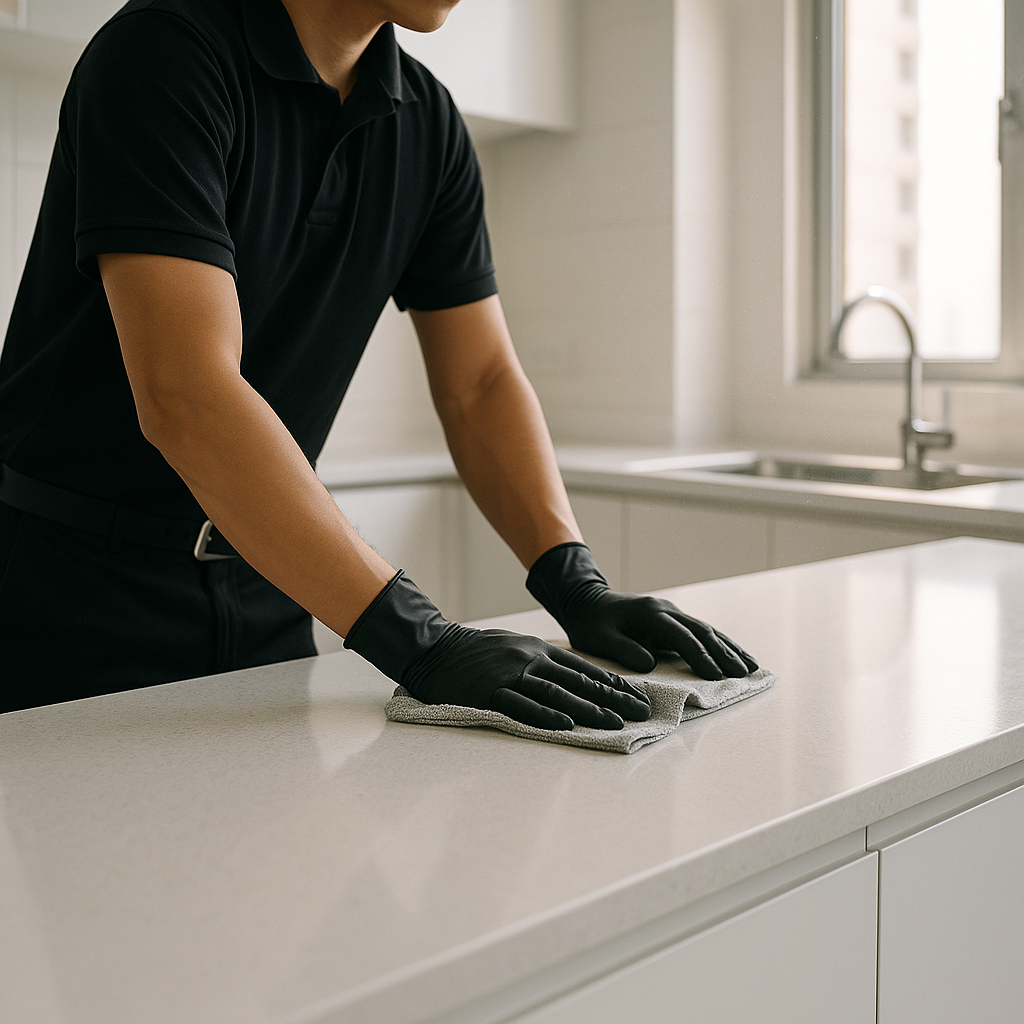
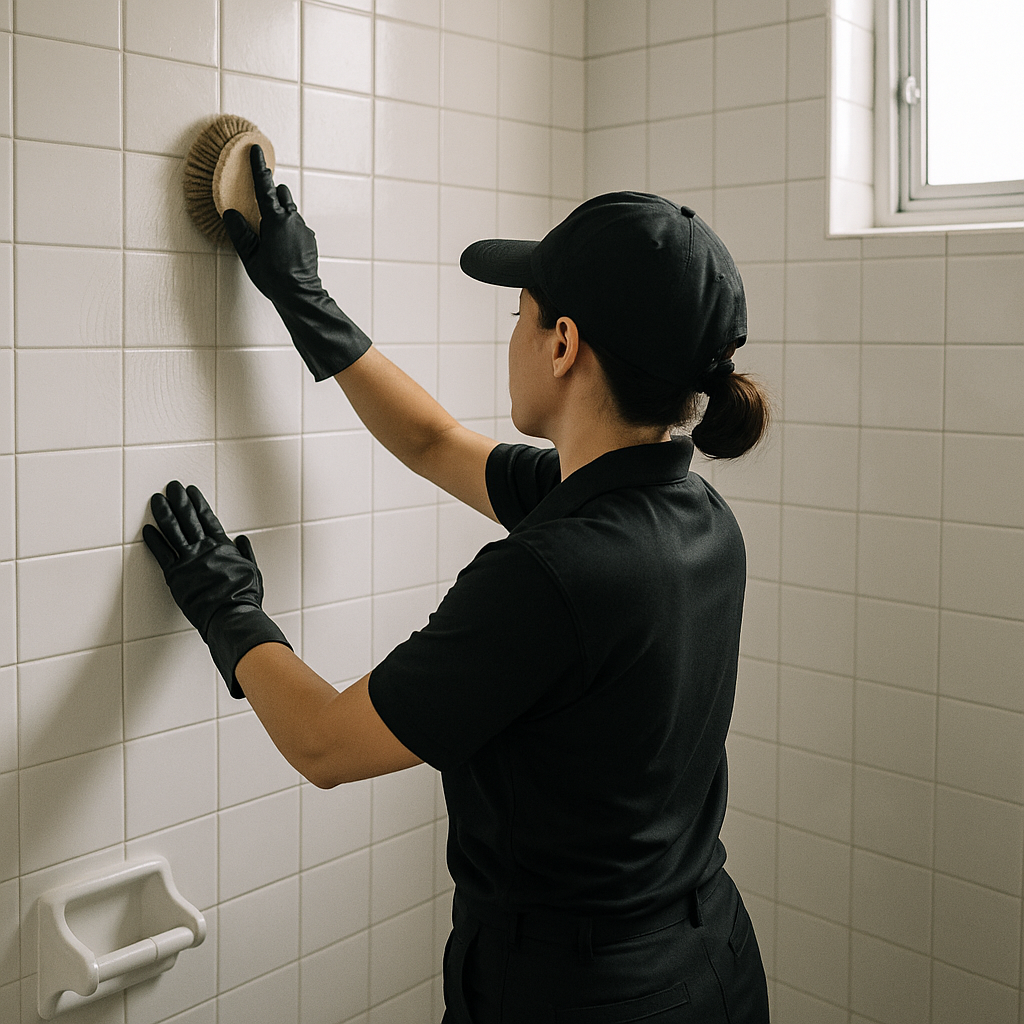
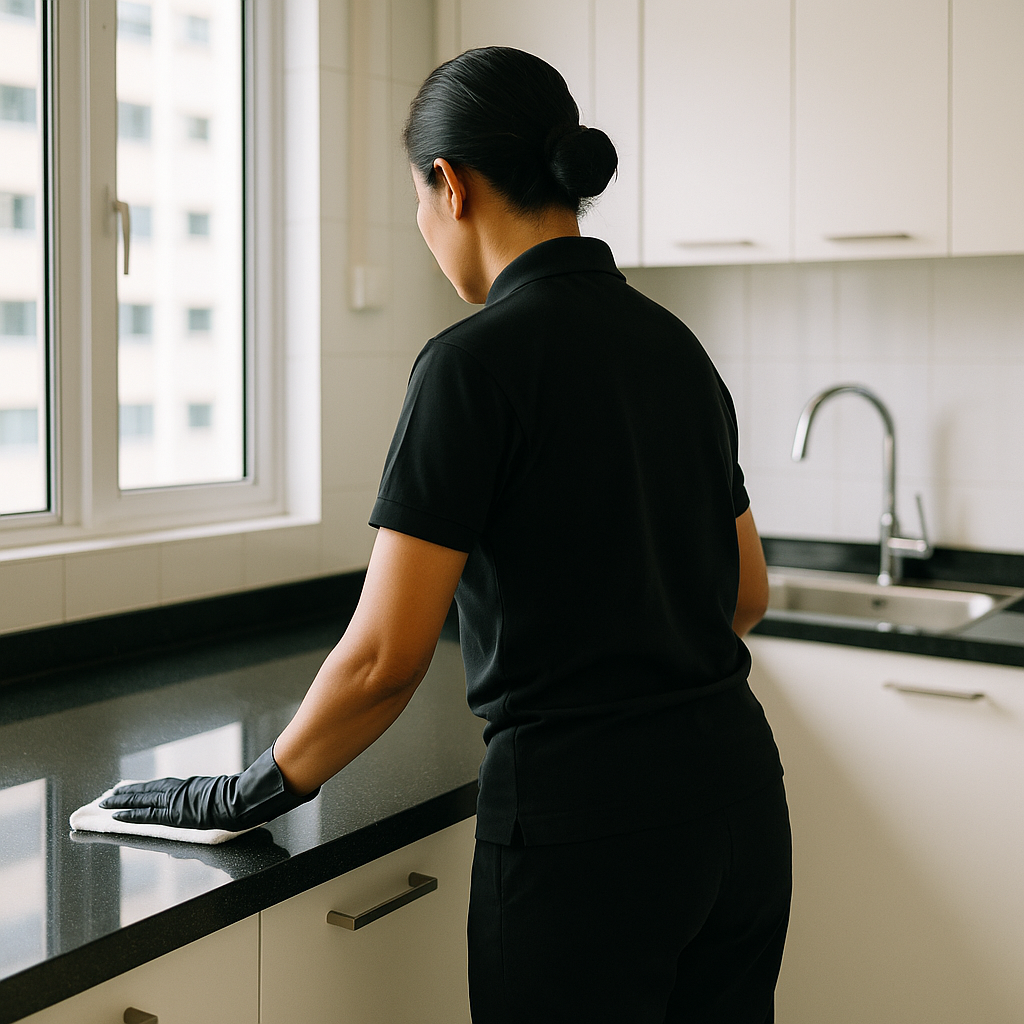
Post-renovation dust isn’t just dust — it’s a mixture of gypsum particles, wood shavings, tile grout powder, and adhesive residue that continues to release odour long after the contractors leave. Our team does a systematic surface wipe-down using damp microfibre cloths and pH-neutral cleaners across every horizontal and vertical surface before any odour treatment begins.
- All window ledges, sills, and aluminium frame tracks wiped down and dried
- Carpentry surfaces, cabinet interiors, and drawer bases cleaned to remove adhesive dust
- Floors mopped with an odour-neutralising solution, paying special attention to vinyl seams and tile grout lines
- Air-con ledges and any ventilation grilles vacuumed to prevent recirculation of dust and VOC particles
“One thing most Singapore homeowners don’t realise is that sealed carpentry — wardrobes and kitchen cabinets — traps the highest concentration of contact adhesive fumes, and simply opening the doors isn’t enough. Doctor Clean always treats the interior surfaces of new carpentry directly, because that’s where VOC off-gassing is most intense and most overlooked.”
Step 3 — Apply Professional Odour Neutralisation Treatment
This is where the real work happens, and it’s very different from what you can do with supermarket products. Our team uses an enzyme-based odour neutraliser combined with an activated odour-absorption treatment that chemically bonds with VOC molecules rather than just masking them with fragrance. We apply this to walls, ceilings, and flooring surfaces using a fine mist sprayer, ensuring even coverage across the entire unit — including inside wardrobes, under counters, and into ceiling cornices where paint fumes pool. In a typical 4-room HDB, this treatment alone takes between 45 minutes to an hour to apply correctly. We leave the treatment to dwell and work for the appropriate contact time before wiping down sealed surfaces, allowing porous surfaces like walls and grout to fully absorb the neutraliser. This step makes a dramatic difference that homeowners can usually detect within the first few hours — that sharp chemical edge in the air is noticeably reduced.
Step 4 — Deploy HEPA Air Purification and Ventilation Strategy
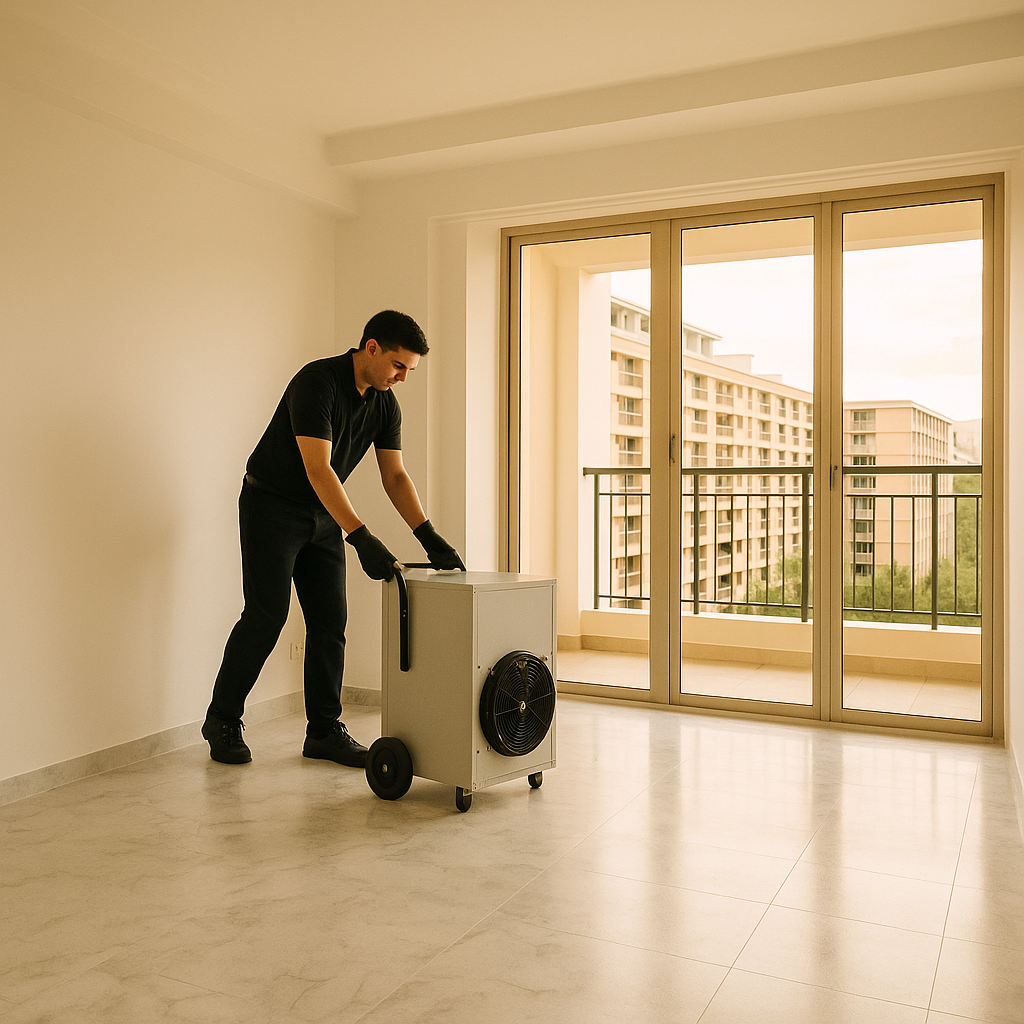
Surface treatment alone doesn’t solve airborne VOCs — you need to pull them out of the air itself. Doctor Clean uses industrial-grade HEPA air purifiers with activated carbon filters during the cleaning session, positioned strategically to maximise air circulation through the unit. Activated carbon is specifically effective at trapping VOC molecules, which is why it’s the gold standard for post-renovation air treatment — standard HEPA filters alone won’t capture gaseous compounds like formaldehyde and toluene. Our team also advises clients on their specific unit’s ventilation setup: for many Singapore condos and HDB flats with limited cross-ventilation, we recommend a targeted window-opening strategy combined with fan placement to create a pressure differential that actively pushes contaminated air out. We run the purifiers for the duration of our session and give homeowners clear guidance on how long to continue running them after we leave, which varies depending on the scale of the renovation and the unit’s natural airflow.
Step 5 — Final Inspection and Homeowner Handover
Before we pack up, our team does a final room-by-room smell check — we actually go nose-close to the surfaces most likely to retain odour, including inside wardrobes, along skirting boards, and in bathrooms where waterproofing compounds and silicone can linger. If any hotspot still has a detectable chemical note, we treat it again on the spot. We also hand every client a short list of what to watch for in the days after our service and when to air the unit — because some VOCs from new materials will continue to off-gas at low levels for weeks, and simple habits like running the air-con fan mode with windows cracked can accelerate the process significantly.
Why Singapore Homeowners Choose Doctor Clean
Post-renovation cleaning is one of the most requested services we handle, and we’ve built our process specifically around the conditions and home types found across Singapore — from Tampines HDB blocks to Buona Vista condos to Jurong East ECs. Here’s what our clients consistently tell us makes the difference:
- Smell is actually gone, not covered up: We use enzyme and activated carbon treatments that neutralise VOCs chemically — your home smells clean and neutral, not like it’s been sprayed with air freshener.
- Safe for children, elderly, and pets: All products our team uses are non-toxic and residue-safe — a critical consideration for families moving into a freshly renovated BTO or condo with young children.
- Trained team who knows renovation materials: Our cleaners are briefed on the specific off-gassing profiles of common Singapore renovation materials — vinyl flooring, water-based paint, contact adhesive, grout sealer — so we treat the right surfaces in the right order.
- Transparent, honest scoping: We’ll tell you upfront if your unit needs a single session or a follow-up, and we don’t inflate job scope to charge more. What we quote is what you pay.
Frequently Asked Questions
How long does post-renovation smell last in a Singapore HDB or condo?
For most Singapore homes, the strongest chemical smell from paint and adhesive fades within 2 to 4 weeks if the unit is well-ventilated — but in sealed, air-conditioned environments this timeline can stretch to 2 to 3 months. Materials like laminate flooring adhesive and contact cement used in carpentry are particularly slow to off-gas. Professional odour treatment significantly accelerates this timeline, and most of our clients notice a dramatic improvement within 24 hours of our service.
Is post-renovation smell harmful to breathe in Singapore homes?
Yes, especially in a tightly sealed Singapore home where air-conditioning limits fresh air exchange. The VOCs from paint, adhesive, and lacquer include compounds like formaldehyde, benzene, and toluene, which can cause headaches, eye irritation, and respiratory discomfort — particularly for young children, elderly residents, or anyone with asthma. We always recommend not sleeping in a freshly renovated room until the smell has noticeably reduced, and professional treatment speeds up that process considerably.
Can I remove post-renovation smell myself with charcoal or baking soda?
Charcoal and baking soda do absorb some odour molecules, but they work extremely slowly and don’t have the capacity to handle the volume of VOCs a full renovation produces. Scented candles and air fresheners are counterproductive — they mask the smell temporarily but do nothing to neutralise the compounds. For a newly renovated Singapore home, professional-grade activated carbon filtration and enzyme-based treatment are meaningfully more effective.
How soon after renovation can Doctor Clean do the odour treatment?
We can come in as soon as your contractors have fully vacated and the renovation is complete — there’s no need to wait. In fact, the earlier we treat the space, the faster we can knock down the initial peak concentration of VOCs before they absorb further into soft furnishings or new furniture you’ve moved in. Most clients book us within the first 1 to 2 weeks of getting their keys back.
Do you service all areas in Singapore, including the East, West, and North?
Yes — Doctor Clean services all areas of Singapore, including the East (Tampines, Pasir Ris, Bedok), West (Jurong, Clementi, Buona Vista), North (Woodlands, Yishun, Sembawang), Central (Toa Payoh, Bishan, Ang Mo Kio), and the CBD and surrounding condo districts. Travel charges may apply for certain locations, and we’ll be upfront about this when you contact us for a quote.
Ready to get this sorted? WhatsApp Doctor Clean — honest quote, no hard sell, fast reply.
 Doctor Clean