
Singapore’s humidity is ruthless on carpets — the combination of 85% average humidity, air-con condensation, and the constant in-and-out of sandy HDB corridors means carpets here attract dust mites, mould spores, and embedded grime far faster than in temperate climates. If you’ve ever lifted a carpet in a Jurong West HDB or a Bishan condo and noticed the dark underlay beneath, you already know the problem. Carpet cleaning Singapore homeowners actually need goes well beyond what a vacuum or supermarket foam spray can achieve — and in this article, our team breaks down exactly why.
A Real Story — The Punggol BTO Carpet That Fooled Everyone
Last year, a young couple from a Punggol BTO reached out to us after two years of vacuuming their bedroom carpet every week without fail — they genuinely thought it was clean. When their toddler started showing persistent sneezing fits, they borrowed a friend’s carpet shampooer and went at it themselves, only for the carpet to smell musty and feel stiff once it dried — a classic sign of moisture trapped deep in the fibres. They called Doctor Clean as a last resort, half-expecting us to tell them the carpet was beyond saving. After our hot water extraction treatment, the water in our recovery tank came out a dark grey-brown on the first pass alone, and the couple told us they felt genuinely shocked — and relieved — seeing their carpet bright, soft, and odour-free within hours.
Step 1 — Inspect and Pre-Assess the Carpet Condition
Before our team touches any equipment, we do a proper hands-on inspection of the carpet — fibre type, pile density, stain history, and whether there are any signs of mould growth underneath. This step matters enormously in Singapore because a wool-blend carpet from a Holland Village landed house needs a completely different approach than the synthetic loop-pile carpet common in newer EC units in Tengah or Canberra. We also check the subfloor situation — if moisture has already wicked into the underlay, we factor in longer drying time and adjust our method accordingly. Skipping this step is where most DIY attempts go wrong from the very start.
Step 2 — Pre-Treatment of Stains and High-Traffic Zones
Once we know what we’re working with, our team applies targeted pre-treatment solutions to stains, pet accident zones, and the heavy-traffic pathways — typically the areas running from the bedroom door to the wardrobe and along the sofa edge. DIY products from FairPrice or Lazada apply a blanket foam across the whole carpet without discriminating between stain types, which often sets protein-based stains like food or pet urine permanently into the fibre. Our pre-treatment process uses pH-adjusted solutions matched to each stain category, left to dwell for the right amount of time before extraction.
- Food and beverage stains — enzyme-based pre-spray to break down organic matter without bleaching fibres
- Pet urine and odour zones — neutralising treatment that targets the uric acid crystals DIY products routinely miss
- Dust mite and allergen-heavy areas — anti-allergen pre-treatment applied to the full pile surface, not just visible stains
“One thing most Singapore homeowners don’t realise is that DIY carpet shampooers sold at rental shops typically only have enough suction to remove about 60–70% of the moisture they inject — leaving the rest sitting in your underlay for days, which is exactly how mould starts. Our truck-mounted and professional-grade portable extractors remove well above 90% of moisture, which is why carpets cleaned by Doctor Clean are typically dry and usable within 2–4 hours.”
Step 3 — Hot Water Extraction (The Method DIY Simply Cannot Replicate)
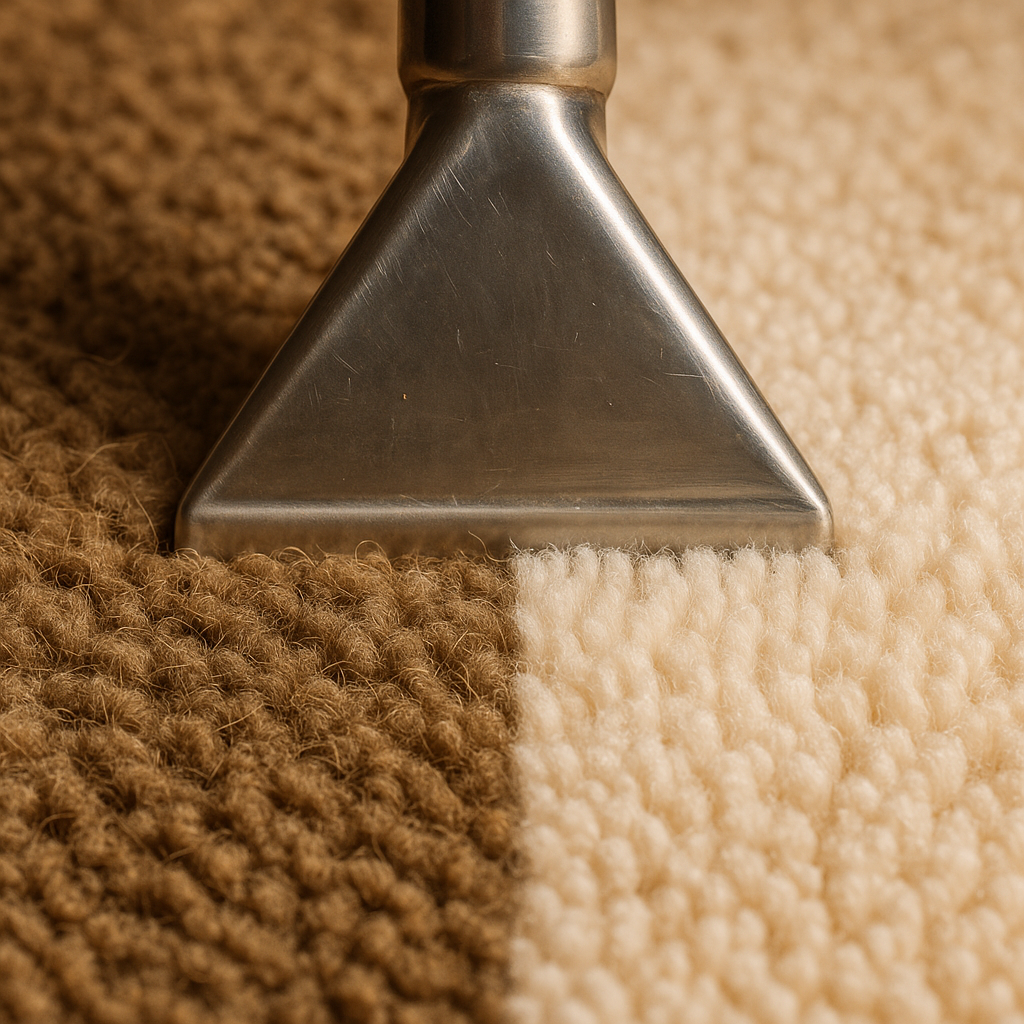
Hot water extraction — often mistakenly called steam cleaning — is the method our team relies on most for carpets in Singapore HDB flats, condos, and landed homes, and it’s the gold standard recommended by most carpet manufacturers worldwide. The process injects heated water mixed with a professional-grade cleaning solution deep into the carpet pile at controlled pressure, then immediately extracts it along with the dissolved soils, dust mites, allergens, and bacteria using powerful suction. The heat component is critical — temperatures above 60°C kill dust mites on contact, something no cold-water DIY machine or vacuum can claim. In a typical Tampines 5-room HDB with a master bedroom carpet and a living room rug, our team can complete the full extraction process in under two hours, leaving the home smelling clean and the fibres visibly lifted and restored. The contrast between the DIY-attempted patches and the professionally extracted areas is almost always immediately visible to the homeowner.
Step 4 — Post-Extraction Grooming and Spot Check
After extraction, our team doesn’t simply pack up — we do a systematic post-cleaning walkthrough of every section of carpet, checking for any residual spots that need a second pass and grooming the pile with a carpet rake to lift the fibres back to their natural upright position. This grooming step is something virtually no DIY guide mentions, but it makes a significant difference to the finished look — especially on thicker cut-pile carpets common in Orchard Road condos or older Bukit Timah landed properties. We also apply a fabric protection treatment on request, which creates a barrier that slows down future soiling and gives homeowners a realistic buffer of 12–18 months before the next deep clean is necessary. Before we leave, the homeowner walks through with us so we can point out any areas that may need slightly longer drying time, and we give honest advice on ventilation — typically recommending fans and keeping air-con running at around 24°C to accelerate drying safely.
Step 5 — Aftercare Advice Tailored to Singapore Conditions
The last thing our team does before leaving any job is give the homeowner specific aftercare guidance tuned to Singapore’s climate — because the advice you read on a UK or US cleaning blog simply doesn’t apply here. We recommend avoiding walking on the carpet for at least two hours, keeping the room well-ventilated for the rest of the day, and vacuuming once the carpet is completely dry (usually the following morning) to catch any loosened debris that surfaces during drying. For homes with young children, pets, or allergy sufferers — which accounts for a large proportion of the Sengkang and Punggol families we work with — we also advise on vacuum frequency and humidity control to extend the results as long as possible.
Why Singapore Homeowners Choose Doctor Clean
We’ve completed carpet cleaning jobs across the full range of Singapore property types — from 3-room rental flats in Queenstown to multi-level landed homes in Serangoon Gardens — and our clients keep coming back for a few very consistent reasons.
- Results you can actually see and smell: Carpets come out visibly brighter, softer underfoot, and free of the stale, dusty odour that Singapore humidity bakes in over time — homeowners consistently tell us it feels like a new carpet.
- Safe for children, pets, and allergy sufferers: We use cleaning solutions that are low in VOCs and residue-free once dry, which matters enormously in HDB and condo homes where children play directly on the carpet surface.
- Trained team with the right equipment: Our crew uses professional-grade extraction machines — not rental units — and every technician is trained in fabric identification and stain chemistry, not just machine operation.
- Fast drying, no disruption to your day: Our high-powered extraction means most carpets are dry and usable within 2–4 hours, so you’re not stepping around wet carpet for the rest of the week or worrying about mould setting in overnight.
Frequently Asked Questions
How often should I get professional carpet cleaning in Singapore?
In Singapore’s climate, we recommend a professional deep clean every 6 to 12 months for most households — more frequently if you have pets, young children, or anyone with asthma or dust mite allergies. Regular vacuuming between professional cleans is essential but it only removes surface debris, not the allergens and bacteria embedded deep in the pile. Homes near MRT construction zones or with high footfall — like those in Woodlands or Jurong East near industrial areas — tend to accumulate grime faster and benefit from more frequent professional attention.
Can DIY carpet cleaning machines from rental shops do the same job?
Rental machines can shift surface-level soiling, but they lack the extraction power of professional equipment — meaning they leave significantly more moisture behind, which increases the risk of mould and mildew in Singapore’s humid environment. They also don’t offer the pre-treatment, post-grooming, or fibre-matched chemical approach that a trained team provides. For light freshening between professional cleans they’re acceptable, but they are not a substitute for a proper deep clean.
Will professional carpet cleaning remove pet urine smell completely?
It depends on how deep the urine has penetrated — if it has soaked through the carpet into the underlay or subfloor, a single surface extraction may reduce but not fully eliminate the odour. Our team assesses this during the initial inspection and will be upfront with you about what’s achievable. In most cases where the underlay is not saturated, our enzyme pre-treatment combined with hot water extraction removes the odour at its source rather than masking it.
Is carpet cleaning safe for my HDB or condo’s flooring underneath?
Yes — professional hot water extraction uses controlled water pressure and the moisture is extracted almost immediately, so there is minimal risk to the flooring underneath when done correctly. Our team always checks the carpet backing and the condition of the floor surface before we begin, and we adjust water temperature and dwell time accordingly. We’ve cleaned carpets over timber, vinyl, and marble floors in Singapore condos without issue.
Ready to get this sorted? WhatsApp Doctor Clean — honest quote, no hard sell, fast reply.
 Doctor Clean