
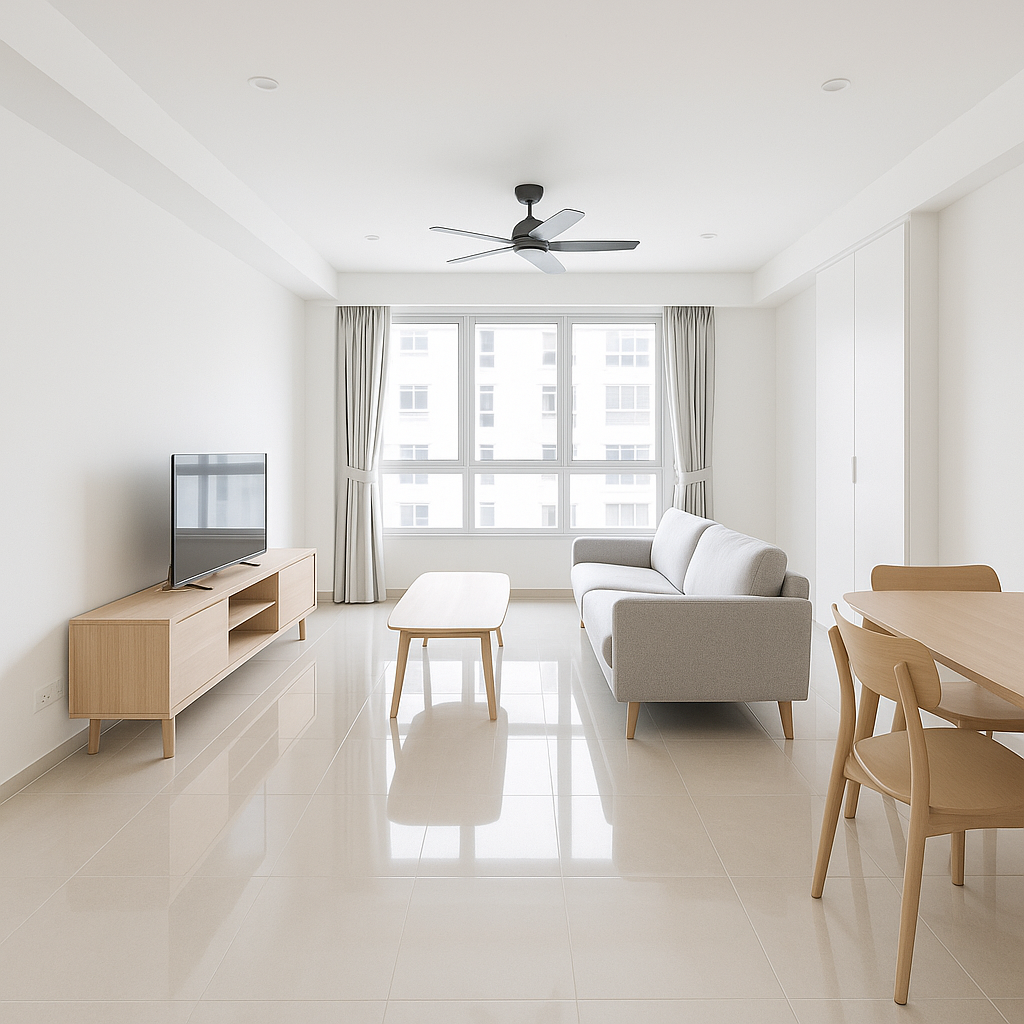
If you’ve ever booked a cleaner and wondered why your HDB still felt grimy underneath the surface, you’re not alone — the confusion around deep cleaning vs regular cleaning Singapore homeowners face every day is real, and it costs people time and money. Singapore’s humidity, open-window cooking culture, and high-density living mean that dirt builds up in ways most weekly cleans simply never reach. Understanding the difference isn’t just semantics — it changes what you book, what you pay, and what you actually get.
A Real Story — A Toa Payoh HDB Owner Who Thought Regular Cleaning Was Enough
Mrs Lim had been booking a regular part-time cleaner every two weeks for her 4-room HDB flat in Toa Payoh for almost three years. She noticed the flat looked tidier after each session, but there was a persistent musty smell near the kitchen cabinets, the grout lines on her bathroom floor had turned a permanent grey, and the top of her fridge and range hood hadn’t been touched in months. She tried mopping more frequently and bought stronger supermarket sprays, but the smell lingered and the grout stayed dark. When she called Doctor Clean for a one-time deep clean before Chinese New Year, our team spent nearly four hours going through areas her regular cleaner had never touched — inside cabinet hinges, behind the washing machine, the full range hood interior — and by the time we were done, she told us the flat smelled like a new BTO for the first time in years.
Step 1 — Assess the Full Scope Before a Single Cloth Moves
Before our team touches anything, we do a structured walkthrough of the entire home. This isn’t a quick glance — we’re checking grout condition, the state of silicone seals around sinks and showers, the grease buildup inside the range hood, how badly the aircon ledges have collected dust, and whether there’s mould developing in corners the homeowner may not have noticed. In our experience cleaning hundreds of Singapore homes, this assessment step is what separates a genuinely effective deep clean from one that looks good on the surface but misses the underlying issues. We also use this time to flag anything that needs a specialist — like severe mould behind tiles — so there are no surprises later.
Step 2 — Target Every Surface a Regular Clean Skips
Regular cleaning maintains what’s already relatively clean — sweeping, mopping, wiping counters, cleaning toilet bowls. A deep clean goes to every surface your weekly routine never reaches. Our team works through the following systematically:
- Inside and behind kitchen cabinets, including hinge areas and shelf liners where grease and dead insects accumulate
- Bathroom grout lines, silicone seals, and the underside of toilet rims using targeted scrubbing agents safe for Singapore HDB and condo finishes
- Skirting boards, door frames, window tracks, and the tops of doors — all notorious dust traps in Singapore’s open-window culture
- Inside the oven, microwave, and fridge (including the rubber door seal where mould commonly grows in our humidity)
- Aircon ledges, light fixture covers, and ceiling fan blades that accumulate fine grey dust year-round
“One thing most Singapore homeowners don’t realise is that regular cleaning actually becomes less effective over time if deep cleaning is never done — you’re essentially redistributing surface dust while embedded grime in grout, seals, and joints keeps building. Doctor Clean recommends at least one proper deep clean every three to six months, depending on cooking frequency and household size, to reset the baseline.”
Step 3 — Apply the Right Treatments to the Right Surfaces
This is where professional deep cleaning earns its cost. We don’t use the same product on every surface — that’s a mistake we see homeowners make all the time, and it can damage stone countertops, strip sealants, or leave chemical residues on food-contact surfaces. For Singapore kitchens, where heavy wok cooking leaves a layer of polymerised oil on range hoods and tile backsplashes, our team uses degreasers specifically formulated to break down carbonised grease without damaging the surface underneath. For bathroom grout in older HDB flats — especially those in estates like Bishan, Ang Mo Kio, or Queenstown where tiles are decades old — we use pH-neutral solutions that lift staining without eroding the grout itself. On newer BTO and condo finishes, which often use more sensitive materials like matte tiles or composite stone, we adjust our products and methods accordingly. Getting the chemistry right is the difference between a deep clean that restores and one that damages.
Step 4 — Tackle Mould, Odours, and Hidden Moisture Problems
Singapore’s humidity sits between 70 and 90 percent for most of the year, and that creates ideal conditions for mould and mildew in areas homeowners rarely inspect — inside washing machine drums, the back corners of wardrobes, behind freestanding furniture near external walls, and in the gap between the toilet base and the floor. Our team treats visible mould with appropriate anti-fungal solutions and dries the area thoroughly, because mould left with any residual moisture simply returns within weeks. We also address odour sources directly rather than masking them — a musty bathroom smell almost always has a source in the silicone seal or the floor trap, not the air itself, and cleaning the air with sprays does nothing to fix it. For post-renovation deep cleans, which we handle regularly for new BTO handovers and condo renovations across Singapore, we also remove construction dust that settles into every crevice and can aggravate allergies for months if left untreated.
Step 5 — Final Check and Handover
Once the deep clean is complete, our team does a full walkthrough before we consider the job done — we’re checking that every agreed area has been completed to standard, that no cleaning product residue has been left on surfaces, and that the home smells clean rather than chemical. We believe the handover moment matters: a Singapore homeowner should walk back into their flat and feel an immediate, noticeable difference — not just a slightly tidier version of what they had before. If anything doesn’t meet the mark, we address it on the spot, because coming back a second time is inconvenient for everyone.
Why Singapore Homeowners Choose Doctor Clean
We’ve cleaned HDB flats, condos, landed homes, and commercial offices across Singapore, and the feedback we hear most consistently is that people wish they’d booked a professional deep clean sooner. Here’s what clients actually get when they work with us:
- A genuinely cleaner home, not just a tidier one: Our deep cleans reach areas that regular cleaning never touches, so the result is a baseline reset — you’ll notice it in the air quality, the smell, and how surfaces feel underfoot and underhand.
- Products matched to Singapore home surfaces: We work with HDB tiles, condo marble, BTO vinyl, and everything in between — and we use the right treatment for each, so nothing gets damaged in the process.
- A trained team that shows up on time and works to a checklist: Every Doctor Clean deep clean follows a structured process, not a freestyle wipe-down. You know what’s included, and our team knows what they’re accountable for.
- No hard sell, no surprises on price: We give honest quotes upfront based on your unit size and scope. What we quote is what you pay — and we’ll tell you clearly if something is outside what a clean can fix.
Frequently Asked Questions
How often should I book a deep clean for my HDB or condo in Singapore?
For most Singapore households, we recommend a professional deep clean every three to six months if you have regular cleaning in between. Homes with heavy cooking, pets, young children, or older residents with respiratory sensitivities may benefit from a deeper clean every two to three months. Post-renovation or post-tenancy situations always call for a full deep clean regardless of when the last one was done, because construction dust and accumulated grime from tenancy are in a different category entirely.
What’s the difference in cost between regular and deep cleaning in Singapore?
A regular home cleaning session for a 3-room or 4-room HDB in Singapore typically runs between $80 and $150 depending on frequency and provider. A professional deep clean for the same unit generally starts from $200 to $350 and upward, depending on the scope, condition, and specific services included like range hood cleaning or grout treatment. The higher cost reflects the additional time, specialist products, and the more intensive labour involved — and most homeowners tell us the result justifies it easily.
Does a deep clean include the aircon, windows, and range hood?
Not automatically — and this is important to clarify before you book with any cleaning company. At Doctor Clean, we’re transparent about what’s in scope: our standard deep clean covers interior surfaces, kitchen and bathroom areas, and general living spaces, while aircon servicing, external window cleaning, and range hood dismantling are add-ons that we quote separately. We’d rather tell you upfront than have you discover on the day that something you expected isn’t included.
Is deep cleaning safe for new BTO flats with sensitive finishes?
Yes, provided the cleaning company knows what they’re doing with materials. New BTOs often use matte or semi-matte tiles, vinyl flooring, and laminate cabinetry that react poorly to harsh chemicals or abrasive scrubbing. Our team is trained to identify surface types and adjust products and techniques accordingly — we never use the same aggressive degreaser on a matte tile that we’d use on a commercial kitchen floor. If you’re not sure what finishes your new flat has, just let us know during the quote stage and we’ll advise.
Ready to get this sorted? WhatsApp Doctor Clean — honest quote, no hard sell, fast reply.

 Doctor Clean