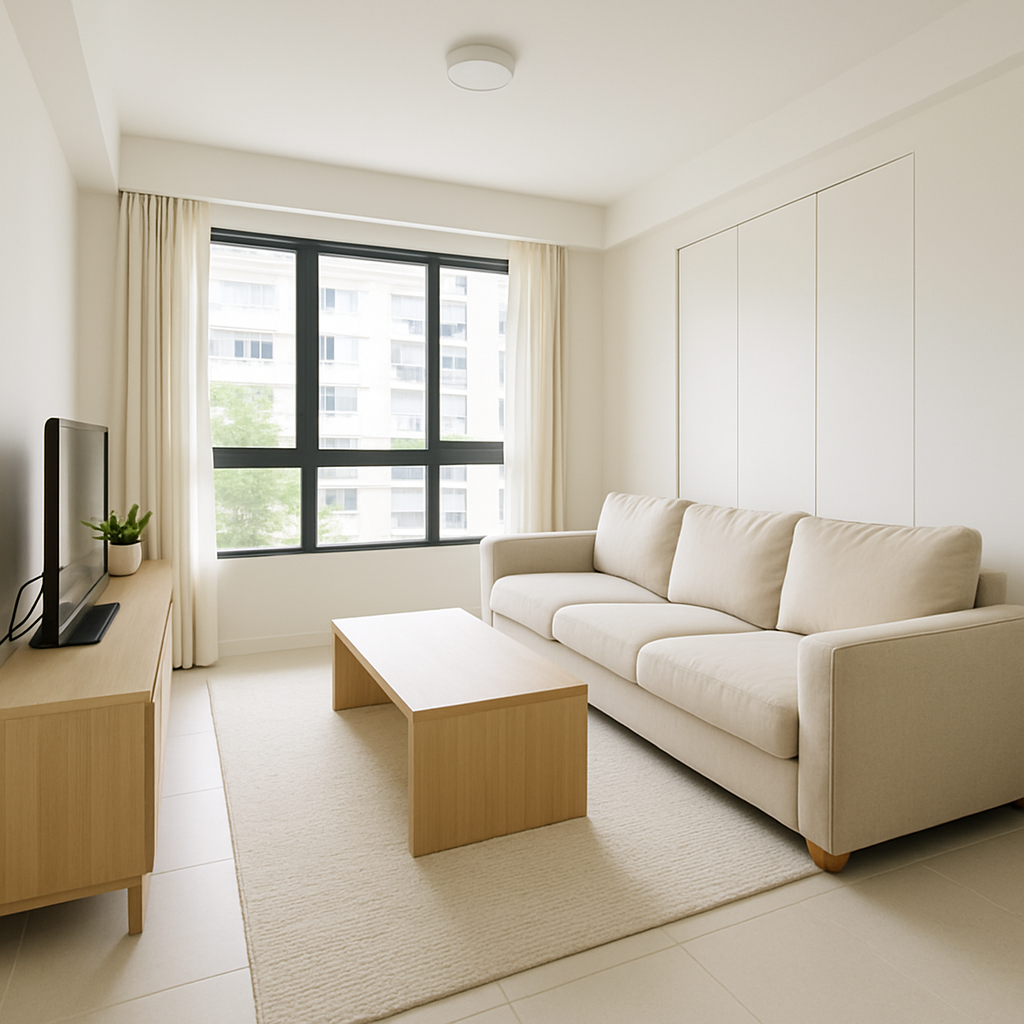
Singapore’s humidity, open-concept layouts, and the sheer number of hours families spend on their sofas make upholstery cleaning in Singapore a genuine necessity — not a luxury. Whether you have a plush fabric sectional in your Sengkang BTO or a full-grain leather sofa in your Buona Vista condo, the heat and moisture here accelerate grime build-up, odour, and fabric degradation in ways most homeowners simply don’t see coming. Our team at Doctor Clean has restored hundreds of sofas across the island, and in this guide we’ll walk you through exactly how we approach fabric versus leather — so you know what to expect and what to ask for.
A Real Story — A Tampines EC Sofa That Looked Clean but Wasn’t
A family in a Tampines Executive Condominium contacted us after their three-year-old light-grey fabric sofa started to smell musty despite looking relatively clean on the surface. They had tried a supermarket foam spray twice and even rented a small wet vacuum, but the smell kept returning within days, and a faint yellowish tide mark had appeared on one armrest. When our team arrived and did a pre-inspection, we found deeply embedded pet dander, dried liquid residue from a spilled bubble tea that had never fully extracted, and the beginnings of mould growth beneath the seat cushion covers — completely invisible to the naked eye. After our full fabric deep-clean treatment, the family told us it was the first time in two years the living room had smelled genuinely fresh, and their youngest child stopped sneezing every evening on the sofa.
Step 1 — Inspect the Fabric or Leather Before Touching Anything
Before our team touches anything, we conduct a thorough pre-clean inspection of the entire piece — not just the visible surfaces. We check the material type (microfibre, velvet, chenille, full-grain leather, PU leather, or bonded leather), look for care labels, test a hidden corner for colorfastness, and identify any existing damage like cracking, peeling, or stress points at the seams. This step is non-negotiable because the wrong cleaning method on the wrong material can permanently damage your sofa — and in Singapore, where many homeowners buy premium furniture from Journey East, Castlery, or IKEA and expect it to last a decade, that is a risk we refuse to take.
Step 2 — Dry Soil Removal and Surface Preparation
Once we have assessed the material, we remove all loose debris before introducing any moisture or product. This is a step many DIY attempts skip entirely, and it is exactly why those attempts often leave residue or push dirt deeper into the fibre. Our team uses professional-grade HEPA vacuum attachments to extract dust, crumbs, pet hair, and dry particulate from every crevice, cushion gap, and seam. For fabric sofas, this also lifts the pile slightly and prepares it to receive our cleaning solution evenly.
- Crevice tool extraction along all seams and armrest edges
- Upholstery head vacuuming across every seat, back panel, and cushion face
- Soft brush attachment on delicate velvet or linen weaves to avoid pull damage
“One thing most people don’t realise is that PU leather and bonded leather — extremely common in Singapore homes — cannot tolerate the same moisture levels or pH ranges as genuine leather. Applying a product designed for full-grain leather onto bonded leather can cause it to bubble and peel within days, which is why our team always confirms the exact material before selecting any cleaning agent.”
Step 3 — Deep Cleaning the Fabric or Conditioning the Leather
For fabric sofas, our team applies a pH-balanced upholstery cleaning solution suited to the specific weave, working it in with a soft-bristle brush in small sections to agitate the fibres without causing pilling or distortion. We then use a hot water extraction machine — the same professional-grade equipment used in commercial settings — to flush the solution and all suspended dirt out of the fabric, leaving behind minimal moisture and no soapy residue. This is critical in Singapore’s climate: residual moisture left in thick fabric can become a breeding ground for mould within 24 to 48 hours, particularly in HDB flats with limited airflow. For leather sofas, we skip the extraction entirely and instead use a dedicated leather cleaner applied with a microfibre pad, working gently in circular motions to lift surface oils, sweat residue, and environmental dust without stripping the leather’s natural conditioning. We pay particular attention to the headrest and armrest areas, which accumulate the most body oil and are typically the first zones to show discolouration or cracking in Singapore’s heat.
Step 4 — Stain Treatment and Odour Neutralisation
Stubborn stains — curry, coffee, ink, pet urine, and the ever-present bubble tea — each require a different targeted treatment, and our team carries a range of professional spot-treatment products calibrated for both fabric and leather surfaces. For pet urine in particular, surface cleaning alone is never enough; we use an enzyme-based neutraliser that breaks down the uric acid crystals embedded in the foam underlay, which is where the odour is actually originating. On leather, we address dark transfer stains (from denim being the most common culprit in Singapore) with a specialist denim transfer remover that lifts the pigment without bleaching the leather beneath. After stain treatment, we apply an antimicrobial finishing spray across all surfaces, which helps suppress bacterial growth and keeps the sofa smelling genuinely clean — not just masked by fragrance — for longer in our warm, humid environment.
Step 5 — Protection, Conditioning, and Post-Clean Advice
The final step is about making the clean last as long as possible. For fabric sofas, we apply a fabric protector that creates an invisible barrier against future liquid spills, giving homeowners a window of time to blot and remove a spill before it penetrates the weave. For leather sofas, we finish with a high-quality leather conditioner that replenishes the natural oils lost during cleaning and restores the supple feel that makes quality leather so satisfying to sit on — particularly important for Singapore homes where air-conditioning can dry out leather surfaces over time. Before we leave, our team always gives the homeowner honest care instructions: how to ventilate the sofa after cleaning, what to avoid spraying near the fabric, and how often to book a professional clean based on their household (pets, children, and frequency of use all affect the recommended interval).
Why Singapore Homeowners Choose Doctor Clean
We have been cleaning sofas across Singapore — from Jurong West HDB flats to Nassim Road landed homes — long enough to know that trust is built on specifics, not promises. Here is what our customers actually tell us makes the difference:
- No guesswork on materials: Our team identifies your exact upholstery type before selecting any product — so your fabric doesn’t pill, your PU leather doesn’t peel, and your genuine leather doesn’t crack from the wrong treatment.
- Real extraction equipment, not supermarket sprays: We use hot water extraction machines and HEPA vacuums, not off-the-shelf foam that leaves residue and invites mould in Singapore’s humidity.
- Trained technicians, not day workers: Every Doctor Clean technician is trained specifically in upholstery cleaning, including material identification, stain chemistry, and safe product selection — not just given a bucket and a brush.
- Honest scope, no surprise charges: We assess on-site and give you a clear price before we start. If something is beyond what cleaning can fix — like deep structural staining or foam damage — we will tell you honestly rather than take your money and disappoint you.
Frequently Asked Questions
How often should I get my sofa professionally cleaned in Singapore?
For a household with no pets and no young children, once every 12 to 18 months is typically sufficient for fabric sofas. If you have pets, children under five, or anyone with respiratory sensitivities like asthma or allergies, we recommend every six to nine months. Singapore’s humidity means dust mites and mould spores accumulate faster than in drier climates, so more frequent cleaning genuinely makes a health difference — not just an aesthetic one.
Can Doctor Clean remove old, set-in stains from fabric sofas?
In most cases, yes — though we will always be honest with you during the inspection if a stain is likely permanent. Stains that have been heat-set (for example, someone used a hot hairdryer on a spill hoping to dry it quickly) or that have chemically bonded with the fabric dye are the hardest to fully remove. Our enzyme and professional-grade spot treatments can significantly reduce even stubborn set-in stains, and in most cases homeowners are genuinely surprised by how much improvement is possible.
Is professional upholstery cleaning safe for children and pets?
Yes — Doctor Clean uses pH-balanced, low-toxicity cleaning solutions that are safe for households with children and pets once the sofa is fully dry. We avoid harsh solvents and heavily fragranced products. We always advise allowing the sofa to air-dry fully before regular use, which typically takes two to four hours with good ventilation or air-conditioning running.
What is the difference between cleaning PU leather and real leather sofas?
Genuine leather is a natural material that responds well to conditioning and can be cleaned with slightly higher moisture and pH ranges. PU leather and bonded leather are synthetic or composite materials that are much more sensitive — excess moisture, alkaline cleaners, or abrasive tools can cause bubbling, cracking, or delamination. Our team always confirms which type you have before selecting any product, which is why we ask for photos or a brief description when you contact us for a quote.
Ready to get this sorted? WhatsApp Doctor Clean — honest quote, no hard sell, fast reply.
 Doctor Clean