
Singapore’s humidity, dust, and relentless pace of life make it genuinely hard to keep your home in order — especially if you’re clocking fifty-hour weeks and barely have time to cook dinner. Knowing how to keep your Singapore home clean isn’t just about motivation; it’s about having the right system for the way real Singaporeans actually live. At Doctor Clean, we’ve cleaned hundreds of HDB flats, BTOs, condos, and landed homes across the island, and we’ve picked up a lot of hard-won insight along the way.
A Real Story — The Pasir Ris Condo That Got Away From a Busy Couple
Last year, we got a WhatsApp from a couple living in a three-bedroom condo near Pasir Ris MRT — both working full-time in the CBD, commuting daily, and barely home before nine at night. They’d been mopping the floors on weekends and wiping surfaces when they could, but the bathroom grout had turned grey, the kitchen hood was coated in sticky residue, and a faint musty smell had settled into the master bedroom. They felt embarrassed inviting friends over and exhausted by the idea of tackling it themselves. Our team came in for a thorough deep clean, tackled the grout with professional-grade tools, degreased the hood completely, and left the whole unit smelling fresh — the couple messaged us afterwards to say it felt like moving into the flat all over again.
Step 1 — Audit Your Home Honestly Before You Build Any Routine
Before our team touches anything in a client’s home, we do a quick walk-through to understand what’s actually dirty versus what just looks cluttered. We encourage every busy professional to do the same — walk through your flat with fresh eyes on a Sunday morning and note the three spots that bother you most. In Singapore homes, it’s almost always the bathroom, the kitchen hood filter, and the area under the sofa or bed where dust accumulates fast because of our open-window culture and tropical air. Once you know your problem zones, you can build a realistic routine around them instead of trying to clean everything all at once and burning out by week two.
Step 2 — Build a Weekly Reset Around Singapore’s Real Conditions
Singapore’s humidity means surfaces collect grime faster than in temperate climates — mould can appear in a bathroom within days if ventilation is poor, and kitchen grease builds up quickly in compact HDB kitchens. Our recommendation is to focus your weekly reset on the highest-impact areas rather than doing a full clean every single week. A realistic weekly reset for a busy professional should cover:
- Wipe down bathroom tiles and toilet bowl with a disinfectant spray — takes under ten minutes and prevents grout staining
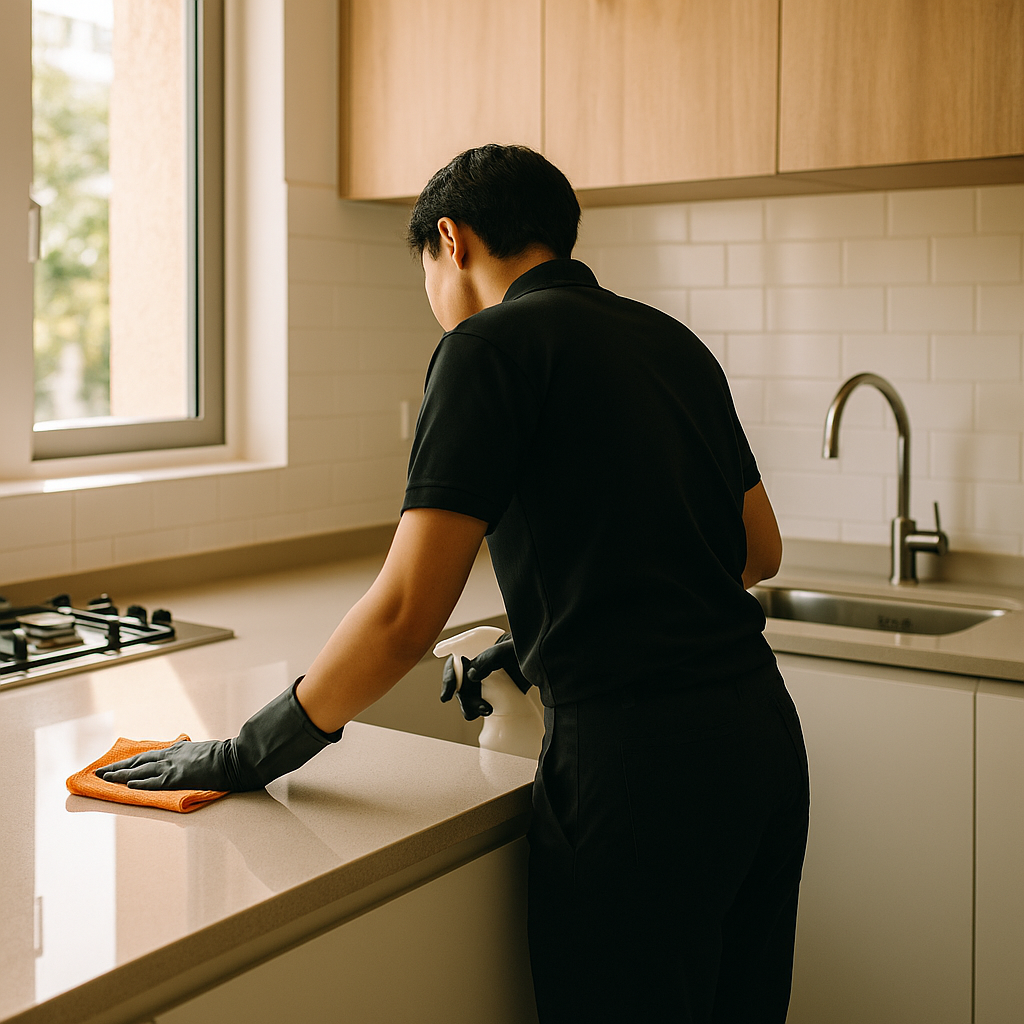
- Clear and wipe the kitchen countertop and stovetop after cooking — grease is far easier to remove fresh than baked-on
- Vacuum or sweep the living room and bedroom floors, paying special attention to corners and under furniture where Singapore dust settles fast
“One thing most homeowners don’t realise is that the kitchen exhaust hood filter is the single biggest source of grease smell in Singapore HDB kitchens — most people wipe the outside but never touch the filter. Our team finds filters caked solid in flats where the owner has been cleaning ‘regularly’ for years.”
Step 3 — Handle Moisture Before It Becomes Mould
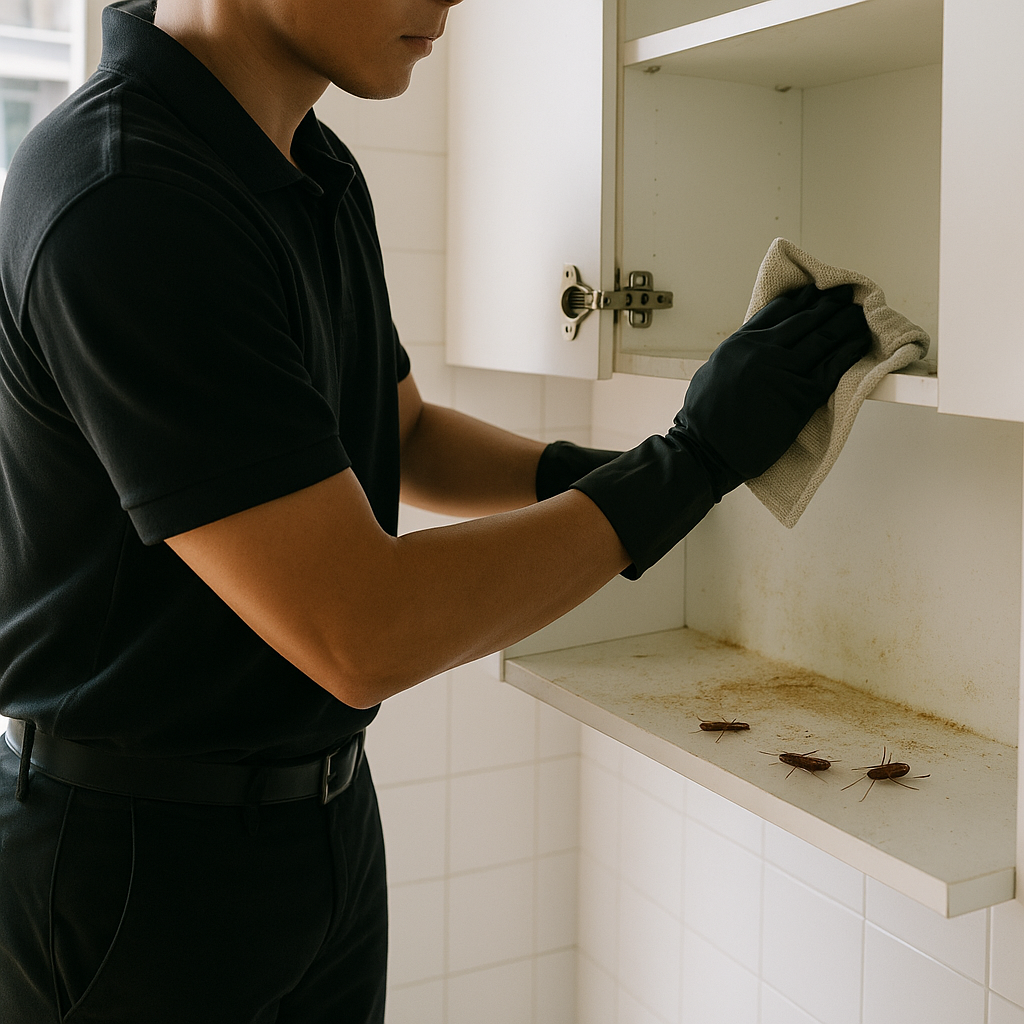
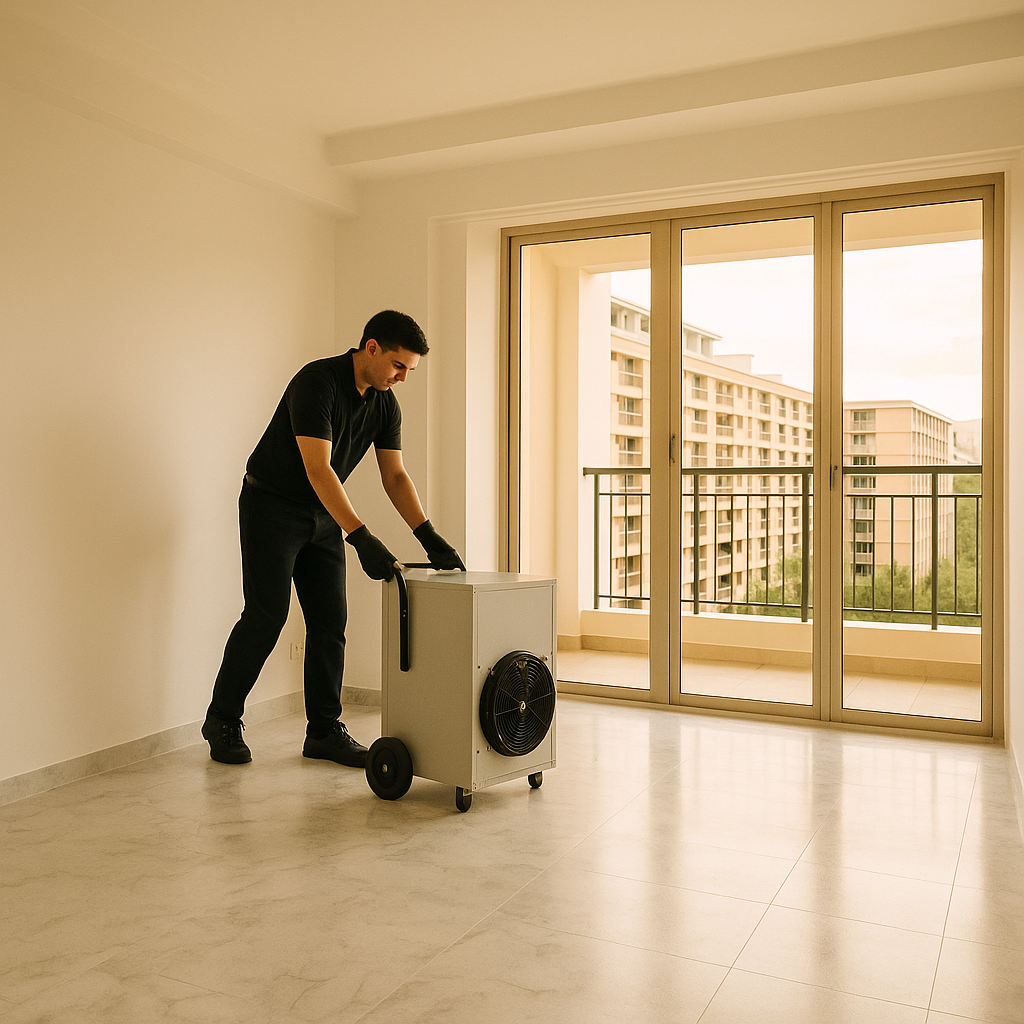
In Singapore’s climate, moisture management is non-negotiable, and it’s the area where we see the most damage in homes we visit across Toa Payoh, Tampines, Jurong West, and everywhere in between. The bathroom is the obvious culprit — grout lines, silicone sealant around the shower tray, and the underside of the toilet rim are where mould takes hold first. But our team also regularly finds mould behind washing machines in service yards, on the walls behind bedroom furniture pushed flush against exterior walls, and inside air-conditioner units that haven’t been serviced in over a year. The practical fix is to squeegee bathroom walls after every shower, leave the bathroom door open after use to allow airflow, and run a dehumidifier in bedrooms if you notice condensation on windows or a persistent musty smell. These small habits genuinely extend the time between deep cleans and protect your walls, grout, and furniture from the kind of damage that costs real money to fix.
Step 4 — Declutter Strategically So Cleaning Takes Half the Time
One of the most consistent things our team notices when we arrive at a new client’s home is that clutter is making every cleaning task take twice as long as it needs to. When surfaces are covered with items — mail, chargers, shopping bags, random objects that don’t have a home — even wiping a table becomes a multi-step job. In Singapore HDB and BTO flats where storage is genuinely limited, this is a real structural problem, not a personal failing. Our advice is to assign every frequently used item a fixed spot and spend five minutes at the end of each day doing a reset — putting things back where they belong rather than letting the pile build up to weekend-crisis level. The homes that stay cleanest between our visits are always the ones where the owners have reduced the number of things sitting out on countertops and shelves, not because they’re minimalists by nature, but because they’ve learned it makes the actual cleaning dramatically faster.
Step 5 — Schedule a Professional Deep Clean Every Three to Six Months
Even with a solid routine, there are areas of every Singapore home that a weekly clean simply cannot reach — behind appliances, inside the oven, deep inside the aircon unit, the grout across an entire bathroom floor, or the accumulated grime in the kitchen exhaust hood. Our team at Doctor Clean recommends that busy professionals in Singapore book a professional deep clean every three to six months depending on the size of their household and how frequently the home is used. Think of it the same way you think about servicing your car — routine maintenance keeps things running, but a professional service catches everything that daily upkeep misses and resets the baseline so your own cleaning efforts actually make a visible difference.
Why Singapore Homeowners Choose Doctor Clean
We’re not the cheapest option in Singapore, and we don’t try to be — but the clients who work with us come back because the results are consistently real. Here’s what they actually tell us matters:
- Visible results every time: Our team works to a detailed checklist for every job, so nothing gets skipped — clients come home to a flat that genuinely looks and smells different, not just tidied.
- Safe for Singapore homes and families: We use cleaning products that are effective against Singapore’s tropical mould and grease without leaving harsh chemical residues — important for families with young children or pets in HDB flats and condos.
- Trained, experienced team: Every Doctor Clean team member is trained on the specific challenges of Singapore home types — from compact BTO kitchens to large landed property bathrooms — so we work efficiently and don’t damage surfaces.
- Flexible scheduling for busy professionals: We offer weekday, weekend, and even early morning slots so you can book a clean around your work schedule without taking leave or rearranging your whole week.
Frequently Asked Questions
How often should I deep clean my Singapore HDB flat?
For a typical two to four-room HDB flat with one or two working adults, we recommend a professional deep clean every three to four months. Singapore’s humidity and urban dust levels mean grime accumulates faster than in cooler climates, particularly in bathrooms and kitchens. If you cook frequently or have children or pets, every two to three months will keep your home in genuinely good condition between visits.
What’s the fastest way to keep a small Singapore flat clean with a busy schedule?
The fastest system is a daily five-minute reset — surfaces cleared, dishes done, bathroom door left open — combined with a thirty-minute weekly focus on your two or three biggest problem areas. Don’t try to clean everything every week; you’ll burn out within a month. Pair that with a quarterly professional deep clean and your home will stay in genuinely good shape without consuming your weekends.
Does Singapore’s humidity make mould unavoidable in HDB bathrooms?
Mould in Singapore bathrooms is common but not inevitable — the key is ventilation and drying surfaces after use. Squeegee your shower walls, leave the bathroom door open after showering, and reseal any cracked silicone around the shower tray or basin. If mould has already taken hold in the grout, a professional clean with the right tools is far more effective than scrubbing yourself with off-the-shelf sprays.
Can Doctor Clean help with post-renovation cleaning for a new BTO?
Yes — post-renovation cleaning is one of our most popular services for new BTO owners across all towns from Tengah to Punggol to Bidadari. Renovation dust gets into every surface, corner, and crevice, and it takes a professional team with the right equipment to remove it properly before you move in. WhatsApp us with your flat size and we’ll give you an honest, itemised quote with no obligation.
Ready to get this sorted? WhatsApp Doctor Clean — honest quote, no hard sell, fast reply.
 Doctor Clean