Singapore offices accumulate grime faster than most business owners realise — humidity creeps into carpeted floors, lunch smells linger in pantries, and high-touch surfaces like lift buttons and door handles become invisible hotspots for bacteria between visits. If your office cleaning checklist Singapore-side isn’t thorough enough, you’re paying for a surface wipe when your team needs a genuine deep clean. Here’s exactly what a proper commercial clean should cover — and how Doctor Clean approaches it for offices across the island.
A Real Story — Tanjong Pagar office that thought it was already clean
A 6,000 sqft marketing agency in a Tanjong Pagar commercial building came to us after their previous cleaner of two years handed in notice. The office manager, Priya, told our team the space looked fine on the surface — desks wiped, floors mopped — but staff kept getting sick and the pantry had a persistent sour smell nobody could trace. When our team arrived for the first assessment, we found mould growing along the rubber seal of the office refrigerator, dust compacted inside every air-con vent, and carpet tiles near the entrance that hadn’t been vacuumed underneath the cable trays in months. After Doctor Clean completed a full commercial deep clean and set up a proper weekly maintenance schedule, Priya messaged us two weeks later to say the smell was completely gone and two staff members who’d been sneezing daily had stopped complaining — she wished she’d called sooner.
Step 1 — Assess the office layout and identify priority zones
Before our team touches a single surface, we walk the entire office and map out the zones that matter most — reception, open-plan workstations, meeting rooms, pantry, server rooms, and bathrooms. Every office in Singapore is different: a creative studio in Bugis with exposed concrete floors needs a different approach than a law firm in Raffles Place with polished marble and glass partitions. We note the flooring types, the number of pantry appliances, whether there are soft furnishings like sofas or curtains, and how many workstations are in active use. This assessment is what separates a professional commercial clean from a generic sweep — we don’t apply a one-size template, we build the checklist around your actual space.
Step 2 — Tackle high-touch and high-traffic surfaces first
Our team starts the active clean with the surfaces that carry the highest contamination risk — the ones every person in the office touches multiple times a day but rarely thinks about. Getting these right sets the hygiene baseline for everything that follows.
- Door handles, push plates, and light switches throughout the entire floor
- Lift lobby buttons and access card panels at the office entrance
- Shared keyboards, mice, and desk phones at hot-desking stations
- Meeting room AV remotes, whiteboard ledges, and presentation screen bezels
- Pantry kettle handles, microwave touchpads, fridge door pulls, and water dispenser taps
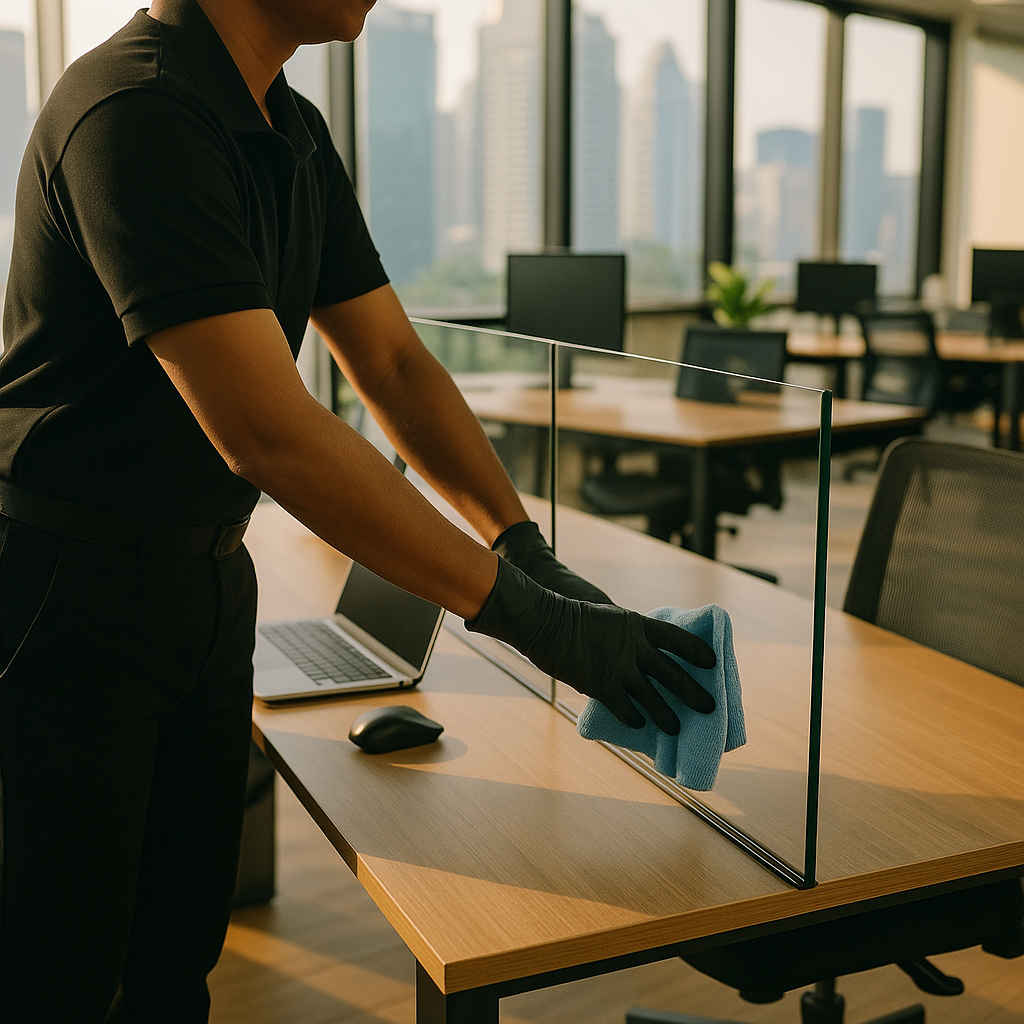
“One thing most offices don’t realise — desk divider panels and the sides of monitor stands collect as much dust as the desk surface itself, but they’re almost never included in a standard cleaning contract. Doctor Clean always includes them because skipping them means the dust just migrates back onto the desks within 48 hours.”
Step 3 — Deep clean the pantry and staff bathroom
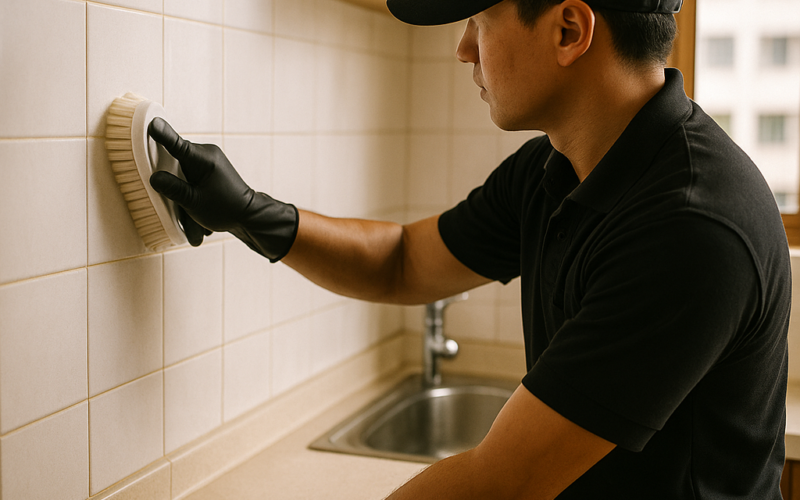
In our experience cleaning commercial spaces across Singapore — from Jurong East tech offices to Orchard Road retail back-offices — the pantry and bathroom are the two areas where corners get cut most often, and where the consequences of cutting them are most felt by staff. The pantry clean our team performs goes well beyond wiping counters: we remove everything from the inside of the microwave, descale the kettle, clean behind and underneath the water dispenser, and pull out the refrigerator shelving to sanitise each tray and the rubber door seals individually. For office bathrooms, we treat every fixture — toilet bowls, urinals, sink basins, tap fixtures, and hand dryer surfaces — with commercial-grade disinfectant that meets Singapore’s NEA standards, and we scrub grout lines in the floor and wall tiles rather than just mopping the surface. We also check that soap dispensers, paper towel holders, and sanitary bins are serviced and lined properly, because an empty soap dispenser in a 50-person office is a hygiene problem that compounds daily. These two rooms are where your team’s perception of cleanliness is formed, and we take them seriously.
Step 4 — Floors, glass, and workstation surfaces across the full floor
Once the high-touch zones and wet areas are done, our team moves through the full floor systematically — vacuuming carpet tiles with a HEPA-filter machine that captures fine particulates rather than redistributing them, or mopping hard floors with a microfibre flat mop system that doesn’t leave streaks on vinyl or timber laminate. Glass partitions get a two-pass clean: a damp wipe to lift fingerprints and smears, followed by a dry buff to eliminate streaking — something that matters enormously in glass-heavy Raffles Place and Marina Bay offices where every smear is visible from across the room. Workstations are wiped down in a consistent pattern — monitor screen, monitor stand, keyboard tray, desk surface, desk drawers front face — so nothing is missed and the cleaner doesn’t have to rely on memory. Cable management trays and under-desk areas get a vacuum pass as well, because that’s where dust bunnies consolidate and eventually affect air quality across the whole floor.
Step 5 — Air-con vents, skirting, and the finishing checks
The last stage is what separates a thorough office clean from a rushed one: the finishing details that most teams skip because they’re not immediately visible but accumulate quickly in Singapore’s humidity. Our team wipes every air-con vent louvre and return air grille with a damp cloth to remove the grey dust that builds up within weeks of a clean — left unchecked, this dust gets pushed back into the office air every time the system kicks in. Skirting boards along the walls, the tops of filing cabinets and storage shelves, and the ledges above doorframes all get a once-over as part of our standard commercial checklist. We do a final walkthrough against our checklist before signing off, and our team leader photographs any areas of concern — such as mould near windows or damaged floor tiles — and flags them to the office manager so nothing falls through the cracks between our visit and the next one.
Why Singapore Homeowners Choose Doctor Clean
Singapore offices and businesses keep coming back to Doctor Clean not because we’re the cheapest option, but because we do what we say we’ll do — consistently, and without needing to be chased. Here’s what our commercial clients tell us makes the difference:
- Genuinely thorough checklists: We cover zones that other cleaners routinely skip — vents, desk dividers, fridge seals, cable trays — so your office stays cleaner between sessions, not just on the day we visit.
- Singapore-appropriate products: We use NEA-compliant disinfectants suited to Singapore’s humid climate, which means surfaces stay bacteria-free longer even in pantries and bathrooms that see heavy daily use.
- Trained, consistent team: We don’t rotate random workers through your office — you get a familiar team who knows your layout, your preferences, and your sensitive areas like server rooms or confidential document zones.
- Flexible scheduling with no disruption: We work around your office hours — early morning before staff arrive, evenings after everyone leaves, or weekends — and we’re in and out without interrupting your business day.
Frequently Asked Questions
How often should a Singapore office be professionally cleaned?
For most offices with 20 or more staff, we recommend a professional clean at least twice a week — daily if you have a large pantry, high foot traffic, or a client-facing reception area. Smaller offices in places like Novena or Toa Payoh with under 10 staff can often manage with a weekly deep clean supplemented by daily in-house tidying. The key is that the professional clean handles what your in-house staff shouldn’t have to — bathrooms, air-con vents, glass partitions, and kitchen appliances.
What’s included in a standard office cleaning checklist in Singapore?
A proper commercial cleaning checklist should cover workstation surfaces and screens, high-touch points like door handles and switches, pantry appliances and counters, bathrooms with full disinfection, floor vacuuming or mopping, glass partition wiping, and air-con vent dusting at minimum. Many budget providers only cover floors and desk wipes — which is why so many offices still smell stale or have recurring pantry issues even with a cleaner coming in regularly. Doctor Clean’s checklist covers all of the above as standard, and we customise it for your specific office layout on the first visit.
Do you bring your own cleaning equipment and supplies?
Yes — our team arrives fully equipped with commercial-grade vacuums, microfibre systems, disinfectants, and all the tools needed for the job. You don’t need to provide anything or stock up on supplies before we arrive. If your office has specific requirements — for example, fragrance-free products due to staff allergies — just let us know when you book and we’ll accommodate that from day one.
Can Doctor Clean clean our office after renovation or a fitout?
Absolutely — post-renovation office cleaning is one of our most common commercial requests, especially for new fitouts in buildings around one-north, Paya Lebar Quarter, and CBD towers. Renovation dust is extremely fine and settles into every surface, vent, and crevice, so a standard clean won’t touch it — you need a proper post-reno protocol with HEPA vacuuming, vent cleaning, and a full wipe-down of every horizontal surface before your team moves in. We handle this regularly and can usually schedule within a few days of your renovation completing.
Ready to get this sorted? WhatsApp Doctor Clean — honest quote, no hard sell, fast reply.
Tags
 Doctor Clean