
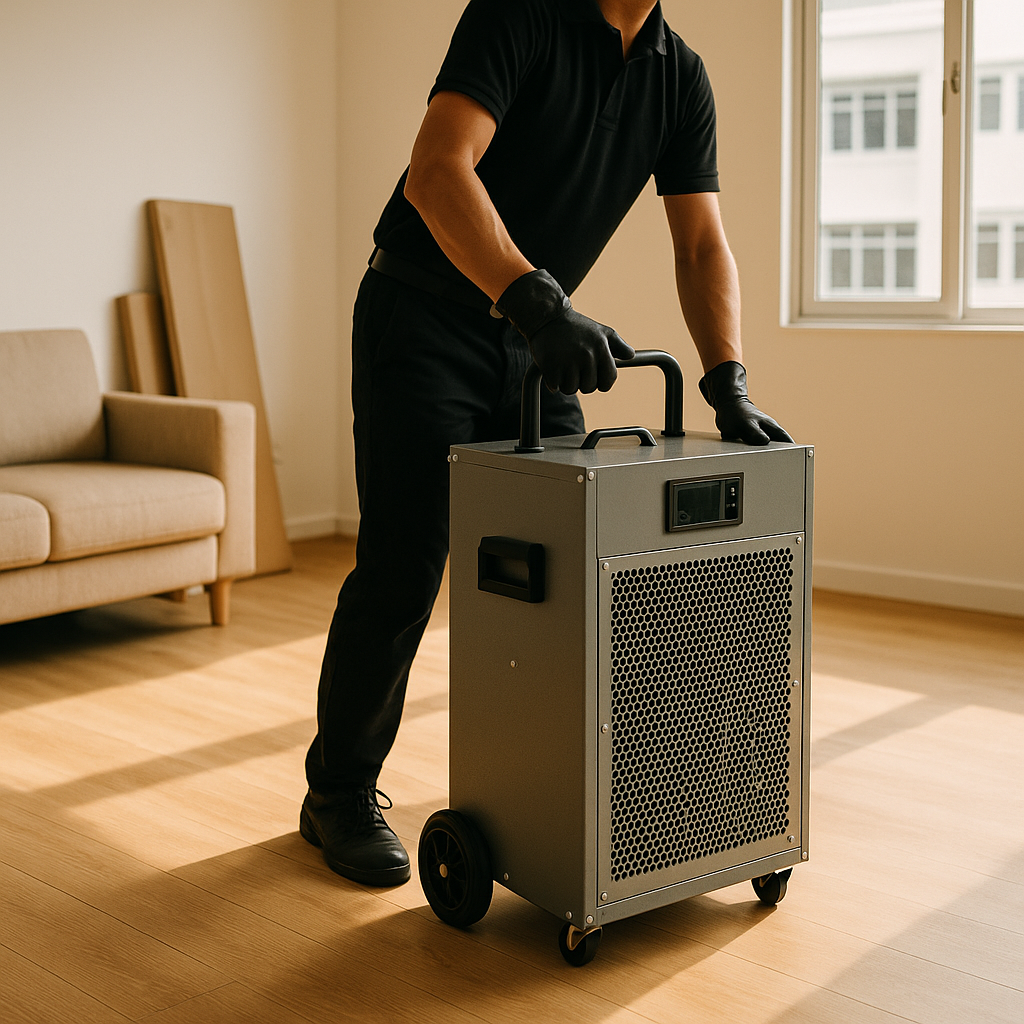
Formaldehyde in new Singapore homes is one of the most overlooked health hazards that BTO and condo owners face after collecting their keys — and most people have no idea they are breathing it in. That sharp, eye-watering smell you notice when you first open the door to a freshly renovated flat? That is largely formaldehyde off-gassing from new furniture, adhesives, laminate flooring, and wall paint. In Singapore’s heat and humidity, the problem is significantly worse than in cooler climates, because elevated temperatures accelerate the rate at which these chemicals are released into your living space.
A Real Story — A Young Family in a New Tampines BTO
A couple who had just collected the keys to their new 4-room BTO flat in Tampines called our team after their toddler started experiencing persistent eye irritation and headaches within the first two weeks of moving in. They had already tried opening all the windows for a week, burning coffee grounds, and placing bowls of vinegar around the flat — all popular remedies they found online — but the smell persisted and their child’s symptoms did not improve. When Doctor Clean arrived, our team carried out a thorough post-renovation purification clean combined with targeted ventilation flushing, treated all new furniture surfaces, and left activated charcoal units strategically placed throughout the home. The couple messaged us four days later to say the smell was gone, their son’s symptoms had cleared up, and they finally felt safe settling into their new home — that kind of outcome is exactly why we do this work.
Step 1 — Assess the Space and Identify Formaldehyde Sources
Before our team touches anything, we walk through the entire home and systematically identify every likely source of formaldehyde off-gassing. In new Singapore homes, the biggest culprits are almost always medium-density fibreboard (MDF) kitchen cabinets and wardrobe panels, urea-formaldehyde adhesives in laminate flooring, new mattresses and upholstered furniture, and freshly applied paint or wallpaper. We also check whether the renovation contractor used low-VOC materials or standard-grade materials, because that directly affects how aggressive our treatment plan needs to be. This initial assessment takes time but it prevents us from applying a one-size-fits-all approach that misses the real problem areas.
Step 2 — Open and Flush the Space Systematically
Ventilation alone is not enough, but it is the essential first layer of any formaldehyde reduction strategy — and most homeowners get the technique wrong. Our team opens every window, every cabinet door, every wardrobe panel, and every drawer in the home simultaneously to expose trapped off-gassing surfaces directly to moving air. We then use industrial-grade fans positioned at key airflow points to create cross-ventilation that pulls stale chemical-heavy air out and draws fresh air through, rather than just circulating the same indoor air. This flush typically runs for a sustained period before we move to the next stage.
- All kitchen cabinet doors and drawers opened fully — including inside spaces behind appliances
- Wardrobe panels swung open and internal shelves wiped down with our formaldehyde-neutralising solution
- New mattresses and sofa cushions stood upright and positioned near open windows to allow maximum air exposure on all surfaces
“One thing most people don’t realise is that formaldehyde hides inside furniture cavities — sealed wardrobes and closed drawers can trap off-gassed chemicals at concentrations far higher than the open room air. Simply opening windows while leaving all your furniture closed achieves very little, which is why so many DIY attempts fail.”
Step 3 — Apply Formaldehyde-Neutralising Treatment to Surfaces
Once the initial flush is underway, our team applies a professional-grade formaldehyde-neutralising solution across all high-emission surfaces — this is the step that makes the biggest measurable difference and the one that no amount of home remedies can replicate. The solutions we use work through a chemical reaction that converts formaldehyde molecules into harmless compounds, rather than simply masking the smell or temporarily absorbing it. We apply the treatment to MDF cabinet interiors, the underside of laminate flooring where accessible, furniture frames, and new wall surfaces, paying particular attention to enclosed spaces that trap the highest concentrations. In Singapore’s climate, where indoor temperatures regularly hit 29 to 32 degrees Celsius even with air conditioning running part of the day, this surface treatment is especially critical because heat continuously drives new formaldehyde out of bonded materials — without treating the source, the problem simply keeps regenerating.
Step 4 — Deploy Activated Charcoal and Air Purification Units
After the surface treatment is applied and the ventilation flush is running, Doctor Clean sets up activated charcoal absorption units throughout the home to capture residual airborne formaldehyde molecules during the hours and days following our visit. Activated charcoal is one of the few passive methods that actually works for VOC absorption — it is far more effective than the commonly recommended baking soda, vinegar, or onion bowls that circulate on Singapore parenting forums. We position the charcoal units based on the room size, the density of new furniture in each space, and the prevailing airflow direction in the flat, rather than just placing them randomly. For larger homes — particularly 5-room HDB flats, executive condos in areas like Punggol or Sengkang, or newly completed landed properties — we bring in a greater number of units and advise homeowners on how long to run them before the air quality can be considered safe for full-time occupation with young children or elderly family members.
Step 5 — Final Wipe-Down and Homeowner Guidance
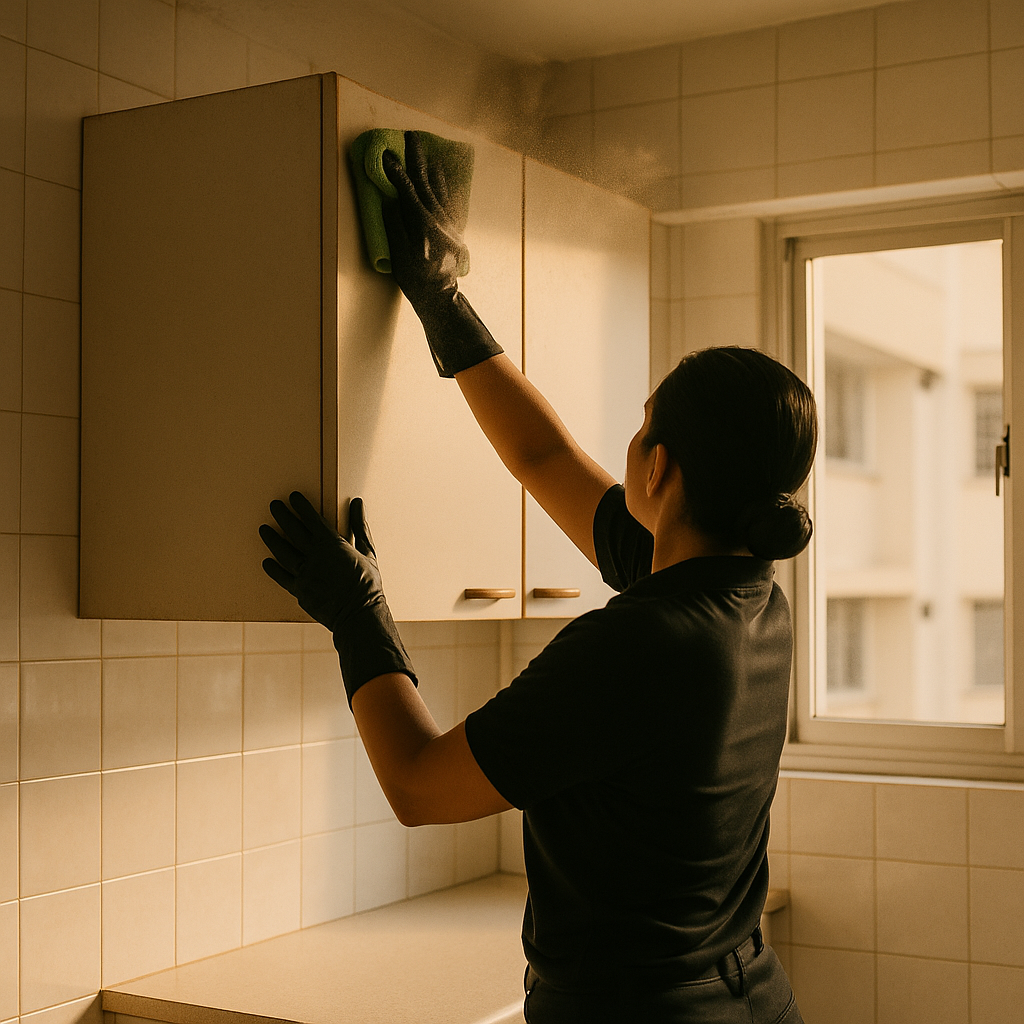
We finish every formaldehyde treatment job with a comprehensive final wipe-down of all surfaces using clean, damp microfibre cloths to remove any residue from the neutralising treatment and leave the home genuinely move-in ready. Before we leave, our team walks the homeowner through the practical steps they should follow over the next two to four weeks — how often to air the home, which furniture pieces will continue to off-gas at lower levels for months, and simple habits like avoiding long periods with all windows closed during the first year in a new BTO or condo. We also advise on choosing low-VOC paint for any touch-up work and recommend that any new furniture purchases during this settling-in period be aired on the corridor or car park before being brought inside.
Why Singapore Homeowners Choose Doctor Clean
We have cleaned hundreds of new and post-renovation homes across Singapore, and homeowners keep coming back — and referring their neighbours — because of outcomes they can actually feel, not just promises on a website. Here is what you actually get when you book Doctor Clean for formaldehyde treatment:
- Measurable smell and symptom reduction: Most clients notice a clear, significant improvement within 24 to 48 hours of our visit — not weeks of waiting and hoping the smell eventually fades on its own.
- Singapore-specific expertise: We understand how local climate conditions, BTO renovation packages, and common contractor material choices affect off-gassing severity — we tailor every job to your actual flat, not a generic checklist.
- Safe, non-toxic treatment products: The neutralising solutions our team uses are safe for homes with young children, elderly residents, and pets — we do not replace one chemical problem with another.
- Honest, transparent advice: We will tell you upfront if the off-gassing level in your home is mild enough that our standard ventilation service is sufficient, or whether a full treatment is genuinely warranted — no upselling, no scare tactics.
Frequently Asked Questions
How long does formaldehyde off-gas in a new Singapore home?
In Singapore’s heat and humidity, new homes can off-gas formaldehyde at detectable levels for anywhere from six months to three years depending on the volume of MDF furniture, laminate flooring, and adhesive-bonded materials used in the renovation. The rate is highest in the first three to six months, which is why the period right after collecting your BTO or condo keys is the most important time to act. Keeping indoor temperatures lower with air conditioning and maximising ventilation helps reduce the rate, but professional treatment significantly shortens the timeline.
Is the formaldehyde smell in new furniture dangerous?
Yes, prolonged exposure to elevated formaldehyde levels is a genuine health concern — the World Health Organisation classifies formaldehyde as a Group 1 carcinogen at high concentrations, and even at lower levels it causes eye, nose, and throat irritation, headaches, and respiratory discomfort. Children, elderly individuals, and those with asthma or allergies are most sensitive and will often show symptoms before other family members notice the smell. If anyone in your household is experiencing unexplained headaches or eye irritation after moving into a new home, do not dismiss it.
Can I just open windows to get rid of formaldehyde?
Ventilation helps but it is rarely sufficient on its own, especially for homes with a large volume of new MDF furniture or laminate flooring. In Singapore, opening windows during the afternoon when outdoor humidity is high can actually slow the off-gassing clearance process, and the chemical continues to be released from bonded materials for months regardless. Professional surface treatment combined with proper ventilation technique produces results that window-opening alone simply cannot match.
How soon after renovation can my family move in safely?
We generally recommend a minimum two-week gap between the end of renovation work and moving in full-time, but in homes with a high volume of new furniture and MDF cabinetry, professional formaldehyde treatment before move-in gives you a much safer starting point. If you have young children or an elderly parent living with you, we strongly recommend booking a treatment session before the first night you sleep in the home. Doctor Clean can typically schedule a same-week visit for new BTO and condo handover jobs across all areas of Singapore.
Ready to get this sorted? WhatsApp Doctor Clean — honest quote, no hard sell, fast reply.
 Doctor Clean