Moving into a new HDB flat, BTO, or condo in Singapore is exciting — but your furniture almost always arrives dusty, compressed, and carrying the grime of storage, lorry transport, or a previous home. Knowing how to clean upholstery after moving properly makes the difference between furniture that looks and smells fresh and pieces that quietly harbour allergens in Singapore’s humid air. Our Upholstery Cleaning service was built exactly for this transition moment, and in this guide we’ll walk you through how Doctor Clean approaches it step by step.
A Common Situation We See — Sofas and chairs that survived the move but need a real reset
Many HDB and condo owners move their fabric sofas, dining chairs, and mattresses from one unit to another and notice within days that the living room carries a faint musty or stale smell they can’t quite locate. A common case is a 4-room HDB where the family vacuumed the sofa before packing but found that moving blankets, plastic wrapping, and two days in a storage facility left the fabric with a compressed, damp-ish feel — especially in the seat cushions. Most people try a quick spray of fabric freshener or run a handheld vacuum over the surface, which removes surface debris but does nothing for the dust mites, skin cells, and micro-moisture trapped deep in the foam and weave. What actually fixes it is a proper hot-water extraction or dry-extraction clean combined with a full deodorising treatment, which resets the upholstery rather than masking the problem.
Step 1 — Inspect every upholstered surface before cleaning begins
Before our team touches any cleaning solution, we do a thorough inspection of every upholstered piece in the home. We check the fabric type — microfibre, velvet, linen blend, faux leather, or woven fabric — because the wrong cleaning method on the wrong fabric can cause shrinkage, watermarking, or colour bleed that no amount of re-cleaning will fix. We also look for pre-existing stains, structural damage to foam, and any areas where the fabric is thinning or the stitching is loose, so we can flag these to you honestly before we begin rather than after.
Step 2 — Dry vacuuming and pre-treatment of problem areas
Once we’ve completed the inspection, our team starts with a deep dry vacuum of all surfaces using a high-powered HEPA-filter machine. This stage pulls out the loose debris, pet hair, dust, and construction fine particles that moving always deposits into upholstery fibres — especially relevant if the furniture was near renovation works in the previous or new unit. We pay particular attention to crevices, armrest seams, and the base panels of sofas where debris concentrates.
- Cushion covers and removable panels are vacuumed on both sides, not just the visible face
- Armrests and backrests get a firm brush-head pass to loosen embedded particles before extraction
- Visible stains are pre-treated with an appropriate fabric-safe spotter solution matched to the stain type and fabric
“One thing most people don’t realise is that post-move upholstery often carries fine construction dust from renovation works in the new building — this dust is alkaline and can dull fabric colour over time if left untreated. Doctor Clean always dry-vacuums first so the extraction stage isn’t pushing that grit deeper into the weave.”
Step 3 — Hot water extraction or dry extraction depending on fabric
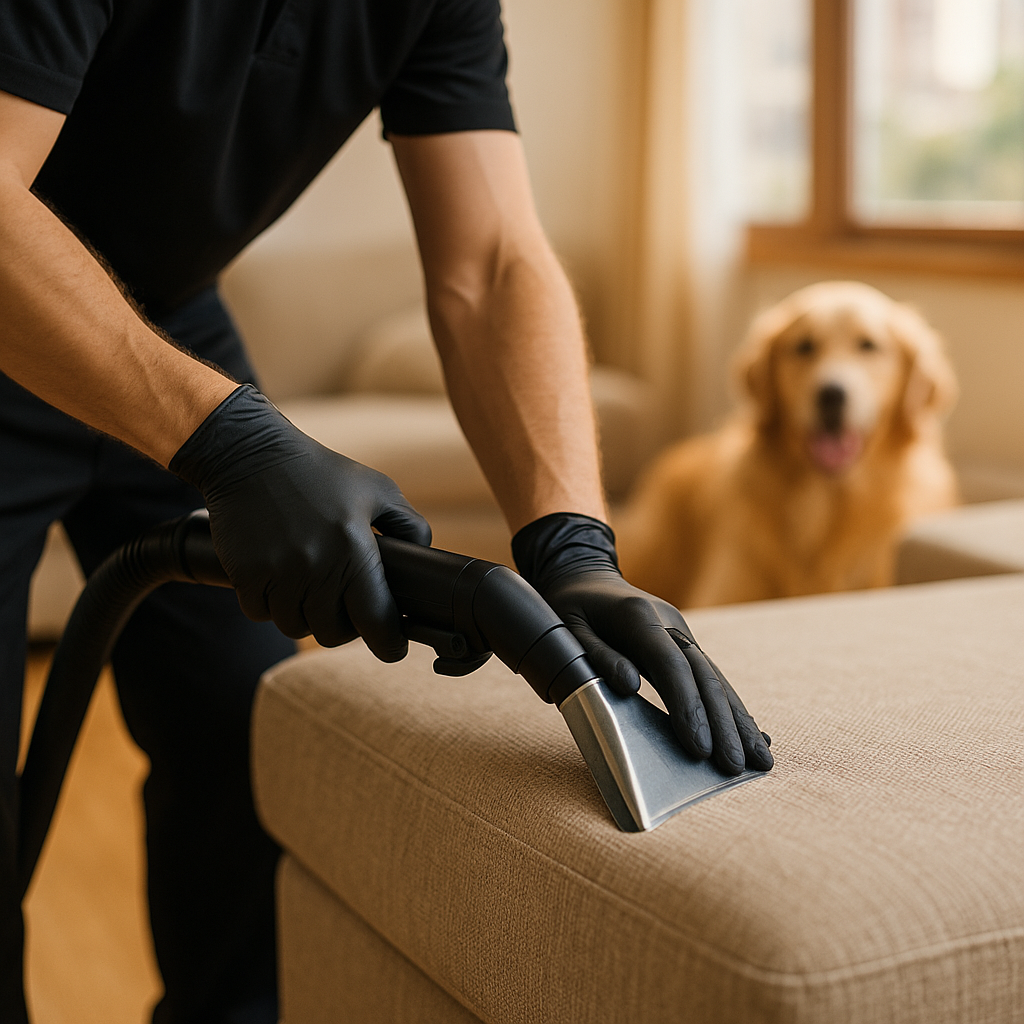
This is the core of how we clean upholstery after moving, and the method we choose depends entirely on what the fabric can handle. For most polyester-blend and microfibre sofas — which are the most common type in Singapore HDB and condo homes — hot water extraction is the gold standard. Our machine injects a precisely heated cleaning solution into the fabric at controlled pressure, agitates the fibres, and then immediately extracts the solution along with the dissolved soils, dust mites, and odour-causing bacteria. For delicate fabrics like silk-blend cushions, dry-clean-code velvet, or vintage woven pieces, we switch to a low-moisture dry extraction method that cleans without saturating the fabric. Singapore’s humidity means that over-wetting upholstery is a real risk — if furniture doesn’t dry fast enough in a 85–90% humidity environment, you can end up with mildew forming inside the cushion foam before the surface even feels dry. Our team accounts for this by calibrating extraction pressure and always ensuring airflow through windows or fan placement immediately after the clean.
Step 4 — Deodourising and fabric protection treatment
After extraction, we apply a professional-grade deodouriser that neutralises odour molecules rather than covering them with fragrance — this matters especially for furniture that has been in storage or transport, where musty or chemical smells can linger in the foam core. For customers who want an extra layer of protection after their move-in clean, we can apply a fabric guard treatment that creates a barrier against future spills and dust adhesion, which is particularly useful in homes with young children or pets. We always recommend this step for dining chairs and ottomans, which tend to be used heavily from day one and are expensive to replace. The treatment is water-based, non-toxic, and safe for households including those with babies and elderly family members — something we’re consistently asked about by families moving into new BTO flats.
Step 5 — Final inspection and drying guidance
Once the cleaning and treatment are complete, our team does a final walk-through with you so you can see the result on every piece before we pack up. We’ll give you a clear drying timeline — typically two to four hours for most fabric sofas in an air-conditioned Singapore home — and advise on whether to run the aircon, open windows, or use a standing fan depending on the humidity that day. We never rush out of a job without making sure you understand how to care for the upholstery in the first weeks after a professional clean, because that follow-up period is when the fabric is most receptive to good habits.
Why Singapore Homeowners Choose Doctor Clean
Hundreds of Singapore families trust Doctor Clean for their post-move upholstery clean, and there are specific reasons they come back and refer us to their neighbours. Our Upholstery Cleaning service covers sofas, mattresses, carpets, dining chairs, and rugs, priced from S$10.00 – S$200.00 depending on the pieces involved — check our prices for a full breakdown.
- Fabric-matched cleaning method: We never apply a one-size-fits-all approach — the extraction method, temperature, and solution are chosen for your specific fabric, which protects your furniture rather than stressing it.
- Built for Singapore conditions: Our drying protocol is calibrated for local humidity levels, so you won’t end up with upholstery that feels damp or smells worse the next morning after a wet extraction.
- Trained team, no harsh chemicals: Every Doctor Clean technician is trained on fabric types and solution chemistry, and we use non-toxic, family-safe products throughout — no strong solvent smells left behind in your new home.
- Convenient scheduling around your move-in: We work around your renovation and moving timeline, including weekend slots, so your upholstery is clean and dry before you fully settle in rather than weeks later.
Frequently Asked Questions
How soon after moving in should I clean my upholstery in Singapore?
Ideally within the first one to two weeks, before you’ve fully settled in and started using the furniture daily. Post-move upholstery carries transport dust, storage odours, and sometimes residual particles from the previous home, all of which embed deeper the longer they sit. Getting the clean done early also means the furniture is fresh and protected from day one, rather than needing a remedial clean later when stains and odours have had time to set.
Can I clean a fabric sofa myself after moving, or do I need a professional?
A surface vacuum and spot-clean with a damp cloth can handle light surface dust, but it won’t reach the dust mites, compressed grime, and odour compounds trapped in the foam and inner fibres. Singapore’s humidity makes DIY wet cleaning particularly risky — it’s very easy to over-wet a sofa cushion and end up with mildew forming inside before the surface dries. Professional extraction equipment removes moisture as it cleans, which is something a rented or household machine typically can’t replicate effectively.
What types of upholstery does Doctor Clean handle after a move?
Our team cleans fabric sofas, sectionals, armchairs, dining chairs, ottomans, mattresses, carpets, and rugs — essentially any soft furnishing that came with your move. We work across HDB flats, BTO units, condos, ECs, and landed properties island-wide. If you have a mixed household with both fabric and faux-leather pieces, we can handle both in the same visit.
How long does post-move upholstery cleaning take to dry in Singapore’s humidity?
Most fabric sofas are dry to the touch within two to four hours when the aircon is running or windows are open with a fan circulating air. Thicker cushions with dense foam cores can take up to six hours in high-humidity conditions, which is why our team always advises on the best drying setup for your specific unit before we leave. We factor Singapore’s ambient humidity into our extraction pressure so the furniture is never left wetter than necessary.
Does Doctor Clean use pet-safe and child-safe products for upholstery cleaning?
Yes — all the solutions we use for upholstery cleaning are water-based, non-toxic, and free from harsh solvents or bleaching agents, making them safe for homes with babies, young children, elderly residents, and pets. We’re frequently asked this by families moving into new BTO flats, and it’s something we take seriously rather than treat as a footnote. If you have specific sensitivities or allergies, let us know when you book and we’ll confirm the exact products we plan to use for your job.
Ready to get this sorted? WhatsApp Doctor Clean — honest quote, no hard sell, fast reply.
Tags
 Doctor Clean