If you’ve just handed over your keys after a renovation in Singapore, you already know the feeling — every surface looks grey, your nose is running, and no matter how many times you mop, the dust seems to come right back. Construction dust removal in Singapore is one of the most misunderstood cleaning challenges we deal with at Doctor Clean, and the reason is simple: the dust left behind by renovation work is fundamentally different from everyday household dust. Normal mopping doesn’t just fail to solve it — in many cases, it makes things worse.
A Real Story — A Tampines BTO Owner Who Mopped for Three Days Straight
A young couple who had just collected their keys to a brand-new 4-room BTO flat in Tampines called us after spending three exhausting days trying to clean up post-renovation dust themselves. They had mopped the floors repeatedly, wiped down every cabinet face, and even bought a new vacuum — but every morning they woke up to the same thin grey film coating the countertops and windowsills. What they didn’t realise was that the fine silica and gypsum particles from their hack-and-plaster work had settled deep into grout lines, lodged inside the air-conditioning vents, and were being redistributed each time they swept or mopped. Our team came in, ran a full post-renovation deep clean over two sessions, and when they walked through the finished flat for the first time, the wife teared up — she said it finally felt like a home, not a construction site.
Step 1 — Assess the Dust Zones Before Touching Anything
Before our team touches anything, we do a full walk-through of the unit to identify where the construction dust has settled most heavily and, crucially, where it has travelled to. Renovation dust is ultrafine — particles can be as small as 1 micron — and it migrates through gaps in doors, into wardrobes left slightly open, and deep into bathroom tile grout. In our experience cleaning hundreds of Singapore homes after renovation, the worst dust accumulation is almost never where clients expect it: it’s inside light fixture housings, on top of door frames, inside cabinet hinges, and coating the inner fins of fan coil units. Mapping the contamination zones first means we clean in the right sequence and don’t cross-contaminate areas we’ve already cleared.
Step 2 — HEPA Vacuuming Before Any Wet Cleaning Begins
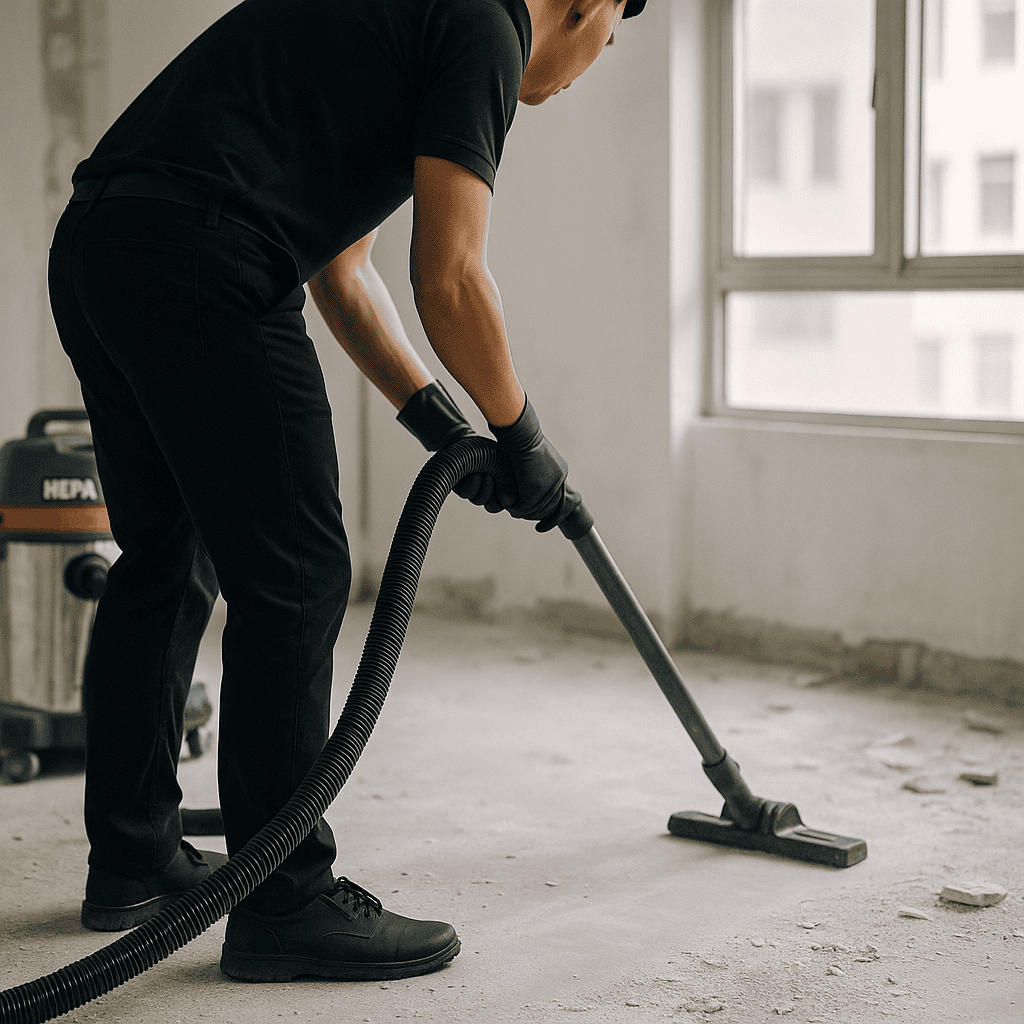
The single biggest mistake homeowners make is reaching for the mop first. When you mop construction dust, you’re not removing it — you’re turning dry particles into a paste that smears across the floor surface and gets pushed into grout lines and porous tile edges. Our team always begins with industrial-grade HEPA vacuum equipment that captures particles down to 0.3 microns, working from ceiling level downward in a strict top-to-bottom sequence. Every surface gets dry-vacuumed before a single drop of water is introduced to the space.
- Ceiling corners, cornices, and light housings vacuumed first using extension attachments
- Walls, skirting boards, window tracks, and door frames cleared of settled dust layers
- Floor surfaces — including tile grout channels and timber laminate gaps — vacuumed on low-suction setting to avoid scattering fine particles
“Most people don’t realise that construction dust contains silica — a health hazard if aerosolised repeatedly by mopping or sweeping. Doctor Clean’s team always wears N95 masks during post-reno cleans, and we strongly advise homeowners to stay out of the unit until the dry-extraction phase is fully complete.”
Step 3 — Targeted Wet Cleaning With the Right Solutions
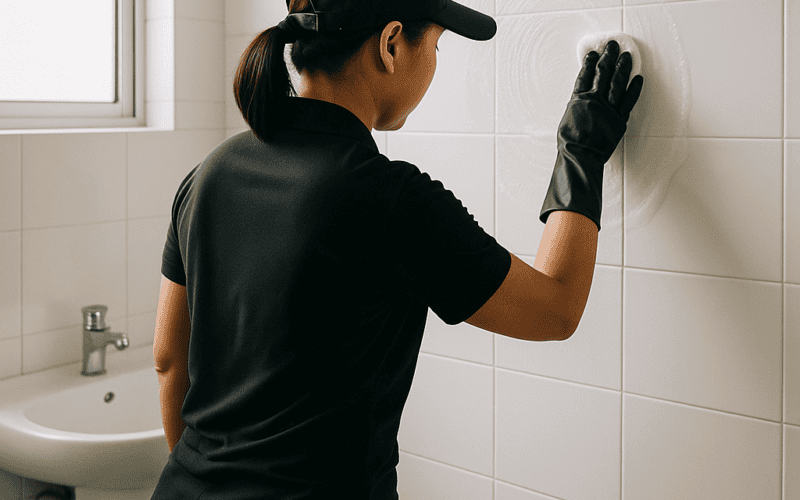
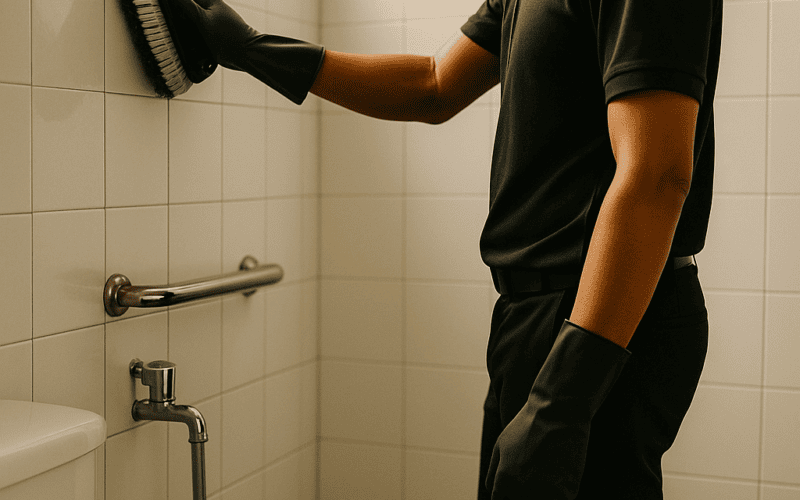
Once the dry extraction phase is done, our team moves into wet cleaning — but the solutions and methods we use are specifically chosen for post-renovation residue, not general household grime. Construction dust often contains calcium carbonate from plaster, cement alkalinity, and adhesive residue from tile-laying, all of which respond very differently to cleaning agents than typical grease or food soiling does. For cement haze on floor tiles — a common issue in newly tiled HDB kitchens and bathrooms — we use a diluted acid-based tile cleaner applied carefully and rinsed thoroughly, which dissolves the mineral deposits without damaging the glaze. For painted walls and laminate surfaces, we use a neutral pH microfibre system that lifts residue without streaking or leaving water marks. We always test on a small inconspicuous area first, especially in units with polished marble, engineered timber, or vinyl plank flooring, because the wrong product on the wrong surface can cause permanent damage that no amount of cleaning will reverse.
Step 4 — Air Handling Units and Ventilation Points
This is the step that separates a genuine post-renovation clean from a surface wipe-down, and it’s the one most cleaning companies skip entirely. During renovation, fine dust is drawn into the air-conditioning fan coil units and settles on the evaporator coils, filters, and drainage trays — and if you switch on the aircon without cleaning it first, you’ll be blowing construction particles directly into your lungs and back onto every clean surface in the room. Our team cleans all accessible air-conditioning filter grilles and inspects the louver fins for dust accumulation as a standard part of our post-renovation package. We also clear bathroom exhaust vents, kitchen hood filters if they’ve been installed pre-clean, and any fresh-air intake points. For clients in condos with centralised ventilation — particularly older developments in areas like Bishan, Toa Payoh, or Buona Vista — we pay special attention to shared duct connections that may have drawn in dust from nearby units undergoing renovation at the same time.
Step 5 — Final Inspection and White Glove Check
After all five stages of cleaning are complete, our team does a final inspection using a strong torchlight held at a low angle to the surface — the same technique used in professional property handover checks — because raking light reveals residual dust films that look invisible under normal overhead lighting. Any areas that fail the torch test get re-done on the spot before we consider the job finished. We also wipe down all switch plates, power point covers, and cabinet interior shelves as a final pass, because these are consistently the spots clients notice within the first 24 hours of moving in. Doctor Clean only signs off on a post-renovation clean when we’re confident you could run a white cloth across any surface in the unit and it would come back clean.
Why Singapore Homeowners Choose Doctor Clean
We’ve completed post-renovation cleans across HDB flats, BTOs, executive condominiums, and landed properties island-wide, and the feedback we hear most often is that clients wish they had called us first instead of spending days attempting it themselves. Here’s what you actually get when you book Doctor Clean for construction dust removal in Singapore:
- Genuinely dust-free results: Our HEPA extraction and top-to-bottom methodology removes construction dust at the particle level — not just the visible layer — so surfaces stay clean after we leave, not just for the first hour.
- No cross-contamination between rooms: We use separate equipment sets for wet and dry phases and change microfibre cloths between rooms, so we’re not dragging Bedroom 1’s dust into the kitchen — a critical detail in open-plan BTO layouts.
- Trained team, no harsh chemical shortcuts: Our team is trained specifically in post-renovation surface chemistry. We don’t use bleach or ammonia-based products on renovation-fresh surfaces, which protects your new tiles, timber, and paintwork from avoidable damage.
- Flexible scheduling around your handover timeline: We understand renovation overruns are common in Singapore. Doctor Clean offers flexible booking windows and can mobilise quickly for clients working toward a tight move-in date or tenancy start.
Frequently Asked Questions
How long does post-renovation dust removal take for an HDB flat in Singapore?
For a standard 4-room HDB flat with moderate renovation works — such as flooring replacement, painting, and carpentry — our team typically takes between 6 to 9 hours for a thorough post-renovation clean. Larger units like 5-room HDB flats, executive maisonettes, or condos above 1,200 square feet may require a two-session approach across consecutive days to do the job properly. We always do a site assessment before confirming the duration so there are no surprises on the day.
Can I just use a regular vacuum cleaner instead of hiring professionals?
Most household vacuum cleaners — including many popular bagless models — do not have true HEPA filtration, which means they capture the larger particles but exhaust the fine silica dust straight back into the room through the motor filter. This is actually worse than not vacuuming at all, because you’re aerosolising the finest and most harmful particles. Professional HEPA vacuum systems used by Doctor Clean are sealed-unit designs that trap particles down to 0.3 microns and vent clean air — that’s the critical difference.
Is post-renovation cleaning covered under HDB or developer defect liability?
No — post-renovation cleaning is the homeowner’s responsibility and is not covered under HDB’s defect liability period or any developer’s handover checklist. The defect liability period covers structural and workmanship defects in the construction itself, not the cleanliness of the unit after your own renovation works. Doctor Clean can provide a detailed invoice and service report if you need documentation for any tenancy or property management purposes.
How soon after renovation is completed should I book a dust removal clean?
Ideally, book your post-renovation clean within 48 to 72 hours of your contractor completing their final works and clearing their tools from the site. The longer construction dust sits on surfaces — particularly on new timber flooring or uncoated cement screed — the more it can become embedded and the harder it is to remove without risk of surface damage. Doctor Clean recommends not running your air-conditioning at all until after the professional clean is completed, to avoid circulating fine particles through the system before it has been inspected and cleared.
Ready to get this sorted? WhatsApp Doctor Clean — honest quote, no hard sell, fast reply.
Tags
 Doctor Clean