Key Takeaways
- Always check the fabric label, curtain condition, lining, and existing stains before applying heat or moisture.
- Different materials react differently, so sheer, blackout, lined, velvet, and delicate curtains should not be treated the same way.
- Safe results depend on controlled application, gentle movement, proper distance, and avoiding excessive dampness.
- Proper ventilation and full drying are essential to prevent odours, stiffness, uneven drape, or fabric changes.
Introduction
Curtains are among the largest fabric surfaces in a home or commercial space, yet they are often cleaned less frequently than floors, furniture, or windows. In Singapore’s humid environment, curtains are constantly exposed to dust, moisture, cooking odours, outdoor particles, and airborne pollutants. Over time, this build-up can affect indoor freshness, especially in condos, landed homes, rental units, offices, and recently renovated spaces.
Many homeowners and tenants search for how to clean curtains with a steam cleaner because steam cleaning seems convenient. It can refresh curtains while they remain hanging, which reduces the hassle of removing, washing, drying, and rehanging them. However, steam is still a combination of heat and moisture. Safe results depend on preparation, fabric type, cleaning technique, and drying conditions. Without proper care, curtains may shrink, lose their drape, develop watermarks, or become distorted.
Preparation And Environmental Conditions That Affect Steam Cleaning Results
Before starting, inspect the curtain label, fabric condition, lining, stitching, and existing stains. Some curtains may already be weakened by sun exposure, old moisture marks, or long-term dust accumulation. These areas can react differently once steam is introduced. If the care label warns against heat, moisture, or steam treatment, it is safer not to proceed with DIY steaming.
Vacuuming is an important first step before steam exposure. Loose dust should be removed with a soft brush attachment from top to bottom, especially along folds, hems, pleats, and curtain tracks. This prevents dirt from becoming damp and settling deeper into the fabric. Proper preparation also supports safer steam curtain cleaning, allowing the steam to work more evenly across the curtain surface instead of mixing with built-up particles.
Room conditions matter as well. When learning how to clean curtains with a steam cleaner, choose a dry, well-ventilated part of the day where possible. Open the windows if outdoor conditions are suitable, switch on a fan, and avoid steaming curtains in a damp or enclosed room. In Singapore, humidity can slow drying, so airflow is essential to prevent musty smells, retained moisture, and stiffness after cleaning.
How Different Curtain Types Influence Cleaning Safety And Results
Curtain material plays a major role in whether steam cleaning is suitable. Not all curtains respond the same way to heat and moisture. Some fabrics tolerate light steaming well, while others may shrink, ripple, or lose their original texture. Good curtain fabric care means understanding the material before deciding how much steam to apply, how close to hold the steamer, and whether DIY cleaning is appropriate at all.
How Lightweight And Sheer Fabrics Respond To Steam Cleaning
Lightweight and sheer curtains usually respond better to controlled steam because they are thinner and dry faster. Their structure allows moisture to evaporate more easily, reducing the risk of trapped dampness. However, this does not mean they can be steamed carelessly. Thin fabrics can still ripple, stretch, or become uneven if steam is held too close or applied for too long in one area.
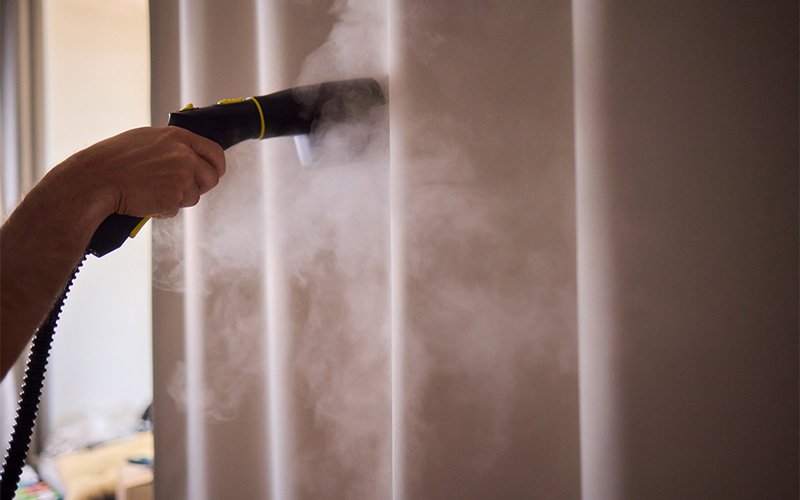
For safer results, keep the steamer at a slight distance from the curtain and move in slow, steady, downward strokes. Avoid pressing the nozzle directly onto the fabric. If you are unsure how to clean curtains with a steam cleaner when handling sheer materials, start with a small hidden section near the lower corner. Let it dry fully before checking whether the fabric texture, colour, and drape remain unchanged. Stop steaming if you notice colour transfer, puckering, watermarks, texture changes, or any change in how the fabric hangs.
How Blackout And Lined Curtains React To Steam Exposure
Blackout and lined curtains need a more cautious approach because they contain additional layers or backing. These layers can trap moisture between fabric surfaces, making them slower to dry. If too much steam is applied, the curtain may dry unevenly, which can affect how it hangs. In some cases, backing materials may soften, crease, or warp when exposed to excessive heat.
When steaming lined curtains, avoid repeated passes over the same area. Use lighter steam exposure and allow sections to cool before continuing. The aim is to refresh the surface, not saturate the entire curtain. Pay close attention to the bottom hem and side seams, as these thicker areas may hold moisture longer than the main fabric panel.
How Velvet And Delicate Fabrics Are Affected By Steam Cleaning
Velvet, silk, embroidered fabrics, and other delicate curtains are more sensitive to heat, pressure, and moisture. Velvet can lose its pile and soft texture if steam is applied too closely, while silk and fragile fibres may contract, weaken, or develop visible marks. Decorative stitching or embellishments may also respond differently from the main fabric.
For these materials, DIY steaming may not be the safest choice. A gentle fabric refresh from a distance may be acceptable for some curtains, but direct heat should be avoided unless the care label allows it. If the curtain is expensive, custom-made, or visually prominent in the room, professional assessment is usually the safer option before attempting curtain steam cleaning.
How Steam Cleaning Works And What Affects Safe Cleaning Outcomes
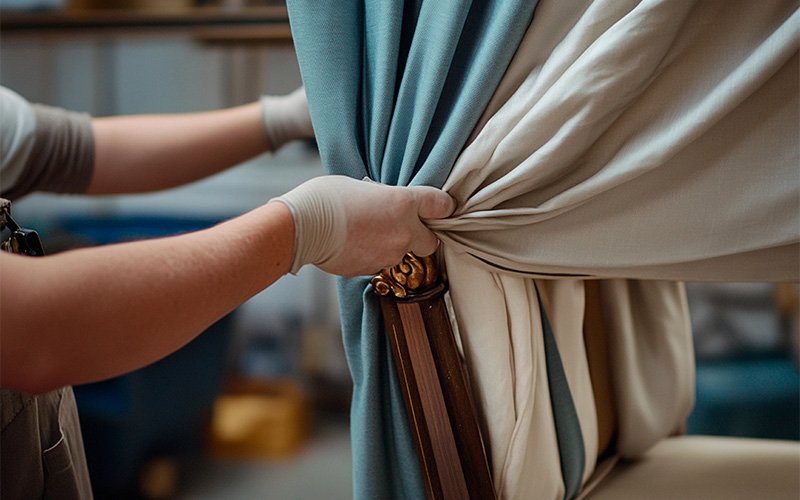
Steam cleaning uses heated vapour to loosen dust, odours, and light build-up from curtain fibres. It does not clean in the same way as full washing or dry cleaning, and it should not be used to force out heavy stains. Its main benefit is surface refreshment, especially when curtains are not heavily soiled and do not require removal.
For curtains with set-in stains, mould, heavy dust, or persistent odours, repeated steaming may not solve the issue and could add unnecessary moisture to the fabric.
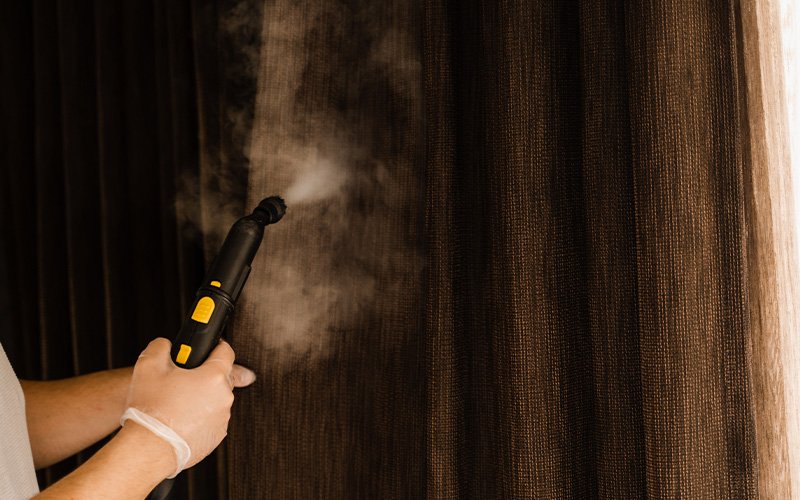
The safest way to apply steam is to work from top to bottom in controlled sections. Keep the steamer moving, avoid soaking the fabric, and allow each section to settle before moving on. When people ask how to clean curtains with a steam cleaner without shrinking or damage, the key is moderation. More steam does not mean better cleaning. Excess heat and dampness can create the very problems homeowners are trying to avoid, including shrinkage, odour, and uneven texture.
Drying Conditions That Influence Curtain Shape And Longevity
Drying has a major impact on whether curtains keep their shape after steaming. Curtains should be left fully extended rather than tied, bunched, or pushed tightly against the window. This allows air to move across the fabric more evenly. If the curtain is gathered while damp, some sections may dry faster than others, causing creases or changes in drape.
Good curtain maintenance also means checking that the lower hems, pleats, and lined sections are dry before closing the curtains fully. Fans can help improve air circulation, but strong direct heat should be avoided because it may dry some areas too quickly. In air-conditioned rooms, allow some ventilation so dampness does not linger in the fabric or surrounding area.
When Professional Curtain Cleaning Ensures Controlled And Reliable Results
There are situations where professional cleaning is the safer choice, especially for delicate, lined, blackout, or heavily soiled curtains. This is also true for end-of-tenancy cleaning, post-renovation cleaning, commercial spaces, or homes where curtains have absorbed dust, odours, or moisture over a long period. Professional cleaners can assess the fabric, level of soiling, and suitable cleaning method before treatment begins.
Doctor Clean supports residential and commercial cleaning needs in Singapore with trained cleaning crews, safe cleaning solutions, and specialised cleaning services for different property situations, including curtain cleaning and advanced fabric maintenance. For homeowners, tenants, landlords, and office managers comparing curtain cleaning options in Singapore, this support can help reduce guesswork and give curtains a more consistent finish, especially when they are difficult to remove or require careful handling.
Conclusion
Knowing how to clean curtains with a steam cleaner safely starts with understanding that steam is not suitable for every fabric or every cleaning situation. The process should begin with inspection and vacuuming, followed by careful steam application, proper ventilation, and complete drying. Lightweight curtains may tolerate gentle steaming, while lined, blackout, velvet, and delicate curtains require more caution.
For high-value curtains, post-renovation dust, rental handovers, offices, or homes that require a more thorough finish, Doctor Clean can provide dependable support as part of its broader home cleaning services in Singapore. Protect your curtains from shrinkage, moisture damage, and uneven results by speaking with our team for curtain cleaning support tailored to your fabric type, room conditions, and cleaning needs.
Tags

 Doctor Clean