
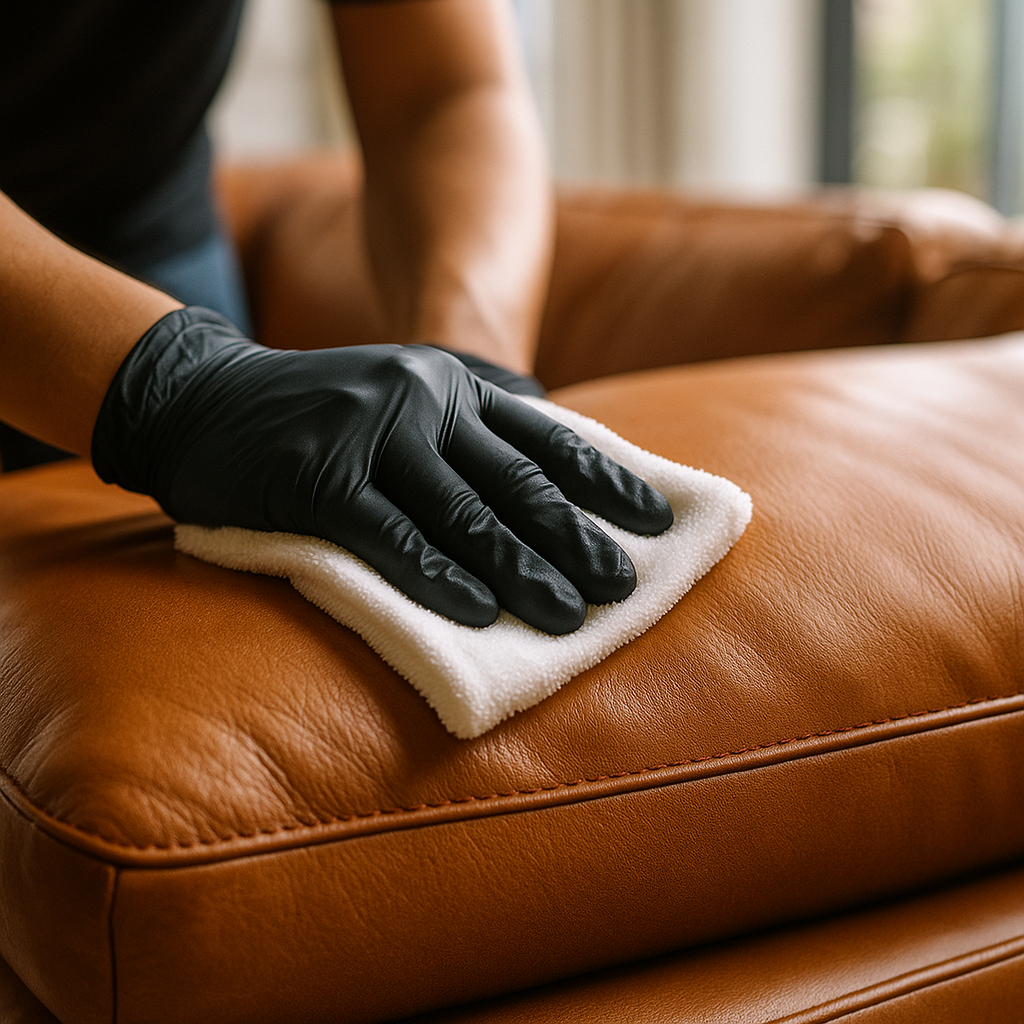
Singapore’s humidity is quietly destroying leather sofas all over the island — from Punggol BTO living rooms to Orchard Road condos. Leather that looked showroom-perfect six months after purchase starts cracking, darkening, or growing a faint white mould bloom before most homeowners even realise what’s happening. If you’re searching for leather sofa cleaning Singapore solutions, this guide covers exactly what our team uses, what we avoid, and the mistakes we see homeowners make almost every week.
A Real Story — The Bishan Condo Sofa That Almost Got Thrown Out
A homeowner in a Bishan condo called Doctor Clean after her three-year-old Italian leather sofa developed a patchy white haze across the seat cushions — a classic case of leather mould caused by Singapore’s high humidity and insufficient airflow near the air-con unit. She had already tried wiping it down with a damp cloth and then, out of desperation, a diluted bleach solution she found in an online forum — which stripped the leather’s protective coating and left two cushions visibly lighter than the rest. When our team arrived, we assessed the damage, confirmed the coating loss, performed a deep leather clean with a pH-balanced conditioner, and applied a protective sealant matched to the original finish. She messaged us two days later to say the sofa looked better than it had in years, and she’d already recommended us to her neighbour on the same floor.
Step 1 — Assess the Leather Type Before Touching Anything
Before our team touches anything, we identify exactly what kind of leather we’re dealing with — because the wrong product on the wrong leather type causes damage that can’t be undone. Singapore homes commonly have full-grain leather, corrected-grain leather, bonded leather, and increasingly, PU or semi-aniline finishes that look real but behave completely differently under cleaning agents. We do a simple water droplet test: genuine full-grain leather absorbs a small drop slowly, while coated or bonded leather beads it up. This single step saves our clients from expensive mistakes and tells us which cleaning method and product range to bring out.
Step 2 — Remove Surface Debris and Test Every Product First
Once we know the leather type, we remove all loose dust, crumbs, and debris before any liquid touches the surface. Using a soft-bristle brush or low-suction vacuum with a fabric nozzle, we work along the seams and crevices where food particles and dead skin cells collect — these are the main food source for mould in Singapore’s climate. We never skip this step, even on sofas that look clean, because applying any cleaning solution over trapped grit causes micro-scratching across the leather grain. After dry removal, we always patch-test our chosen cleaner on a hidden area — typically the back panel or underside of a cushion — and wait five minutes before proceeding.
- Soft-bristle upholstery brush along all seam lines and cushion edges
- Low-suction vacuum with fabric attachment — never a hard plastic nozzle directly on leather
- Patch test on hidden panel with chosen cleaner before full application
“One thing most homeowners don’t realise: the underside of leather cushions in Singapore often has active mould growth months before any visible sign appears on the seat surface. Our team always flips and checks every removable cushion — it changes the entire cleaning approach.”
Step 3 — Clean With the Right Products, Not Whatever’s Under the Sink
This is the step where most DIY attempts go wrong, and it’s the call we get most often after something has already been damaged. For genuine and corrected-grain leather, our team uses a pH-balanced leather cleaner — typically in the 5.0 to 7.0 range — applied with a damp (not wet) microfibre cloth in small circular sections. We work panel by panel, never flooding the surface, and we’re especially careful around stitching and piping where moisture collects and causes the thread to rot over time in Singapore’s humidity. Products we never use on leather include baby wipes (they contain alcohol and fragrance), standard household multipurpose sprays, vinegar, baking soda pastes, and anything with bleach — all of these either dry out the leather, strip the finish, or leave a residue that accelerates cracking. For bonded or PU leather, which is extremely common in Singapore HDB and BTO homes due to its lower price point, we use an even gentler approach because the material is far more sensitive to moisture and friction. The goal at this stage is to lift surface grime and any early-stage mould without disrupting the leather’s natural oils or protective coating.
Step 4 — Treat Stains and Mould With Targeted Solutions
Singapore’s humidity means mould is not a rare event — it’s a when, not an if, especially for leather sofas positioned near windows, below air-con units, or in poorly ventilated HDB living rooms. For surface mould, our team applies a leather-safe antimicrobial solution and works it in gently with a soft cloth, then allows a proper dwell time before wiping off. We never scrub mould aggressively, because that spreads spores across a wider area and can drive them deeper into the leather grain. For ink stains, grease marks, or stubborn dark patches from body oils — particularly common on armrests and headrests — we use targeted leather ink remover or isopropyl alcohol at very low concentration, applied with a cotton swab to the exact stain rather than the whole panel. Colour transfer stains from denim jeans, which we see constantly on lighter leather sofas in Singapore homes, require a leather degreaser followed by careful conditioning to prevent the cleaned area from looking patchy against the untreated sections.
Step 5 — Condition and Protect to Extend the Leather’s Life
Cleaning without conditioning is one of the most common mistakes we see — it leaves the leather clean but dry, which accelerates cracking, especially in air-conditioned Singapore homes where the cool, dry air pulls moisture from the leather surface continuously. Our team applies a quality leather conditioner after every clean, working it in evenly and allowing it to fully absorb before buffing to a gentle sheen. For clients who want longer-lasting protection, we offer a leather sealant application that creates a barrier against spills, UV yellowing, and moisture — a smart investment for anyone with young children, pets, or a sofa positioned near a sunny window in a west-facing condo unit.
Why Singapore Homeowners Choose Doctor Clean
We’ve cleaned leather sofas across Singapore — from Tampines HDB flats to Sentosa Cove bungalows — and our clients keep coming back because we treat every piece of furniture like it matters. Here’s what sets us apart:
- Leather-specific expertise: We identify your exact leather type before choosing any product — no guesswork, no one-size-fits-all approach that damages your sofa.
- Singapore climate knowledge: We understand how humidity, air-con, and poor ventilation affect leather differently here compared to temperate countries — our methods are built for this environment.
- Safe, tested products: Doctor Clean uses pH-balanced, leather-safe solutions with no harsh bleaches or abrasive chemicals — your sofa is protected, not just cleaned.
- Honest, hassle-free service: We give you a straight quote upfront, arrive on time, and won’t upsell services you don’t need — just clear, professional work you can see and feel.
Frequently Asked Questions
How often should I clean my leather sofa in Singapore?
For Singapore homes, we recommend a light wipe-down with a dry microfibre cloth weekly to prevent dust and skin-oil buildup, and a proper professional leather clean every six to twelve months depending on usage. Homes with young children, pets, or high foot traffic should lean toward the six-month interval. Singapore’s humidity also means conditioning every three to four months is good practice even between professional cleans.
Can I use baby wipes or wet wipes to clean my leather sofa?
We strongly advise against it — this is one of the most common causes of leather damage we see in Singapore homes. Most wet wipes contain alcohol, fragrance compounds, and preservatives that strip the leather’s natural oils and protective finish over time, leaving it dry, cracked, and discoloured. Use a barely damp plain microfibre cloth instead, and follow up with a proper leather conditioner.
Is my leather sofa covered under any warranty if it gets damaged by cleaning products?
Most furniture warranties in Singapore explicitly exclude damage caused by improper cleaning products or DIY treatments — so it’s worth checking your documentation before attempting any home cleaning. If your sofa is still under warranty, using an unverified product or method could void your coverage entirely. Professional cleaning by a qualified team like Doctor Clean is often the safer and more cost-effective route when the sofa still has warranty value.
What’s the white haze or bloom appearing on my leather sofa?
That white haze is almost certainly mould or a condition called “spew” — where fats and waxes from the leather manufacturing process migrate to the surface, triggered by humidity and heat fluctuations common in Singapore homes. Both issues look similar but require different treatments, so correct identification matters before you attempt any cleaning. Don’t wipe it with water alone — this spreads the problem. Contact our team for an assessment and we’ll tell you exactly what you’re dealing with and the best way to fix it safely.
Ready to get this sorted? WhatsApp Doctor Clean — honest quote, no hard sell, fast reply.
 Doctor Clean