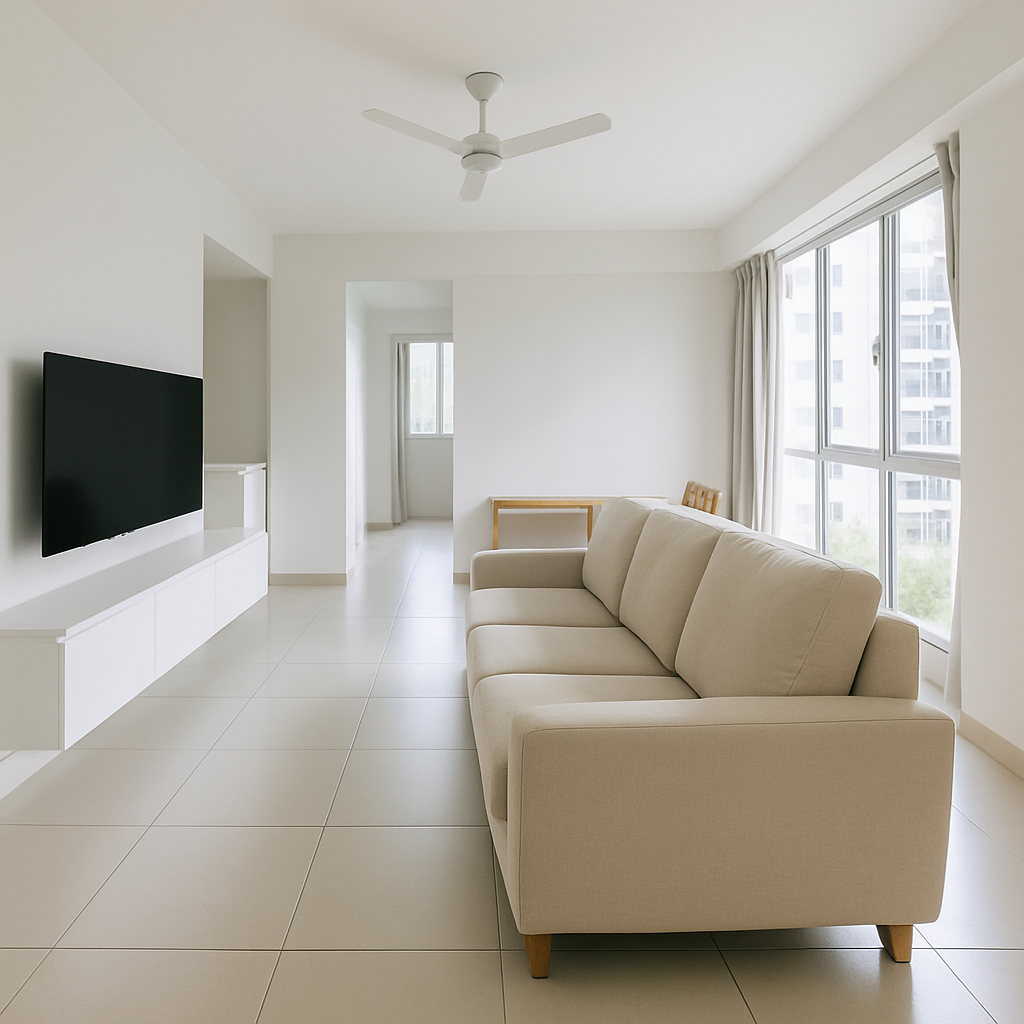
Singapore’s humidity is brutal on sofas — sweat, cooking smells, and the occasional kopi spill have a way of sinking deep into fabric fibres before most homeowners even notice the damage. Sofa cleaning Singapore-style isn’t just about wiping down surfaces; it’s about extracting what’s trapped inside the foam, the weave, and the seams. At Doctor Clean, we’ve restored hundreds of sofas across HDB flats, condos, and landed homes — and we’re going to walk you through exactly what works, and what doesn’t.
A Real Story — The Tampines EC Sofa That Smelled Fine Until It Didn’t
A couple in a Tampines executive condominium contacted us after their three-year-old light beige fabric sofa developed a persistent musty smell they couldn’t explain — no pets, no visible stains, just an odour that seemed to get worse after rainy weather. They’d tried a supermarket upholstery spray and even rented a handheld steam cleaner from a hardware shop in Tampines Mall, but the smell kept coming back within days. When our team arrived, we found moisture had been trapped in the sofa’s lower cushion foam, likely from the unit’s aircon condensation dripping nearby — classic Singapore problem, and one that surface sprays can never fix. After our full extraction and deodorising treatment, the smell was completely gone, and the couple told us it was the first time in over a year the living room felt fresh again.
Step 1 — Inspect the Sofa Fabric and Identify the Problem
Before our team touches any cleaning solution, we always start with a thorough inspection of the sofa — fabric type, construction, stain age, and any manufacturer care codes stitched into the lining. This matters enormously in Singapore, where sofas range from microfibre and velvet to synthetic blends and genuine leather, and each material reacts very differently to water, heat, and cleaning agents. We check for hidden problem zones: the base of armrests, the crevice between seat cushions, and the back panel closest to the wall — all spots where dust mites and moisture accumulate in our humid climate. Rushing this step is one of the main reasons DIY sofa cleaning attempts in Singapore go wrong.
Step 2 — Deep Vacuum and Dry Soil Extraction
The second step is a thorough dry vacuum using a high-powered HEPA machine with upholstery attachments — not a standard household vacuum. Most homeowners are surprised by how much dry debris, skin cells, and dust mite matter we pull out before any liquid is applied. Skipping this step and going straight to wet cleaning just pushes soils deeper into the fibres, which is exactly why some sofas smell worse after a DIY clean than before.
- Full surface vacuum of seat, back, armrests, and base panels
- Crevice tool along all seams, piping, and cushion gaps
- Underside and leg area cleared of accumulated dust and debris
- Spot-check for loose threads or fragile weave that needs extra care
“One thing most people don’t realise: vacuuming a sofa properly takes our team 10 to 15 minutes alone — any less and you’re only skimming the surface. In Singapore’s climate, that dust and organic matter sitting in the fibres is what feeds the mould and odours that come back every wet season.”
Step 3 — Pre-Treat Stains and Problem Zones
Once the dry debris is removed, Doctor Clean applies targeted pre-treatment solutions to any visible stains or heavily soiled areas — and this is where experience really counts. Different stains need different chemistry: a milk or food stain on a fabric HDB sofa needs an enzyme-based solution to break down the protein, while a grease mark from a hawker meal requires a different emulsifier entirely. We never use a one-size-fits-all spray, because on delicate materials like velvet or woven cotton blends common in condo furniture showrooms, the wrong solution can cause permanent colour bleeding or fibre damage. We also pay close attention to the edges of old stains, which often have a concentrated ring of residue that needs softening before the main clean — miss those edges and you’ll see a faint halo reappear as the sofa dries. Pre-treatment dwell time is typically five to ten minutes depending on the stain type and fabric weight, and we never rush this.
Step 4 — Hot Water Extraction or Dry Foam Cleaning
This is the core of what we do, and the method we choose depends entirely on what we found in Steps 1 and 3. For most fabric sofas — microfibre, polyester blends, and synthetic weaves that are common in BTO and resale HDB flats — we use hot water extraction, where a cleaning solution is injected into the fibres under controlled pressure and then immediately vacuumed back out along with the loosened soil and moisture. The result is a genuinely deep clean that reaches the mid-layer of the cushion, not just the surface. For more delicate or water-sensitive materials like velvet, silk-blend cushions, or certain vintage fabrics, we switch to a dry foam method that uses minimal moisture and is far safer for the fibre structure. In both cases, our team controls the water temperature, pressure, and dwell time precisely — because over-wetting a Singapore sofa in a humid HDB flat without proper extraction is a fast way to create a mould problem far worse than the original stain. Every step of this process is calibrated to the specific sofa in front of us.
Step 5 — Deodorise, Protect, and Speed-Dry
After the main clean, Doctor Clean applies a professional-grade deodouriser that neutralises odour molecules at the source rather than masking them with fragrance — this is especially important for sofas in Singapore homes with pets, cooking smells, or tobacco exposure. Where the customer requests it, we also apply a fabric protector that forms an invisible barrier on the fibres, making future spills bead up and wipe off before they can soak in. Finally, we use high-velocity air movers to accelerate drying time, which in Singapore’s humidity is critical — a properly extracted sofa should be dry to the touch within two to four hours, not left damp overnight where mould risk rises sharply.
Why Singapore Homeowners Choose Doctor Clean
We’ve cleaned sofas in Bishan HDB flats, Sentosa Cove villas, Punggol BTO units, and everything in between — and the reasons clients come back to us are pretty consistent. Here’s what they actually tell us matters:
- Results that last: Our extraction process removes what’s actually inside the sofa, not just what’s sitting on top — so the clean holds for months, not days.
- Safe for Singapore homes: We use solutions that are child-safe and pet-safe, which matters enormously in the compact HDB and condo spaces most Singapore families live in.
- Trained, experienced team: Every Doctor Clean technician is trained in fabric identification and stain chemistry — we don’t send general cleaners with a spray bottle to do a specialist job.
- Honest scoping, no upsell surprises: We’ll tell you upfront if a stain is permanent or if a particular fabric has limitations — no inflated promises, no shock charges when we arrive.
Frequently Asked Questions
How much does sofa cleaning cost in Singapore?
Sofa cleaning Singapore pricing typically depends on the size of the sofa, the fabric type, and the condition — a standard 3-seater fabric sofa usually starts from around $80 to $120 for a professional clean, while L-shaped or sectional sofas are priced higher due to the larger surface area. Leather sofas involve different products and techniques and are generally priced separately. At Doctor Clean, we provide a transparent quote after a quick photo assessment via WhatsApp — no surprises on the day.
Can sofa cleaning remove old, set-in stains?
It depends on the stain type, how long it’s been there, and the fabric — and we’ll always be honest with you about this upfront. Many old stains, including food, sweat, and drink spills, respond very well to our enzyme pre-treatment and hot water extraction even after months. However, certain dye-based stains like ink or turmeric on light-coloured fabric may be permanently set, and no professional cleaner can guarantee full removal — anyone who does is overselling.
How long does it take for a sofa to dry after cleaning?
With Doctor Clean’s extraction method and air movers, most fabric sofas are dry to the touch within two to four hours in normal Singapore aircon conditions. We strongly recommend keeping the aircon running and avoiding sitting on the sofa until it’s fully dry, as residual moisture in humid Singapore air can cause re-soiling or, in extreme cases, mildew if the sofa is covered or pushed against a wall too soon.
Is professional sofa cleaning safe for children and pets?
Yes — Doctor Clean uses cleaning solutions that are formulated to be safe for households with young children and pets once dry. We avoid harsh solvents and always rinse thoroughly during the extraction process to ensure no chemical residue is left in the fibres. If you have a particularly sensitive household, just let us know when you book and we’ll confirm the exact products we plan to use for your sofa type.
How often should I have my sofa professionally cleaned in Singapore?
For most Singapore households, we recommend a professional sofa clean every six to twelve months — more frequently if you have young children, pets, or if anyone in the home has allergies or asthma, since sofas are one of the biggest reservoirs of dust mites in a typical HDB or condo. In between professional cleans, a quick weekly vacuum and prompt blotting of any spills will go a long way toward keeping your sofa in good shape.
Ready to get this sorted? WhatsApp Doctor Clean — honest quote, no hard sell, fast reply.
Tags

 Doctor Clean