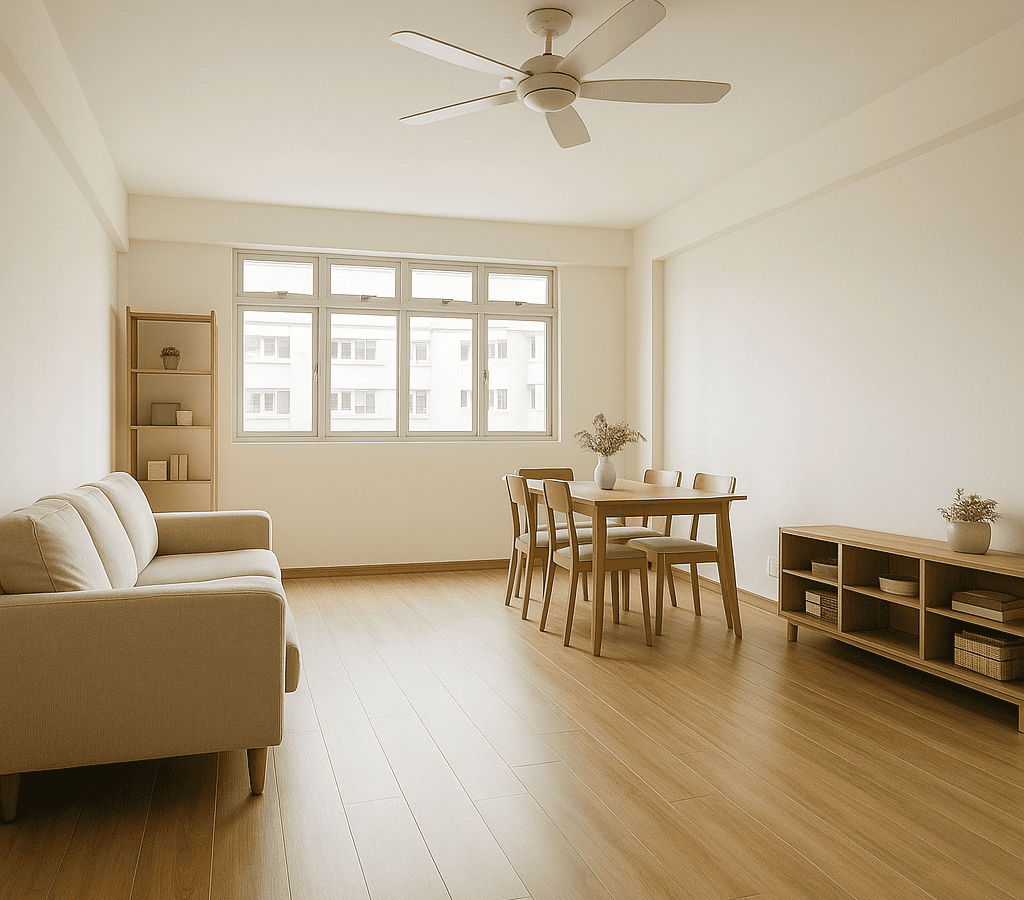
Spring cleaning Singapore homes is never just a quick wipe-down — between the year-round humidity, greasy kitchen extraction fans, and the dust that settles into every corner of an HDB or condo unit, a proper spring clean is a serious undertaking. Most homeowners we speak to underestimate how much has quietly built up behind appliances, inside cabinets, and along those hard-to-reach ceiling cornices. Our team at Doctor Clean has put this checklist together based on what we actually do when we walk into a Singapore home for a full spring clean — not theory, but the real sequence that gets results.
A Real Story — The Tampines BTO That Hadn’t Been Deep Cleaned in Three Years
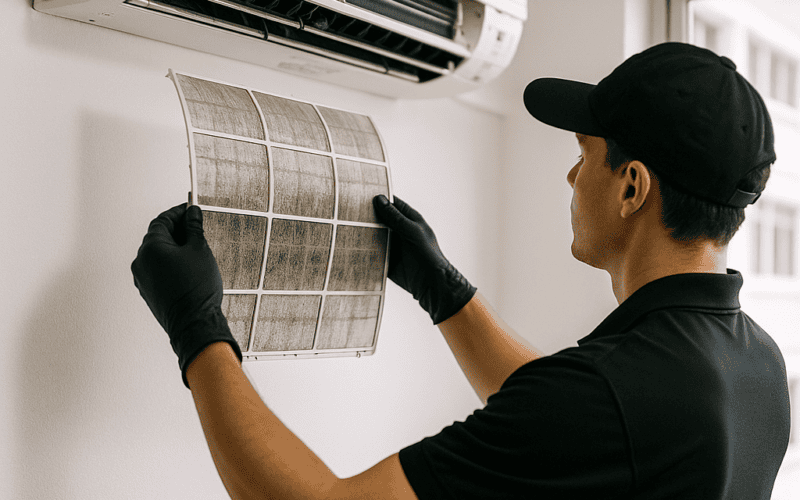
A couple in a Tampines BTO 5-room flat reached out to us after spending an entire weekend trying to spring clean themselves — they’d mopped, wiped surfaces, and vacuumed, but the flat still felt stale and grimy in the corners that mattered most. The kitchen hood filter was black with grease, the bathroom grout had turned a persistent grey-brown despite their scrubbing, and the ceiling fan blades were so caked with dust that running it just redistributed the problem. When our team arrived, we worked through the full checklist in a single day — extraction fan filter degreased, grout treated and restored, fans cleaned blade by blade, and every air-con filter removed and washed. The husband messaged us the next morning to say his wife cried a little when she walked into the kitchen — in a good way — because it finally looked the way it did when they first collected their keys.
Step 1 — Assess the Flat Before Touching Anything
Before our team touches anything, we do a full walk-through of the unit — room by room, noting the problem areas, the surface types, and anything the homeowner has flagged. In our experience cleaning hundreds of Singapore homes, the biggest mistake people make is diving straight into mopping the floor when the ceiling fans, light fixtures, and top-of-cabinet surfaces haven’t been done yet — you just contaminate the floor again. We identify the sequence, confirm the cleaning products appropriate for each surface (marble countertops in a Bishan condo need very different treatment from laminate in an older Queenstown HDB), and set expectations with the homeowner before we start.
Step 2 — Work Top to Bottom, Room by Room
Our team always cleans from the highest point in the room downward — this is non-negotiable during a spring clean because dust, debris, and cleaning product residue all fall. In a typical Singapore HDB or condo, this means we work through:
- Ceiling fan blades, light fittings, and cornices — wiped down with a damp microfibre cloth to capture dust rather than scatter it
- Cabinet tops, shelving, curtain tracks, and door frames — surfaces that rarely get touched during regular cleaning and accumulate a thick layer of grime over months
- Window tracks, grilles, and sill ledges — in Singapore’s humid climate these collect both dust and mould, especially in north-facing rooms or units near greenery
- Walls and skirting boards — scuff marks, water stains near aircon units, and grime lines at floor level are cleaned before we ever mop
- Floors last — vacuumed, then mopped with the appropriate solution for the floor type, whether vinyl, ceramic tile, timber laminate, or marble
“One thing most homeowners don’t realise: the aircon ledge above your indoor unit collects so much dust and mould that it can affect your air quality even after you’ve cleaned everywhere else. Doctor Clean always treats this area specifically — it’s often the hidden culprit behind that musty smell that just won’t go away.”
Step 3 — The Kitchen Gets Its Own Session
The kitchen in any Singapore home — whether it’s an open-concept condo or a wet-and-dry HDB layout — is always the most labour-intensive part of a spring clean, and it deserves dedicated time rather than being rushed through as part of a general wipe-down. Our team degrease the extraction hood filter, the hob surface and burner caps, the oven interior if there is one, the tiles behind the stove, and the underside of wall cabinets, which collect an invisible film of airborne grease that turns sticky and dark over time. We pull out the fridge where possible to clean behind and underneath it — this area is a magnet for grime, food debris, and sometimes mould growth because of the warm air the compressor exhausts. Cabinet interiors get emptied, wiped, and re-lined if needed, and the sink basin, tap fixtures, and draining area are descaled and polished — limescale builds up fast in Singapore given the water mineral content, and a spring clean is the right time to address it properly rather than just wiping around it.
Step 4 — Bathrooms, Tile Grout, and the Mould Problem
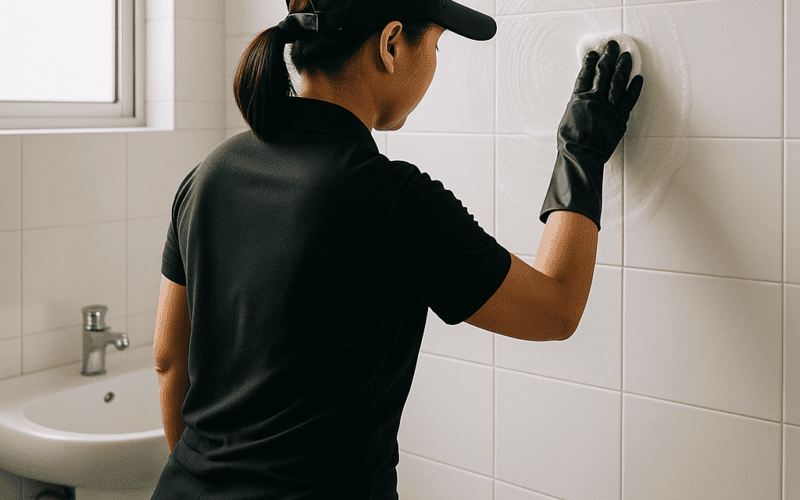
Singapore’s humidity means bathrooms in even well-ventilated HDB and condo units develop mould and soap scum faster than most homeowners can keep up with between regular cleans. During a spring clean, our team goes beyond the standard scrub — we apply a targeted grout cleaner and let it dwell on the grout lines before agitating with a stiff brush, which is the only way to actually lift the discolouration rather than just bleach the surface temporarily. Shower screens get a full descaling treatment because that cloudy calcium film that builds up over months requires a specific acid-based product applied with dwell time, not just a spray-and-wipe. We clean behind and around the toilet base, the concealed pipework areas, the exhaust fan grille, and the ceiling — bathroom ceilings in Singapore are notorious for black mould spots that most people only notice when they look up during a spring clean. If there’s a bathtub, the grout at the tub surround and the overflow cover both get specific attention because they’re the spots that catch water and never fully dry.
Step 5 — Final Check, Air Quality, and Handover
Once every room has been completed top to bottom, our team does a full walk-through with the homeowner — we don’t leave until any areas of concern are re-addressed and the client is happy with the result. We also recommend running the aircon units for fifteen to twenty minutes after the clean to help clear any residual cleaning product scent and to circulate fresh air through the unit, especially important in Singapore where windows are often kept closed for aircon efficiency. If any issues were identified during the clean — a grout line that needs resealing, a window track that’s showing early rust, a mould spot that has penetrated the paint — we flag it honestly so the homeowner knows what to watch for or address with a contractor.
Why Singapore Homeowners Choose Doctor Clean
We’ve done this long enough to know that a spring clean is only worth it if the result actually lasts and the process doesn’t leave you with damaged surfaces or more stress than you started with. Here’s what clients consistently tell us matters most:
- Real deep cleaning, not surface wiping: Our team goes behind the fridge, into the grout, along the ceiling cornices, and inside the cabinets — the places that make the actual difference to how your home feels and smells.
- Surface-appropriate products for Singapore homes: We use different solutions for marble, vinyl, laminate, ceramic, and stainless steel — no one-size-fits-all approach that risks damaging your finishes, which is especially important in newer BTO and EC units with premium fittings.
- Trained team, professional equipment: Every Doctor Clean crew member is trained in our cleaning sequence and uses professional-grade microfibre, extraction tools, and degreasers — not supermarket products that leave residue.
- Honest scoping and no hard sell: We tell you upfront what’s included, what isn’t, and whether your unit needs more or less than the standard package — you get a clear quote before we start, and we don’t add surprise charges on the day.
Frequently Asked Questions
How long does a spring cleaning session take for an HDB flat in Singapore?
For a standard 4-room HDB flat, our team typically takes between six and eight hours for a full spring clean — smaller 3-room units may be done in four to five hours, while a 5-room or jumbo flat can run to eight to ten hours depending on condition. Condos with more bathrooms or larger kitchen areas take longer because those rooms are the most labour-intensive. We always give an estimated duration upfront so you can plan your day accordingly.
Is spring cleaning different from a regular home cleaning session?
Yes — significantly. A regular home cleaning session covers the surfaces you see and use daily: mopping, vacuuming, wiping counters, cleaning bathrooms and the kitchen hob. A spring clean goes much deeper — cabinet interiors, ceiling fans, grout lines, behind appliances, window tracks, and areas that aren’t touched during routine cleaning. Think of it as a full reset for your home rather than maintenance upkeep.
Do I need to be home during the spring cleaning?
Many of our clients in Singapore provide access and leave us to work — we’re used to operating independently in HDB flats and condos, and we’ll update you by WhatsApp if we encounter anything that needs your input. That said, we do recommend being available at the start for the walk-through and at the end for the handover check, even if you step out in between. It’s the best way to make sure we’ve addressed your specific priorities.
How often should I do a spring clean for my Singapore home?
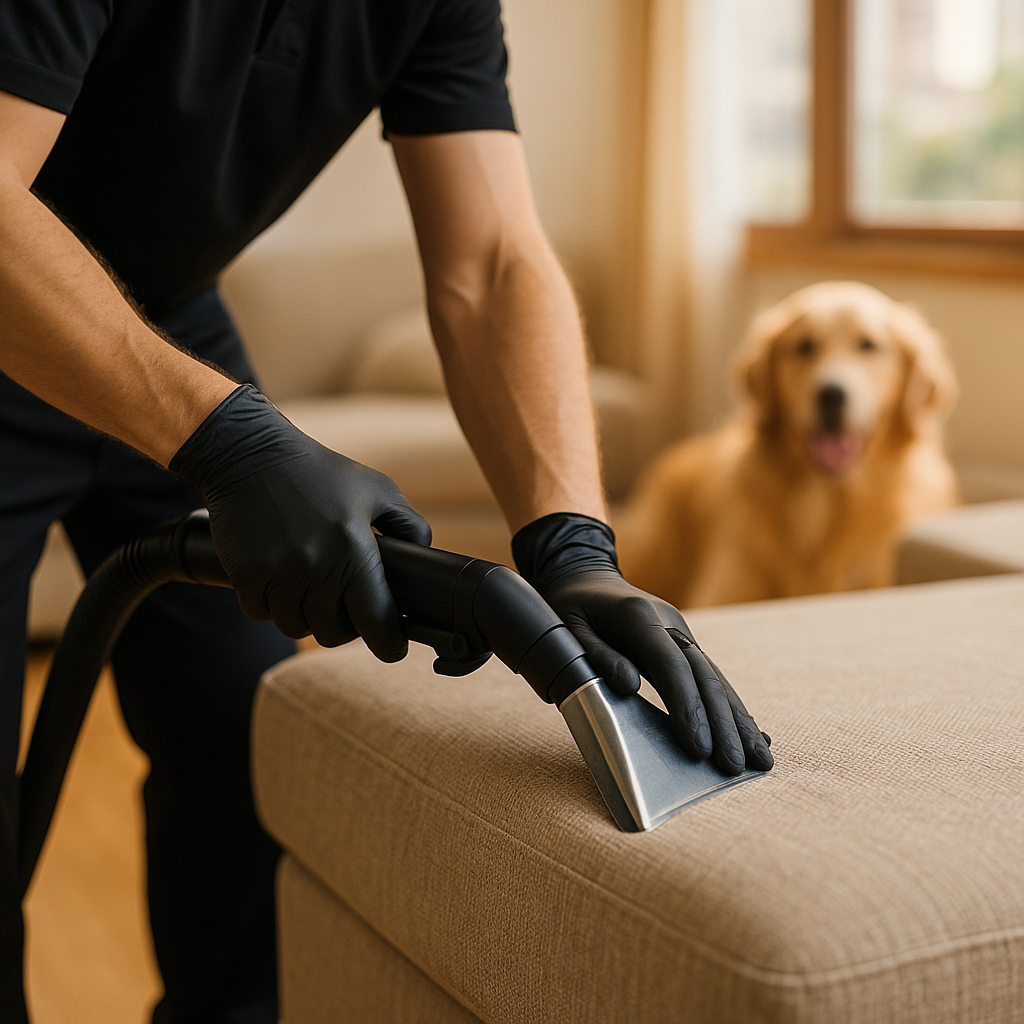
For most Singapore households, once a year is the minimum we’d recommend — typically around Chinese New Year or after a long holiday period when the home has been closed up. If you have young children, pets, or live in a humid-facing unit prone to mould (north-facing, low-floor, near MRT construction), twice a year is worth considering. Homes that have regular weekly or fortnightly cleaning maintenance between spring cleans will obviously be in better shape and the spring clean itself will take less time.
Ready to get this sorted? WhatsApp Doctor Clean — honest quote, no hard sell, fast reply.
Tags
 Doctor Clean