
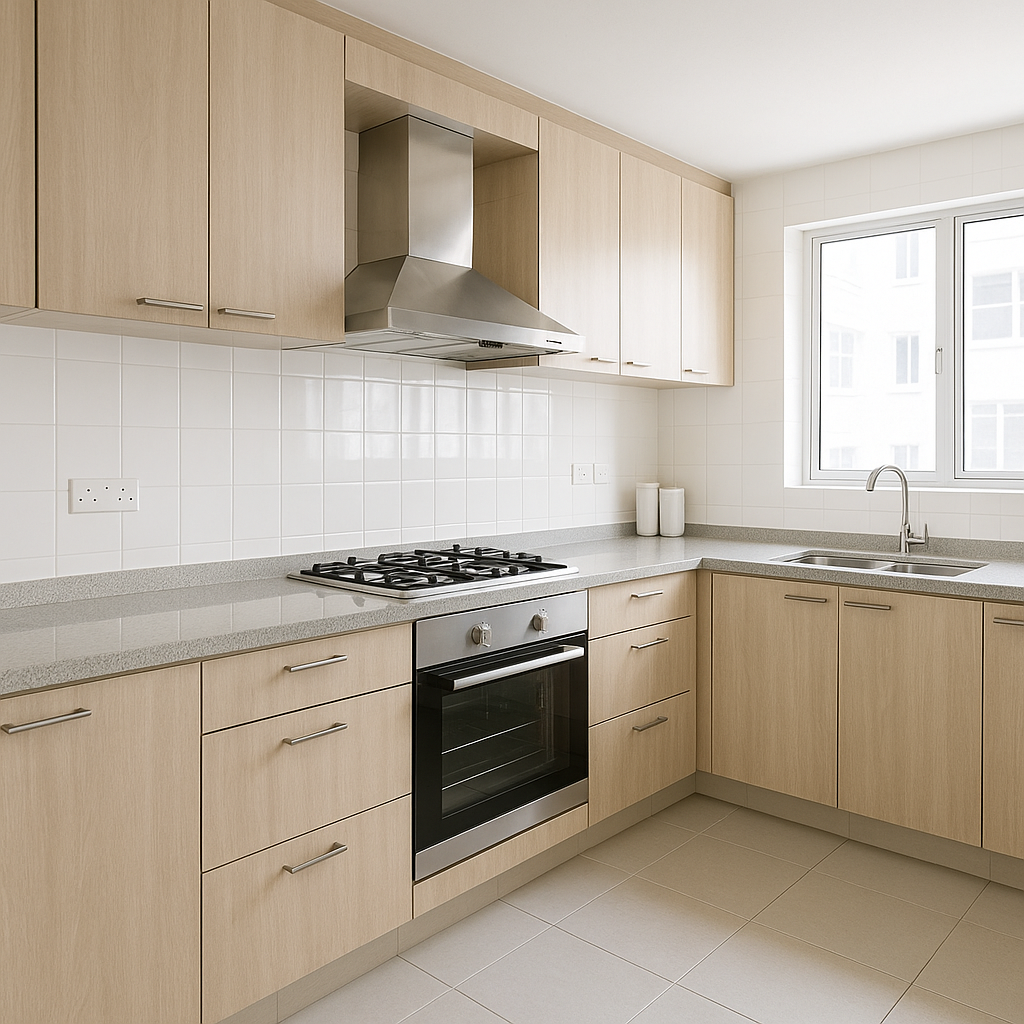
Singapore kitchens work harder than almost anywhere else in the world — daily stir-fries, curry nights, and the relentless humidity mean grease and grime build up in places most home cooks never think to check. If you’ve been wiping down your counters and calling it clean, you’re missing at least half the picture. Kitchen deep cleaning Singapore homes actually need goes far beyond the visible surfaces, and after cleaning hundreds of HDB flats, BTOs, and condos across the island, our team at Doctor Clean knows exactly where the hidden buildup lives.
A Real Story — The Toa Payoh HDB That Smelled Fine But Wasn’t
A homeowner in a Toa Payoh 4-room HDB reached out to us after noticing her kitchen smelled faintly stale even after mopping — she’d been cooking daily for three years and regularly wiped her hob and counters, but the smell lingered no matter what she tried. She bought a commercial degreaser from the supermarket and scrubbed for an afternoon, but the odour came back within days. When our team arrived, we found the source immediately: thick grease had polymerised along the top of her kitchen cabinets, inside the hood filter housing, around the hinges of her oven door, and along the skirting behind her refrigerator — all spots she’d never touched. After a full deep clean, she WhatsApped us the next morning to say it was the first time in years her kitchen genuinely smelled like nothing, and that she finally felt at ease cooking for her family again.
Step 1 — Assess the kitchen before lifting a single cloth
Before our team touches anything, we do a full visual assessment of the kitchen — checking ventilation, grease distribution, surface materials, and the condition of the hood, oven, and cabinet interiors. This isn’t just a formality; it tells us which degreasers are safe for your specific surfaces, whether your tiles are grouted or sealed, and how long the job will realistically take. In Singapore kitchens especially, we look for signs of trapped humidity — discolouration on cabinet bases, mould beginning at sealant lines, and rust around metal fixtures — because these need a different approach than simple grease removal. Getting the assessment right is what separates a genuine deep clean from a surface wipe-down.
Step 2 — Target the 10 areas most home cooks never clean
This is the core of what kitchen deep cleaning Singapore homes truly need. Most home cooks clean what they can see at eye level, but the worst buildup is almost always hiding in these overlooked spots. Our team systematically works through each one using the right tools and degreasers for each surface type.
- Top of kitchen cabinets: Grease aerosols from cooking rise and coat this surface in a thick, sticky film that attracts dust and hardens over time — most homeowners haven’t looked up here in years.
- Inside the hood filter housing and fan blades: Even if you clean your mesh filters monthly, the housing behind them and the fan blades themselves accumulate a dense grease layer that restricts airflow and creates fire risk.
- Oven door hinges, seals, and inner glass: The inner glass panel on most Singapore ovens is actually double-layered and food drips between the panes — it requires disassembly to clean properly.
- Behind and beneath the refrigerator: Dust, grease vapour, and the occasional dropped food item create a mat of debris that degrades your fridge’s efficiency and is a known cockroach harbour.
- Cabinet hinge recesses and door edges: Grease and moisture collect in the grooves around hinges and along the inner lip of cabinet doors, softening the laminate over time.
- Sealant lines along the hob, sink, and countertop edges: Singapore’s humidity turns these silicone seals into a breeding ground for black mould within months of installation.
- Drain trap and sink base cabinet interior: Even without a visible leak, moisture under the sink creates mould on the cabinet base and inside the drain trap collar.
- Tile grout behind the hob: Grease and spatter discolour grout within weeks of cooking and are nearly impossible to remove without the right tools once they’ve set.
- Burner caps and the area under the hob grates: Removing and soaking burner caps reveals carbonised food deposits that block gas flow — a common cause of uneven flames in HDB kitchens.
- The underside of overhead shelves and spice racks: Grease vapour coats the underside of anything hung near the stove, and this surface almost never gets wiped during routine cleaning.
“One thing most Singapore homeowners don’t realise is that their kitchen hood may look clean on the outside while the internal housing is coated in centimetres of compacted grease — and a dirty hood is a genuine fire hazard, not just a hygiene concern. At Doctor Clean, we always inspect the full hood assembly, not just the removable filters, and we’ll tell you honestly if the situation is beyond cleaning and the unit needs replacement.”
Step 3 — Degrease surfaces with the right product for each material
One of the most common mistakes we see after homeowners attempt their own kitchen deep clean is using the wrong product on the wrong surface — alkaline degreasers on natural stone countertops, abrasive scrubbers on laminate cabinets, or bleach-based sprays on coloured grout. In our experience cleaning hundreds of Singapore kitchens, this causes more long-term damage than the grease itself. Doctor Clean uses a tiered approach: heavy-duty alkaline degreaser for stainless steel and ceramic tile, enzyme-based cleaners for grout and sealant lines, and pH-neutral solutions for laminate, wood veneer, and stone surfaces like quartz or marble. Each product is left at the correct dwell time — this is critical, because wiping too early means you’re just spreading grease around rather than lifting it. We also work in sections so that dwell times don’t overlap with rinsing, keeping the process methodical and the results consistent across every surface type.
Step 4 — Scrub, rinse, and dry in the correct sequence
The sequence of scrubbing, rinsing, and drying matters more than most people expect, especially in a Singapore kitchen where humidity means surfaces stay damp for longer than they should. Our team scrubs from top to bottom so loosened grease and debris falls onto surfaces we haven’t cleaned yet, never back onto clean ones. After scrubbing, we rinse with clean water and then immediately dry each section with microfibre cloths — leaving surfaces wet, even briefly, encourages mould growth on grout and sealant lines, which undoes the cleaning work within days. For the hood interior and oven, we do a secondary wipe-down after the initial rinse to make sure no degreaser residue remains, as residue can smoke or smell the first time the appliance is used at high heat. This level of care is what makes the result last weeks longer than a basic clean.
Step 5 — Final inspection and homeowner walkthrough
Once every section is complete, our team does a full inspection under torch light — checking sealant lines, hood housing, oven seals, and cabinet interiors for anything we’ve missed or that needs a second pass. We then walk the homeowner through what we found, what we cleaned, and any maintenance advice specific to their kitchen — for example, which sealant lines are beginning to fail and should be replaced within the next few months, or whether their hood filter needs replacing rather than just cleaning. This handover takes five to ten minutes but it’s one of the things our customers consistently mention in their feedback, because it means they leave the experience actually understanding their kitchen better, not just with a cleaner one.
Why Singapore Homeowners Choose Doctor Clean
We’ve built our reputation one kitchen at a time across HDB towns, new BTO launches, and condos from Buona Vista to Punggol — and here’s what our customers tell us actually makes the difference.
- We clean what others skip: Our team uses a documented 10-area checklist for every kitchen job, so nothing gets missed — not the hood housing, not the grout behind the hob, not the skirting behind the fridge.
- Safe products for Singapore homes: We use surface-appropriate, non-toxic degreasers throughout — no harsh fumes that linger in a closed HDB kitchen or affect families with young children or elderly members.
- Trained, experienced team: Every Doctor Clean cleaner is trained on surface compatibility and product usage — we’ve seen what the wrong cleaner does to quartz countertops and laminate cabinets, and we won’t let that happen in your home.
- Honest, no-surprise pricing: We assess the job before quoting, so the price you agree to is the price you pay — no add-ons at the end because the oven turned out to be worse than expected.
- Fast turnaround and easy booking: Most kitchen deep cleans are completed in three to five hours, and you can book with a single WhatsApp message — no forms, no waiting on hold, no hard sell.
Frequently Asked Questions
How long does a kitchen deep cleaning in Singapore usually take?
For a standard HDB 3-room or 4-room kitchen, our team typically takes between three and four hours to complete a full deep clean covering all ten areas. Larger kitchens in condos or landed properties, or kitchens with heavy grease buildup from years without a deep clean, can take five to six hours. We’ll give you a realistic time estimate after a quick photo assessment over WhatsApp before we confirm your booking.
How often should I book a kitchen deep cleaning in Singapore?
For households that cook daily — which is the norm in most Singapore HDB flats — we recommend a professional kitchen deep clean every six to twelve months. If you cook heavy dishes like curry or deep-fry regularly, every four to six months is more appropriate, as grease polymerises quickly in Singapore’s heat and becomes significantly harder to remove the longer it’s left. In between professional cleans, a monthly wipe-down of your hood filters and cabinet tops will slow the buildup considerably.
Can Doctor Clean deep clean a kitchen in a new BTO flat after renovation?
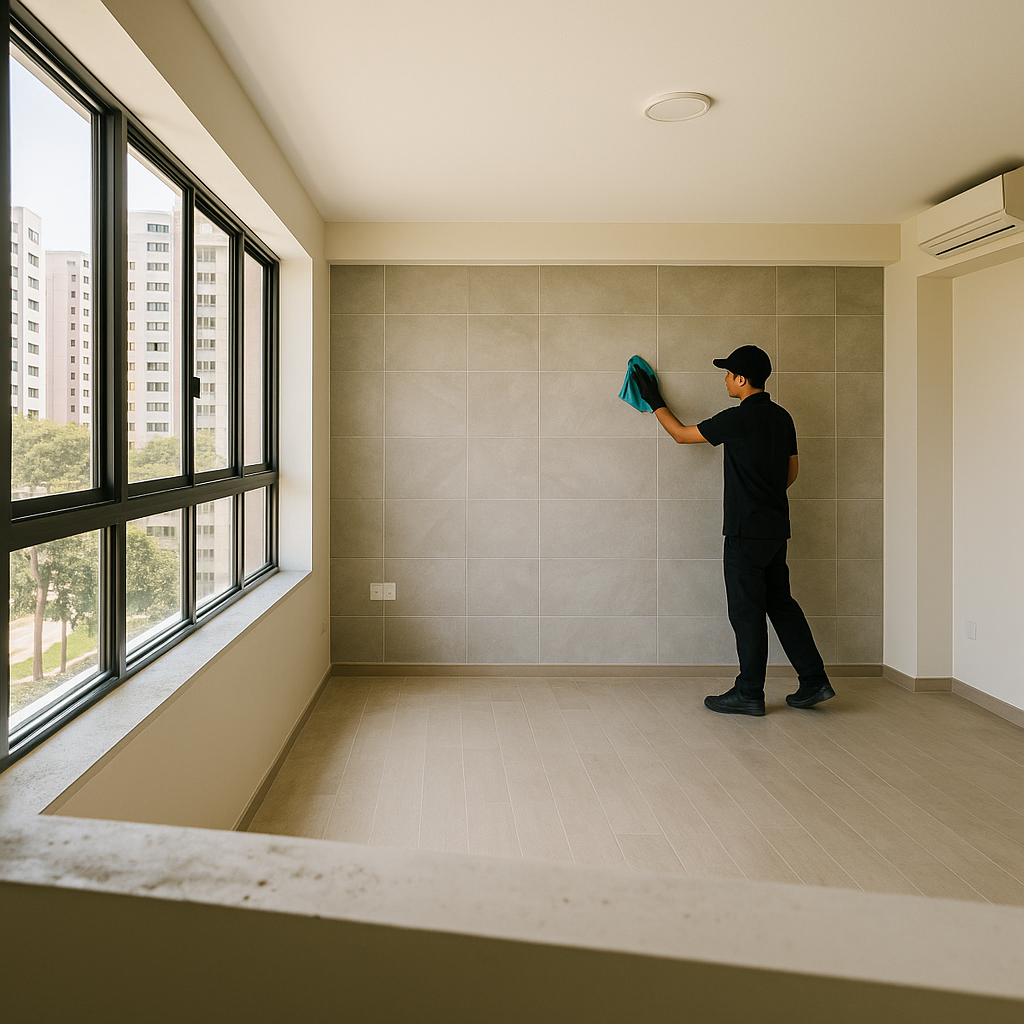
Yes, and post-renovation kitchen cleaning is one of our most common requests. After renovation work, Singapore BTO kitchens are left with cement dust on cabinet interiors, adhesive residue on tiles, silicone smears on fixtures, and construction debris behind appliances — all of which require specific removal methods different from standard grease cleaning. Our team handles post-reno kitchen cleans regularly and we bring the right tools and products for the job from the start.
Is it safe to use your cleaning products around children and pets?
All the products Doctor Clean uses in kitchen deep cleaning are selected to be safe for residential use, and we ensure the space is fully rinsed and dried before we leave. We recommend keeping children and pets out of the kitchen during the cleaning process as a precaution — not because of toxicity, but simply because we’re moving appliances and working with wet surfaces. The kitchen is completely safe for normal use, including cooking, immediately after our team finishes.
Do I need to empty my cabinets before the Doctor Clean team arrives?
For a standard kitchen deep clean, you don’t need to empty every cabinet — our team focuses on exterior surfaces, hinges, tops, and the areas around and beneath appliances. However, if you’d like us to clean inside your cabinets and drawers, we ask that you empty them beforehand so our team can work efficiently and you can check everything before repacking. Just let us know when you book and we’ll factor it into the time estimate.
Ready to get this sorted? WhatsApp Doctor Clean — honest quote, no hard sell, fast reply.
 Doctor Clean