
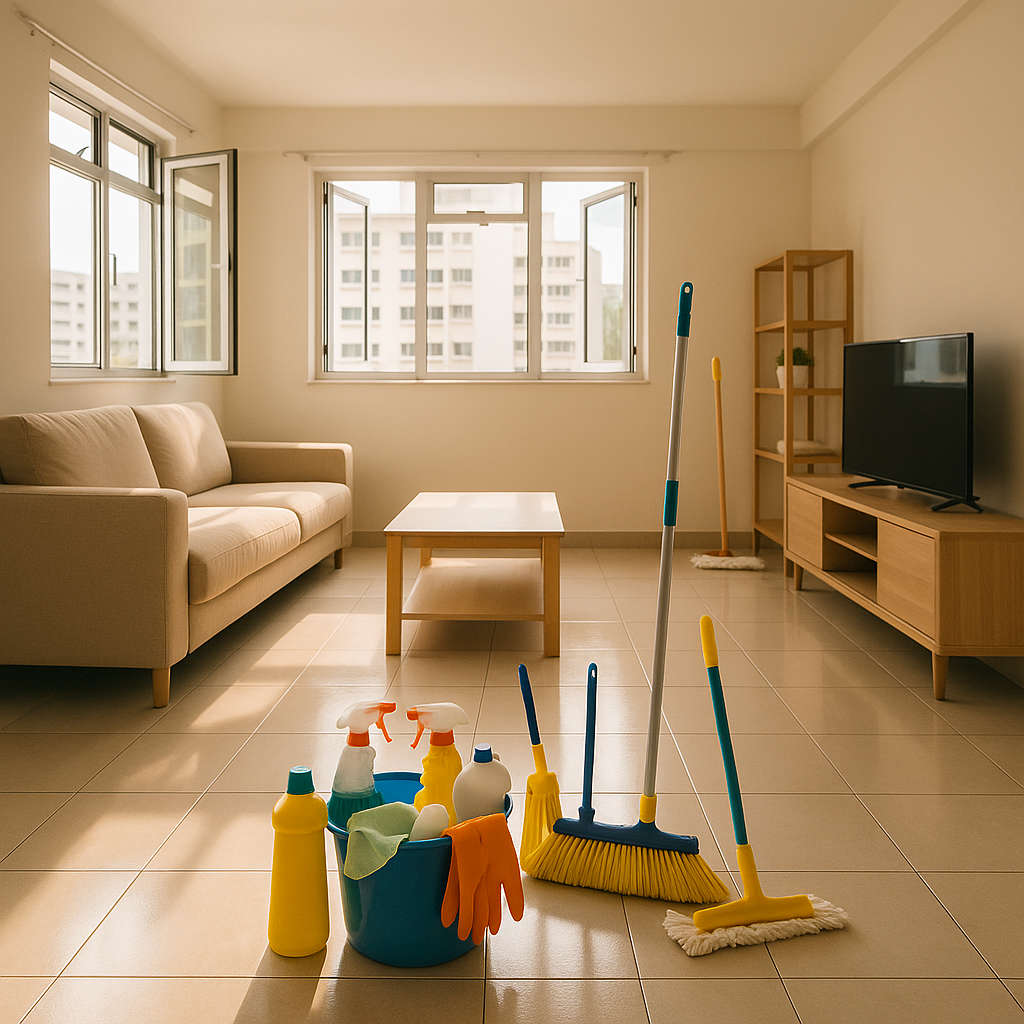
Every Chinese New Year or year-end school holiday, thousands of Singapore homeowners pull out the mop and tell themselves this time they’ll do a proper spring clean — only to realise two hours in that they’ve barely scratched the surface. If you’ve been searching for a reliable spring cleaning checklist Singapore homes actually need, this is the one: we’ve built it from years of cleaning HDB flats, BTOs, condos, and landed properties across the island, and it covers the 50 areas most people walk right past. Singapore’s humidity, open-window cooking culture, and dense urban living mean grime builds up in places you genuinely wouldn’t think to look.
A Real Story — A Toa Payoh HDB family who thought they were done
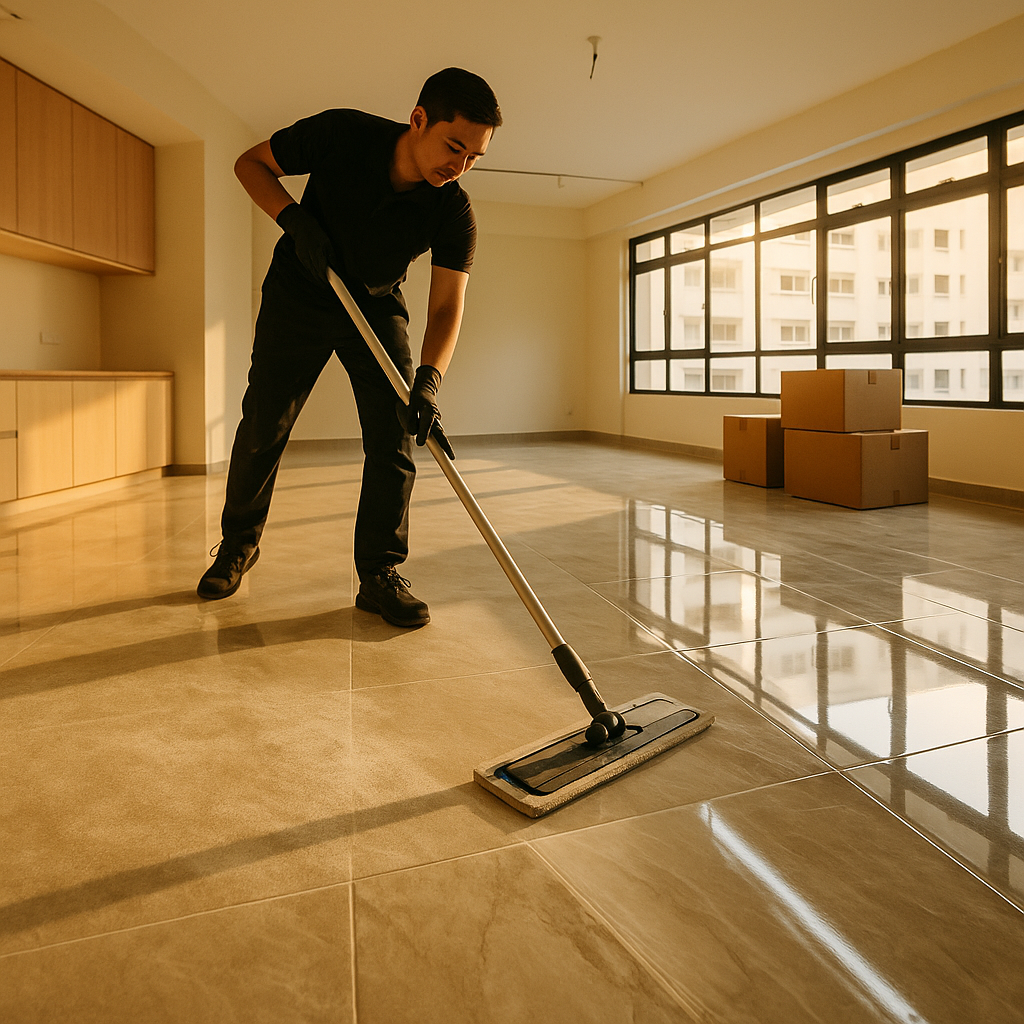
Last March, a family living in a 4-room HDB flat in Toa Payoh contacted us after spending an entire Saturday cleaning before CNY. They’d mopped the floors, wiped the counters, and scrubbed the bathroom — and still felt like something was off when guests arrived. When our team did a walkthrough, we found thick grease behind the kitchen exhaust hood, mould colonies along the silicone seals of every window frame, a refrigerator coil caked in dust, and curtain tracks so grimy they were leaving black marks on the curtains themselves. Within four hours, Doctor Clean had worked through our full checklist and the flat smelled and looked genuinely different — the homeowner’s exact words were “I didn’t know it could feel this clean.” That’s the difference between a surface wipe-down and a real spring clean.
Step 1 — Start with a zone-by-zone assessment before touching anything
Before our team touches anything, we walk the entire home and flag every problem area — we call this the pre-clean audit. This isn’t just about knowing where to start; it’s about making sure we don’t spread grime from one area to another, which is the most common mistake DIY spring cleaners make. In our experience cleaning hundreds of Singapore homes, the audit almost always uncovers at least five to eight areas the homeowner had completely forgotten about, from ceiling fan blade buildup to the gunk sitting inside sliding door tracks. We document what we find, agree on priorities with the homeowner, and then work room by room in a deliberate sequence — wet areas last.
Step 2 — Tackle the 50 overlooked areas, room by room
This is the heart of any proper spring cleaning checklist Singapore homes require. Most people clean what they can see easily — they miss everything at eye level on walls, above head height, and behind or beneath furniture. Here’s the shortlist of the areas our team hits that most homeowners skip entirely:
- Kitchen: Inside the exhaust hood and filter mesh, behind the refrigerator, inside the refrigerator drip tray, the rubber door seal of the fridge, inside the microwave turntable well, the stovetop knob bases, the underside of kitchen cabinets, the gap between the oven and cabinetry, inside the dish rack tray, and the bin cabinet interior
- Living room and bedrooms: Ceiling fan blade edges and motor housing, the tops of picture frames and wall-mounted TVs, air-conditioner vents and louvre fins, curtain tracks and rod brackets, window frame channels and rubber seals, the undersides of sofas and bed bases, inside wardrobe top shelves, light switch plates, power socket surrounds, and the corners where skirting boards meet the floor
- Bathrooms and wet areas: Behind and beneath the toilet cistern, the toilet flush button recess, shower head nozzle holes, silicone grout lines along walls and floors, the underside of the basin counter lip, the inside of the bathroom exhaust fan grille, the drain cover and the trap below it, glass shower screen edges, the toothbrush holder base, and the back of the bathroom door
- Often-forgotten whole-home areas: The front door frame top edge, the letter box interior, window grille bars, the underside of stair treads (landed), balcony drainage outlets, service yard ceiling and pipes, utility meter box surrounds, and the floor under every appliance including the washing machine
“One thing Doctor Clean always tells homeowners: Singapore’s humidity means mould doesn’t just grow in bathrooms — we regularly find it on the back walls of wardrobes, inside air-con units, and along window seals in north-facing bedrooms. If you only clean the surfaces you use every day, you’re missing where the real biological buildup is happening.”
Step 3 — Deep clean all fabric and soft furnishings properly
Fabric surfaces are where odours, dust mites, and allergens accumulate the fastest in a Singapore home, and they’re almost always left out of a basic spring clean. Our team uses hot-water extraction or steam cleaning on sofas, mattresses, and fabric chairs — vacuuming alone shifts surface dust but doesn’t penetrate the fibres where mites and skin cells have been accumulating for months. In HDB flats with open windows year-round, curtains absorb cooking fumes, cigarette odours from corridors, and general outdoor pollutants at a rate most homeowners underestimate — we’ve extracted genuinely dark rinse water from curtains that looked clean to the naked eye. For condos with blackout roller blinds, we wipe each blind panel individually because dust accumulates in layers on the textured surface. If you have a mattress that hasn’t been professionally cleaned in over a year, that’s the single highest-impact item to add to your spring cleaning checklist — Singapore’s humidity accelerates dust mite breeding faster than in temperate climates.
Step 4 — Sanitise, not just clean, every high-touch surface
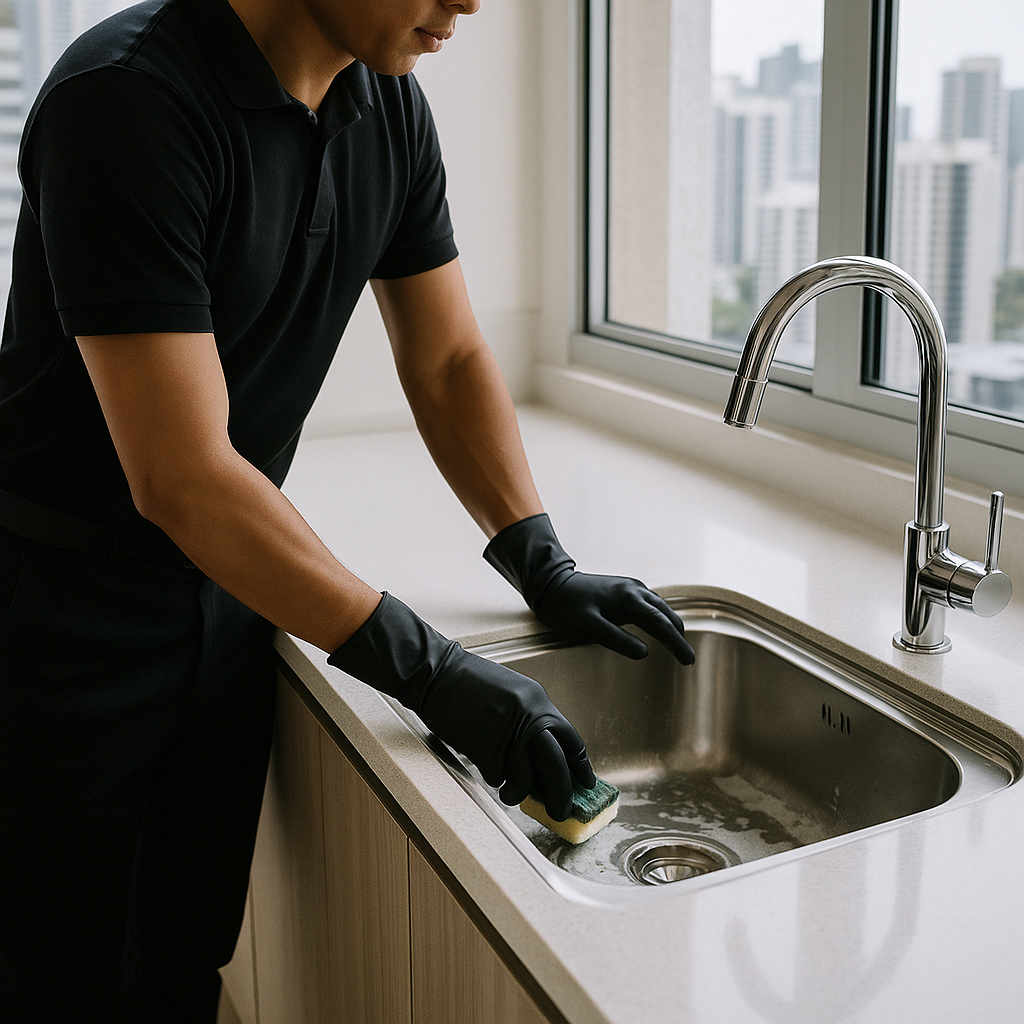
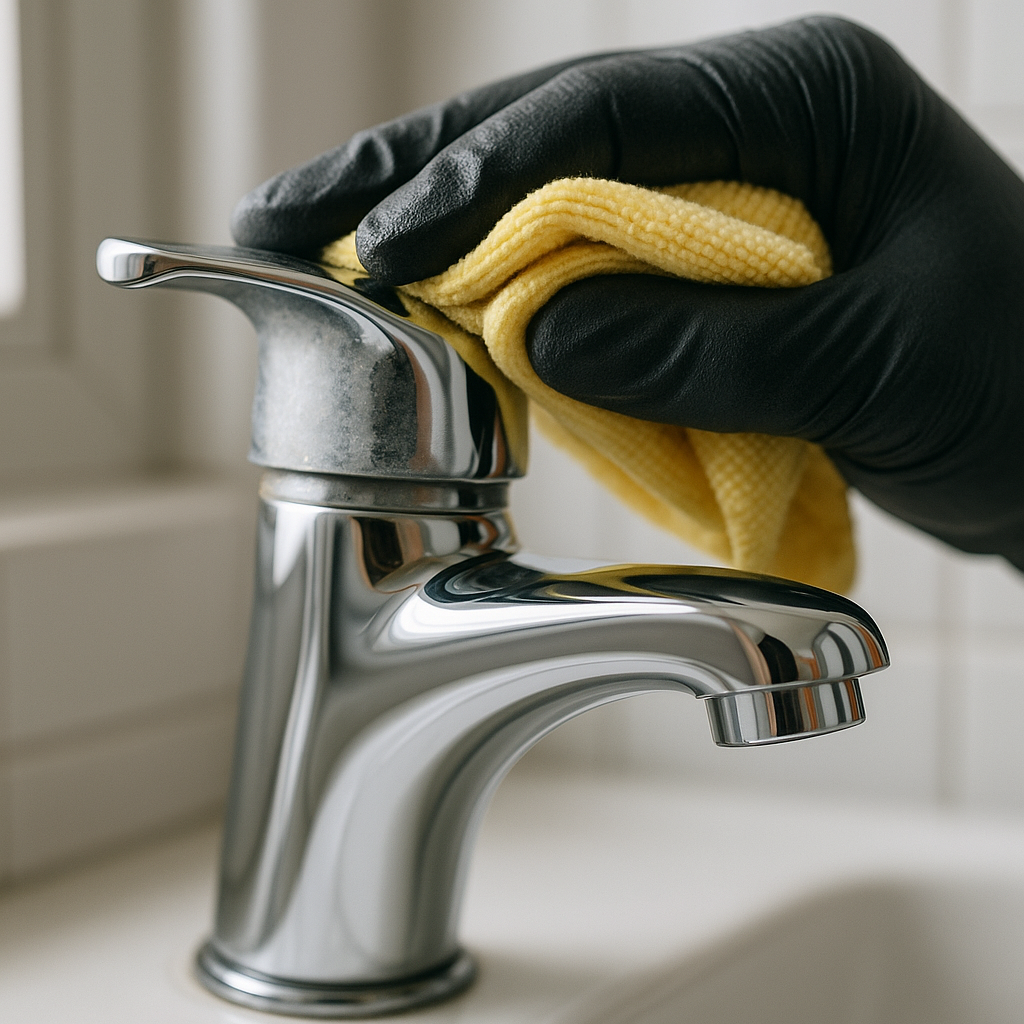
There’s a difference between cleaning and sanitising, and a proper spring clean needs to do both. Cleaning removes visible dirt and grime; sanitising kills the bacteria, viruses, and mould spores that invisible residue leaves behind. Doctor Clean uses hospital-grade, family-safe disinfectants on all high-touch surfaces — door handles, light switches, remote controls, tap handles, toilet flush buttons, refrigerator door handles, and lift buttons in condo units. We pay particular attention to kitchen surfaces near the sink, where cross-contamination between raw food prep and general use is common in Singapore open-plan kitchens. Many families with young children or elderly parents tell us this step alone is the reason they book a professional clean rather than DIY — knowing the home has been properly sanitised gives a real sense of reassurance that a mop and spray can’t match.
Step 5 — Finish with a post-clean walkthrough and a maintenance plan
Once we’re done, Doctor Clean always does a final walkthrough with the homeowner — we want you to inspect every zone before we pack up, because if anything isn’t right, we fix it on the spot. We also leave you with simple maintenance notes: which areas are likely to need attention sooner in your specific home based on what we found, and what you can do monthly between professional cleans to keep things in good shape. A thorough spring clean done properly once or twice a year, combined with regular upkeep, is genuinely all most Singapore homes need to stay fresh, hygienic, and comfortable all year round.
Why Singapore Homeowners Choose Doctor Clean
We’ve cleaned homes from Woodlands to Bedok, from Jurong West BTOs to Orchard Road condos — here’s what our customers tell us makes the real difference:
- Nothing gets skipped: Our team works from a structured checklist that covers all 50 overlooked areas — you’re not paying for a basic mop-and-wipe, you’re getting a comprehensive clean every single time.
- Safe for Singapore families: We use non-toxic, child-safe, and pet-safe cleaning solutions as our default — no harsh chemical smells left behind, no residue on surfaces your kids touch.
- Trained, experienced team: Every Doctor Clean team member is trained specifically for Singapore home environments — HDB wet areas, condo marble flooring, timber laminate, and aluminium window frames each need a different approach, and our team knows the difference.
- Honest, fuss-free service: We give you a clear quote before we start, we show up on time, and we don’t upsell you on services you don’t need — customers in Ang Mo Kio, Clementi, and Tampines keep coming back because they trust us to be straight with them.
Frequently Asked Questions
How long does a full spring clean take for an HDB flat in Singapore?
For a typical 4-room HDB flat, a thorough spring clean covering all major and overlooked areas usually takes between four to six hours with a two-person team. Larger units like 5-room flats or executive apartments can take six to eight hours depending on condition and the number of fabric items to be cleaned. If the home hasn’t had a deep clean in over a year, allow extra time — accumulated grease and mould in Singapore’s climate takes longer to break down safely without damaging surfaces.
Is it worth hiring a professional for spring cleaning, or can I DIY?
DIY spring cleaning is absolutely doable for maintenance-level tidying, but for a genuine deep clean of all 50 areas on a proper spring cleaning checklist, most Singapore homeowners find they lack the right equipment — especially for fabric extraction, grout cleaning, and air-con fin cleaning. Professional teams also bring the right chemical concentrations for each surface type, which protects your flooring, cabinetry, and fixtures. Many of our customers try DIY first and then call us because they want the job done properly without spending a full weekend on it.
How much does spring cleaning cost in Singapore?
Pricing varies by property size, condition, and scope of work. As a rough guide, spring cleaning for a 3-room HDB flat starts from around $180–$250, while a 4-room or 5-room flat typically ranges from $250–$400 depending on add-ons like mattress cleaning or curtain washing. The best way to get an accurate figure is to WhatsApp us with your unit type and we’ll give you a no-obligation quote — no hidden fees, no surprise charges on the day.
How often should I do a spring clean in a Singapore home?
We recommend a full deep clean at least twice a year — most Singapore families align these with Chinese New Year and either the mid-year school holidays or year-end. If you have young children, elderly family members, or anyone with respiratory sensitivities, quarterly professional cleaning of high-impact areas like mattresses, air-cons, and bathrooms makes a noticeable difference. Between professional visits, a consistent weekly routine covering visible surfaces will keep your home in good condition without too much effort.
Can Doctor Clean handle post-renovation cleaning as part of a spring clean?
Post-renovation cleaning is a specialised service we offer separately from standard spring cleaning — renovation dust is a completely different challenge because fine cement and silica particles settle into every gap, vent, and surface in the unit. If you’ve just received your BTO keys or completed a condo renovation, we’d recommend booking our post-reno clean first, and then a spring clean a few weeks later once the dust has fully settled. WhatsApp us the details of your renovation and we’ll advise the right sequence and package for your situation.
Ready to get this sorted? WhatsApp Doctor Clean — honest quote, no hard sell, fast reply.
 Doctor Clean