
Your new renovation looks stunning. Fresh carpentry, new furniture, gleaming floors. But there’s something you can’t see — and in some cases can barely smell — slowly releasing into the air of your brand new home. Formaldehyde. And it’s in almost every newly renovated space in Singapore.
What is formaldehyde and where does it come from?
Formaldehyde is a colourless gas that occurs naturally at very low levels in the environment — but in a newly renovated home, concentrations spike significantly. It off-gasses from a wide range of renovation and furnishing materials that are now standard in modern homes:
Plywood, MDF boards, and particleboard used in carpentry and cabinetry are bonded with adhesives that contain formaldehyde-based resins. New furniture — wardrobes, shelving, bed frames — releases it too. Laminate flooring, vinyl, wall paints, varnishes, and even certain fabric treatments all contribute. In a freshly renovated Singapore home, you can have dozens of these sources releasing formaldehyde simultaneously into a sealed, air-conditioned space.
Why it matters — what formaldehyde does to you
Formaldehyde at elevated concentrations is classified as a human carcinogen. But even at lower levels — the kind found in newly renovated homes — it causes real, daily discomfort that many people mistake for allergies, tiredness, or the common cold.
Children, the elderly, and anyone with respiratory conditions are particularly vulnerable. In a home where the air conditioning runs all day and windows stay closed, these symptoms can persist for months — or even years — if the formaldehyde source isn’t properly treated.
The problem with "just open the windows"
The most common advice is to ventilate. Open windows, run fans, let the home air out for a few weeks before moving in. And ventilation does help — but it’s slow, incomplete, and in Singapore’s climate, often impractical.
Formaldehyde doesn’t just sit on surfaces waiting to leave. It’s embedded in the materials themselves and continues to release for months — sometimes years — as the resins in engineered wood and adhesives slowly break down. Opening windows reduces concentration temporarily but doesn’t eliminate the source. As soon as the windows close and the air conditioning goes back on, levels climb again.
Waiting it out isn’t a solution. It’s a delay.
How Doctor Clean removes formaldehyde
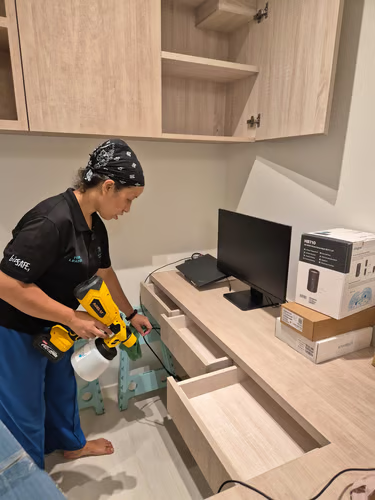
Doctor Clean uses a professional-grade photocatalytic treatment process — a method proven to actively break down formaldehyde molecules rather than simply masking or diluting them.
A specialised photocatalytic solution is applied across the surfaces and into the air space of the home. When activated, it triggers a chemical reaction that converts formaldehyde and other volatile organic compounds into harmless carbon dioxide and water vapour. It works on the materials themselves — the carpentry, the flooring, the furniture — not just the air around them.
The result is a measurable reduction in formaldehyde levels that ventilation alone cannot achieve in any comparable timeframe. Doctor Clean can test air quality before and after the treatment so you can see the difference — not just feel it.
The treatment solution contains titanium dioxide — a photocatalyst that, when exposed to light, generates oxidising agents that break down formaldehyde at a molecular level. It's non-toxic, leaves no harmful residue, and continues to work on the treated surfaces over time. Safe for children, pets, and the elderly.
When should you book formaldehyde removal?
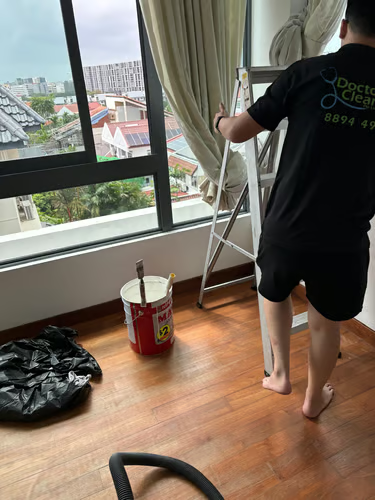
The ideal window is immediately after renovation is complete and before you move any soft furnishings in — bedding, cushions, curtains — that would absorb the treatment solution. Doctor Clean recommends scheduling the treatment at the same time as your post-renovation clean, so the unit is dealt with comprehensively in one visit.
If you’ve already moved in and are experiencing symptoms, it’s not too late. Treatment can still be done in an occupied home — the process is safe and the solution is odourless once applied. Many families notice an improvement in air quality and a reduction in symptoms within days of the treatment.
New home, clean air
A renovation transforms how a home looks. Formaldehyde removal transforms how it feels to live in it. The visible result of a renovation is immediate — but the air you breathe in that space every day, the sleep you get, the way your eyes and throat feel in the morning — that’s determined by what’s happening at a level you can’t see.
Doctor Clean’s formaldehyde removal service gives you both: a beautiful new home and the clean air it deserves.
 Doctor Clean
I appreciate you highlighting the health benefits of using eco-friendly cleaners. It’s not just about the environment; it’s about creating a healthier home for ourselves and our families!