
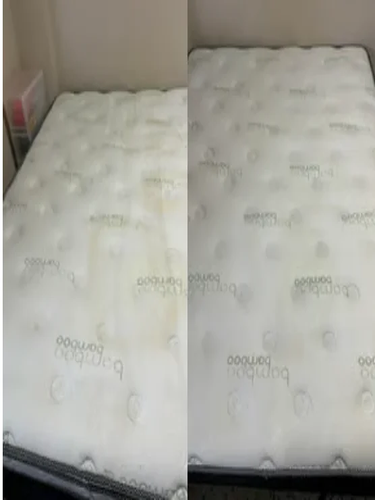
Your sofa is probably the most used piece of furniture in your home. You sit on it every day, eat on it, sleep on it, let the kids climb all over it. And yet, of all the surfaces in a home that get cleaned regularly, upholstered furniture is almost always the last one anyone thinks about — until the smell or the stain becomes impossible to ignore.
Fabric furniture absorbs everything — silently
Unlike hard surfaces that show dirt clearly, fabric upholstery absorbs it. Sweat from skin contact works into the fibres daily. Body oils transfer from hair and hands and build up in the areas most frequently touched — armrests, seat cushions, headrests. Food crumbs and liquid spills get pushed deeper into the foam with every sit-down. Pet dander, dust mites, and mould spores settle into the weave and stay there.
None of this is visible at a glance. The sofa looks fine. Maybe a little tired, a little flat, a faint background smell you’ve stopped noticing. But underneath what the eye sees, the fabric is holding months of accumulated grime that a vacuum or a surface spray will never fully reach.
What upholstery cleaning covers
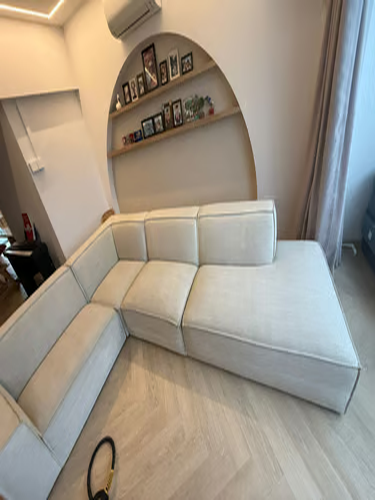
Doctor Clean’s upholstery cleaning isn’t limited to sofas. Any fabric-covered surface in the home benefits from a proper deep clean — and the results are often just as dramatic on items people don’t typically associate with professional cleaning.
Step 1 — High pressure steaming into the fabric
Doctor Clean starts every upholstery session with high pressure steam — driving heat directly into the fabric and the foam padding beneath. The steam reaches temperatures high enough to kill dust mites, bacteria, and the microorganisms responsible for odour, while the pressure breaks apart the oils, body residue, and organic matter that have bonded deep into the fibres over months of use.
For pieces with heavy skin and hair contact — dining chair backs, sofa headrests, armrests — this stage makes a striking difference. The steam penetrates the contact zones where sebum and protein residue accumulate most heavily, breaking them down at a level that surface wiping simply cannot reach.
Step 2 — Deep extraction pulls everything out
Steam loosens what’s embedded in the upholstery. Deep extraction removes it. After the steam treatment, Doctor Clean’s extraction machine draws out all the dissolved grime, loosened particles, dust mite matter, biological residue, and odour-causing material — pulling it out from deep within the cushion and padding, not just the surface layer.
What comes out of the extraction tank after a well-used sofa or a set of dining chairs is genuinely eye-opening. Dark, murky water carrying everything that’s been building up inside your furniture — material that no amount of surface cleaning would ever have shifted. Seeing it is the clearest possible proof of what the process achieves.
After extraction, the fabric is left damp but not wet — the machine pulls out the vast majority of moisture along with the contaminants. With good airflow, most upholstered pieces are dry and ready to use within two to four hours.
Dust mite fact: The average sofa hosts thousands of dust mites living inside the fabric and foam, feeding on dead skin cells shed during daily use. They are one of the leading causes of indoor allergen exposure in Singapore homes. Doctor Clean's high pressure steam eliminates them completely — offering immediate, lasting relief for allergy and asthma sufferers in the household.
What about stains?
Stains are addressed as part of the process — coffee rings, food spills, pet accidents, and general discolouration. Doctor Clean pre-treats specific problem areas before the main steam and extraction cycle, using solutions matched to the stain type and fabric being cleaned.
Older stains that have been set for a long time, or ones that have been scrubbed or treated incorrectly, may be permanently bonded to the fabric — and Doctor Clean will always be honest about that upfront. But in the majority of cases, the improvement after a full steam and extraction session is substantial. Often complete.
The difference you notice immediately
The first thing most people notice after a Doctor Clean upholstery session is the smell — or the absence of it. That low-level mustiness that had become background noise in the room is simply gone. Fabric that felt flat and slightly stiff from absorbed oils and residue feels softer and more responsive. Colours that had dulled come back.
Rooms feel fresher. People with allergies notice the difference within days. And the knowledge that what you’re sitting on has actually been cleaned — not just vacuumed or sprayed — changes how the whole home feels.
How often should upholstery be professionally cleaned?
For most Singapore homes without pets, once every 12 months keeps upholstery in genuinely good condition. With pets or young children, every 6 months. If anyone in the household has allergies or respiratory sensitivities, more frequent cleaning delivers a measurable improvement in daily comfort. And if there has been a spill or accident — the sooner the better. The longer a stain sits, the harder it becomes to fully lift.
The furniture you use every single day holds more than it shows. Doctor Clean’s upholstery cleaning gives it a proper reset — so what you’re sitting on is as clean as everything else in your home.
 Doctor Clean
I appreciate you highlighting the health benefits of using eco-friendly cleaners. It’s not just about the environment; it’s about creating a healthier home for ourselves and our families!