
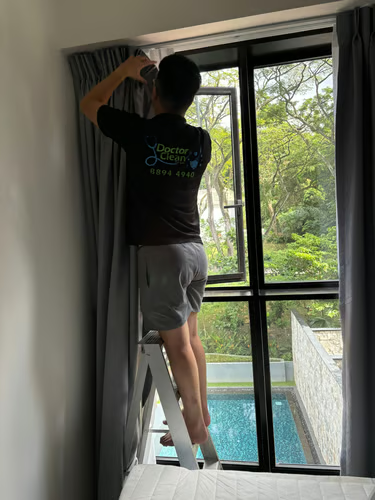
Most people never think about their curtains until they notice they look grey, smell musty, or someone in the home starts sneezing every time the window is opened. By then, the curtains have spent months — sometimes years — quietly collecting dust, mould spores, pet dander, and everything else that drifts through the air in a Singapore home. Doctor Clean’s curtain dry cleaning service fixes all of that, without taking them down.
What your curtains are actually holding
Curtains are one of the largest fabric surfaces in any home, and they hang in exactly the spot where air circulates most — near windows and aircon units. Every time a breeze moves through the room, particles settle into the fabric. Every time the aircon runs, fine dust gets blown directly onto them.
Over time, curtains accumulate dust mites, mould spores, pet hair, cooking grease that drifts from the kitchen, cigarette odour, and the general airborne grime of daily life. In Singapore’s humidity, moisture gets trapped in the fabric folds and creates the conditions for mould and bacteria to grow — which is where that musty smell comes from.
You might not see any of this. But it’s there. And every time someone in the home brushes past the curtains, sits near an open window, or simply breathes the air in the room — they’re being exposed to it.
Why putting them in the washing machine isn't the answer
The instinct is to take the curtains down and wash them. And for some lightweight cotton or polyester panels, a gentle machine wash is fine. But for most curtains found in Singapore homes — lined drapes, blackout curtains, velvet panels, eyelet curtains with stiffened headings, or any fabric with interlinings — a machine wash causes real damage.
The difference you notice immediately
The most immediate change is the smell — or rather the absence of it. That background mustiness that you’d stopped noticing? Gone. Rooms that have had their curtains cleaned feel noticeably fresher, and the air quality improvement is real — particularly for households with allergy sufferers, young children, or elderly family members.
Visually, colours come back. Fabric that looked flat and dull regains its texture. Curtains that had started to look tired — not dirty exactly, just worn — look revived. It’s one of those cleaning results that genuinely transforms a room without changing anything in it.
How often should curtains be dry cleaned?
For most Singapore homes, once every 12 to 18 months is a reasonable baseline. Homes with pets, heavy cooking, smokers, or anyone with respiratory sensitivities benefit from cleaning every 6 to 12 months. If curtains are in a room that’s heavily used or near an aircon unit that runs constantly, more frequent cleaning makes a measurable difference.
The best time to schedule it is alongside another Doctor Clean service — a spring clean, a post-renovation clean, or a move-in session. The curtains are often one of the last things people think of, but they’re one of the highest-impact cleans in the home.
The curtains have been there all along — now they can breathe
Curtains are easy to overlook because they don’t obviously get dirty the way floors or kitchen surfaces do. But they’re working every day — filtering light, insulating the room, absorbing sound, and quietly collecting everything that drifts through your home’s air. When they’re properly cleaned, the difference in how a room looks, smells, and feels is immediate.
Doctor Clean’s curtain dry cleaning service is the easiest way to get that result — without the hassle of removal, laundry, and rehang. Just clean curtains, still perfectly in place.
 Doctor Clean
Great post! It’s so important to make the switch to eco-friendly cleaning products. Thanks for sharing these recommendations; I’m definitely going to check some of them out.